
A Kit Simplifies Parts, Not Site Responsibility
A WPC pergola kit can organize profiles, connectors, trims, and an assembly sequence, but it does not make every patio or deck ready to support the structure. The site still needs suitable dimensions, foundations or structural anchorage, drainage, clearances, wind design, and local approval. Those decisions should be resolved before production or delivery.
Start with the intended use: decorative shade frame, plant support, outdoor dining area, or part of a larger deck composition. Review the pergola collection, square-tube profiles, and decking collection together so posts, overhead members, and nearby surfaces form a coordinated project rather than separate purchases.
Measure the Space in Three Dimensions
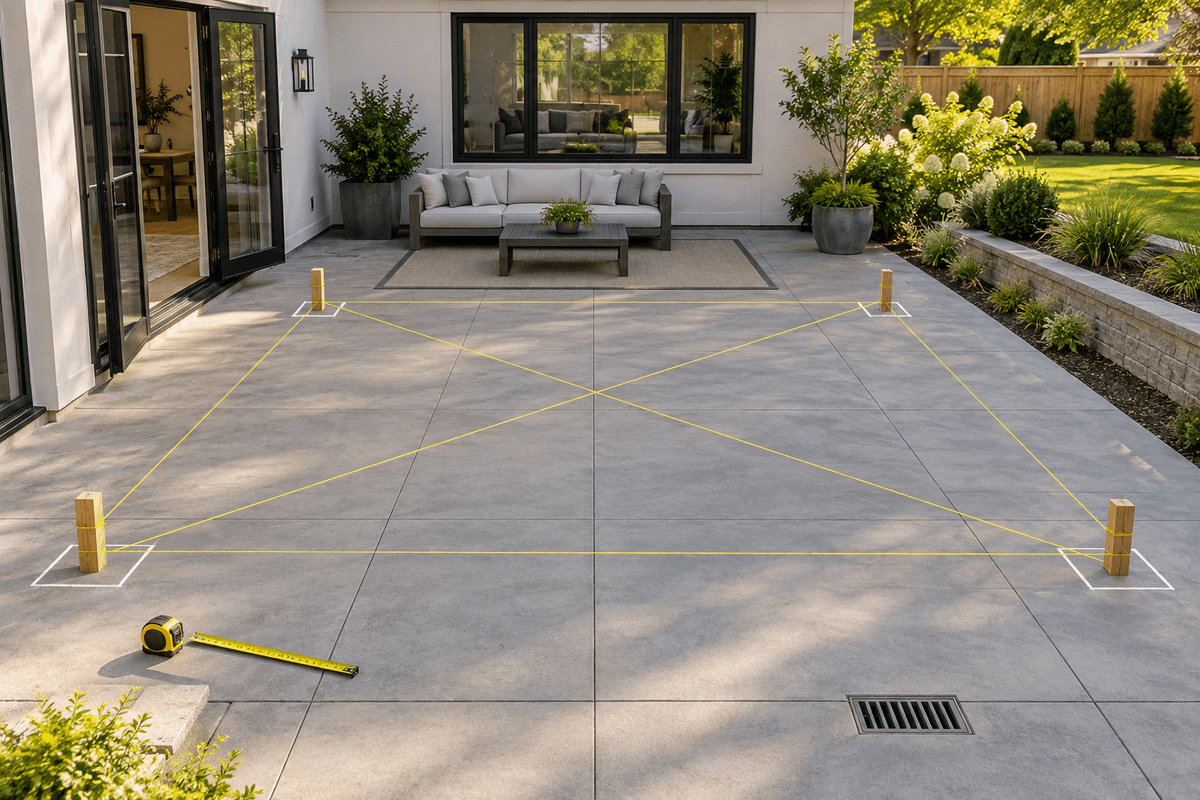
Record overall width, projection, finished height, post centers, diagonal measurements, slope, door swings, eaves, windows, utilities, drains, steps, and property-line clearances. Do not assume an existing patio or house wall is square. Equal diagonals are a useful layout check, but structural and boundary verification may still be required.
Mark the proposed post footprints at full size and walk around them with furniture in place. Confirm circulation, headroom, views, and maintenance access. A kit that technically fits the slab may still crowd a doorway or place a post where water must drain.
- Confirm permits, setbacks, utility locations, wind, snow, and fire requirements.
- Measure post centers, diagonals, height, slope, openings, and drainage routes.
- Verify whether WPC profiles are decorative sleeves or load-bearing members.
- Match anchors and foundations to the structure and site conditions.
- Check the complete packing list, assembly sequence, tools, access, and crew needs.
Separate the Structural Frame From the Finish
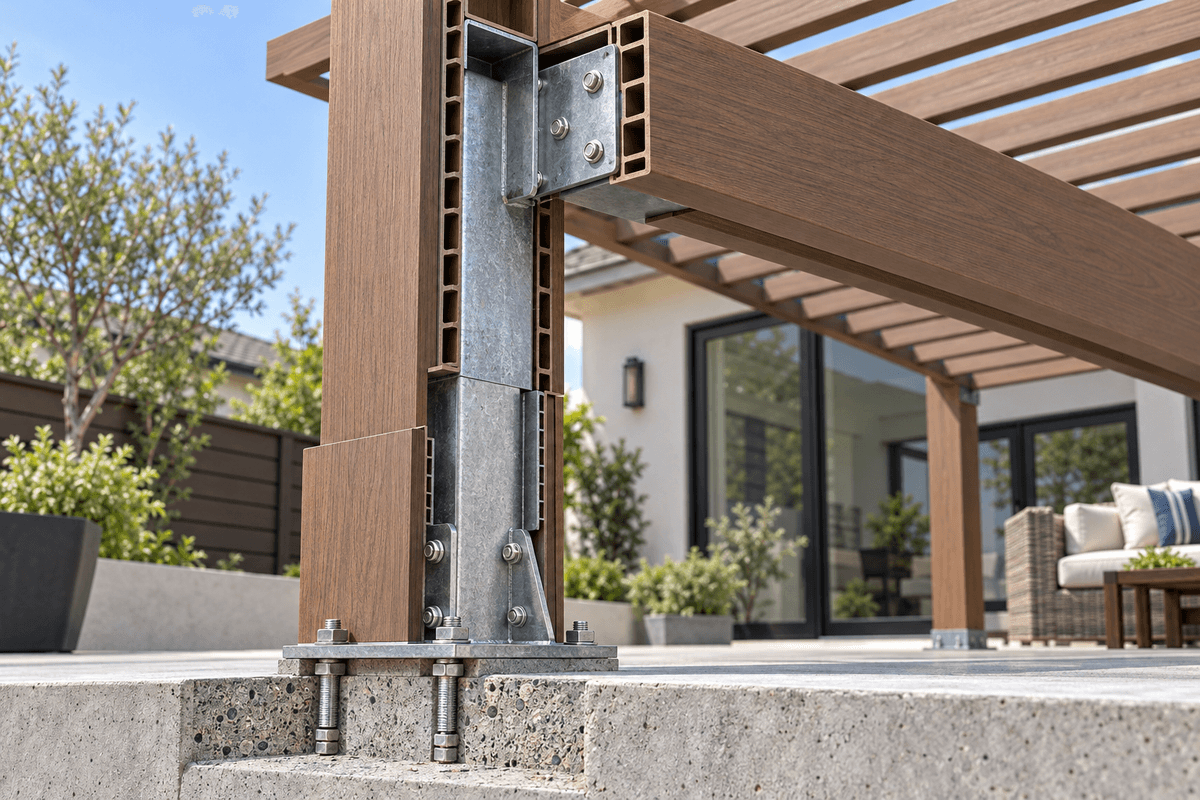
Some WPC pergola profiles are decorative or protective elements installed over metal reinforcement or another engineered frame. They should not be assumed to carry roof, wind, snow, hanging, or climbing-plant loads on their own. Ask for a clear drawing that identifies every structural and nonstructural component.
Confirm allowable spans, reinforcement sizes, connection details, and permitted accessories for the exact kit. Do not hang swings, heaters, fans, lights, privacy screens, or retractable covers unless those loads and attachment points have been approved.
Anchoring Begins Below the Finished Surface
Post bases must transfer forces into concrete, footings, framing, or another verified structure. Pavers, thin topping slabs, deck boards, and waterproof membranes are not automatically suitable anchors. Existing conditions may need scanning, test information, reinforcement, or a designed curb before assembly.
Avoid drilling through a roof or balcony membrane without an approved waterproofing detail. On a deck, coordinate post loads and connections with the frame rather than attaching only to surface boards. The layout-first installation guide guide reinforces the broader principle that finish materials do not replace structural support.
Shade Direction Should Be Chosen Deliberately
The spacing and orientation of overhead members affect morning, midday, and afternoon shade. Model the sun direction for the site and season that matters most. A dining area may need late-day protection, while plants or interior windows may benefit from more winter light.
A pergola is not necessarily a waterproof roof. If rain protection is expected, clarify whether the kit supports an approved cover, how water will drain, and how loads change. Adding panels later can greatly increase wind uplift and should not be treated as a cosmetic modification.
Movement and Drainage Need Exit Paths
WPC components and metal reinforcement respond differently to temperature. Follow the kit instructions for clearances, fastener locations, slots, sleeves, and trim. Do not fill movement joints with adhesive or sealant unless the detail specifically calls for it.
Open profiles and hollow members may require designed drainage holes or caps. Keep post skirts and beam channels from trapping water. Check that patio slope and deck gaps remain functional after bases, furniture, and planters are added. The expansion-gap guide resource offers useful background, while the kit manual governs the final assembly.
Delivery Day Needs a Plan of Its Own
Long posts and beams require suitable unloading space, level storage, and careful support. Verify package dimensions and weights, access limits, lifting method, hardware cartons, and protection before dispatch. Count parts against the packing list and isolate damaged pieces before assembly begins.
Review the instructions in advance and stage components in sequence. Confirm the required crew, ladders or platforms, drills, bits, levels, temporary bracing, and torque guidance. Do not fully tighten connections early if the manual expects the frame to be squared first.
Treat the Pergola as a Maintainable Outdoor Structure
Plan access for cleaning, fastener checks, drainage inspection, lighting service, and vegetation control. Keep vines from entering joints or concealing structural connections unless the design anticipates that growth. Inspect after severe weather and follow the current care instructions for every material in the system.
Before accepting the completed assembly, verify plumb posts, equal diagonals, level or intentionally sloped members, tightened connections, drainage openings, cap fit, base clearances, and the absence of sharp edges. Compare the installed dimensions with the approved drawing and photograph concealed reinforcement before trims close it. Keep the packing list, final drawing, product codes, spare hardware, finish samples, and care guide together so later service does not begin with guesswork.
Explore Composite Deck Pro, the pergola collection, the services overview, and the Composite Deck Pro blog while developing the brief. You can contact Composite Deck Pro with a site plan, photographs, dimensions, application, support conditions, destination, finish preference, and required documentation. A resolved site makes a kit order faster, safer, and easier to verify.