
The Better Fence Depends on the Owner
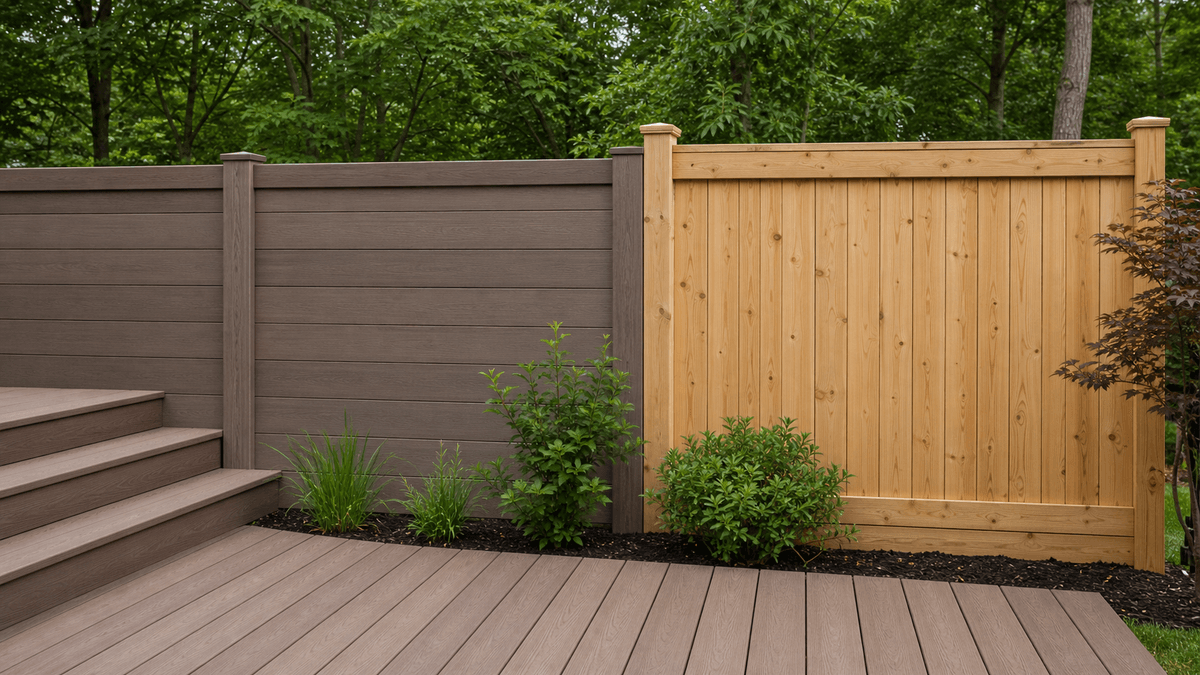
A composite fence vs wood comparison is really a comparison of priorities. Wood remains familiar, repairable, and widely available. Composite fencing appeals to homeowners who want a finished look with less painting, staining, and board-by-board weathering. Neither option wins every yard.
The right choice depends on budget, style, climate, maintenance habits, and whether the fence needs to coordinate with decking or outdoor flooring. The composite decking versus wood comparison, wood plastic composite decking guide, low-maintenance decking overview, composite decking color guide, and Composite Deck Pro give useful context for thinking beyond a single product sample.
Wood Has Flexibility and Familiar Repairs
Wood fencing is easy to understand. Boards can be cut on site, styles are widely known, and damaged pieces can often be replaced individually. Cedar, pressure-treated pine, redwood, and other species each have their own cost and performance profile. For homeowners who enjoy repainting or restaining, wood can remain a satisfying choice.
The tradeoff is ongoing exposure. Wood can check, cup, fade, split, rot, or invite insect damage depending on species, finish, climate, and ground contact. A wood fence may look excellent at installation but require periodic care to keep the appearance close to the original plan.
- Choose wood if easy local repairs and custom cutting are top priorities.
- Choose composite if reducing repainting and surface weathering is more important.
- Check post quality carefully; either material can fail if posts are weak.
- Compare gate hardware, not just panel material.
- Judge color from the yard and house, not only from a sample board.
Composite Offers a More Controlled Finish
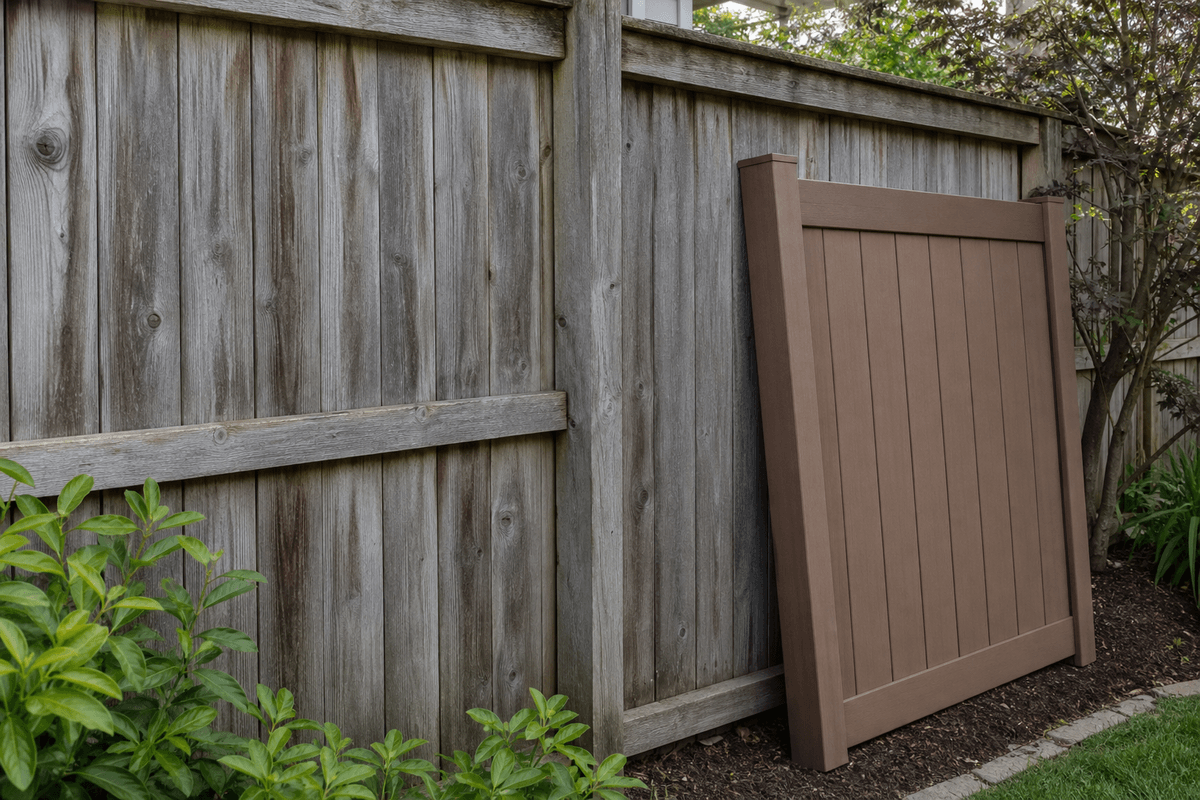
Composite fencing usually offers a more consistent finished appearance than natural boards. Color, grain, and surface texture are manufactured rather than dependent on each piece of lumber. That can help a privacy fence look calmer across a long run, especially near a deck or patio where the fence becomes a visible backdrop.
Composite still needs correct installation. Post spacing, panel support, gate framing, and clearances matter. It may also have a higher material cost than basic wood. The value is not simply in the first invoice; it is in the maintenance routine and how much the owner values a stable-looking surface.
Weathering Looks Different
Wood typically changes more visibly as it ages. Some owners like the silver-gray patina; others see it as a sign that the fence needs work. Composite fencing is designed to keep a more controlled look, though any outdoor material can collect dirt, fade gradually, or show surface wear depending on conditions.
Shade, sprinklers, soil contact, and plantings affect both options. A shaded wood fence may stay damp; a composite fence near dusty roads may need regular rinsing. Low maintenance does not mean the fence can be ignored, but the work rhythm is different.
Cost Should Include Time
First cost matters, but fence decisions should include time. Wood may cost less up front, especially in simple styles, but staining, painting, board replacement, and appearance refreshes add labor. Composite may ask for a larger initial purchase, but it can reduce the ongoing finish cycle that many homeowners dislike.
For a yard with composite decking, the comparison also includes design continuity. A fence color that coordinates with the composite decking color guide and the composite deck board guide can make the whole outdoor space feel more intentional. That design value is hard to capture in a square-foot price alone.
Also compare disruption. A fence that needs frequent refinishing may require moving furniture, trimming planting, protecting nearby surfaces, and scheduling dry weather. A material that needs less finish work can be especially useful behind built-in benches, garden beds, or narrow side yards where access is awkward.
Match the Fence to the Yard You Actually Maintain
A wood fence can be a good choice for owners who want customization and accept seasonal maintenance. Composite fencing can be a good choice for owners who want privacy, a cleaner long-term surface, and less finish work. Compare the whole system: posts, gates, hardware, cleaning access, color, and how the fence relates to decks or outdoor walls. For material coordination questions, contact Composite Deck Pro before narrowing the final palette.