
Why Teak Stands Out
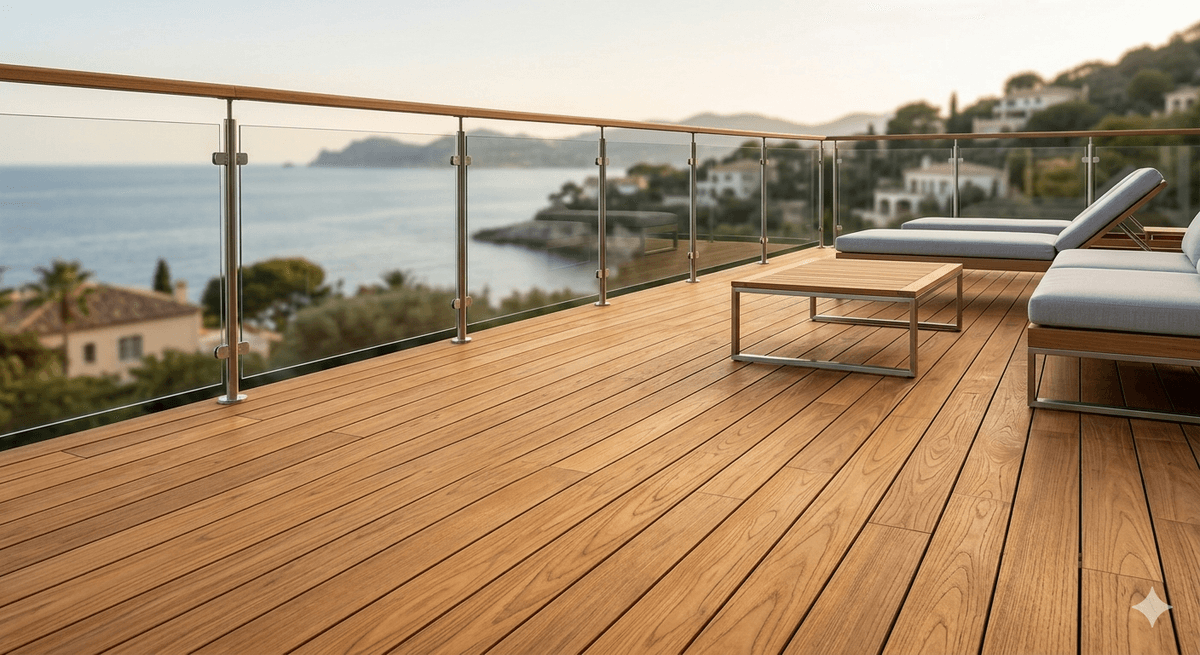
The Wood Database describes teak as very durable in regard to decay resistance, and its natural oils are one reason it performs so well outdoors. WOOD Magazine also notes that teak has long been favored for marine and exterior use because it handles exposure better than many common woods. In practical terms, that means teak is attractive to buyers who want real wood character without choosing a species that needs constant babying.
Teak also ages in a distinctive way. If left unfinished, it can weather toward a silver-gray patina that many homeowners like. If you want to preserve the warmer brown tone, that usually means committing to a maintenance routine rather than expecting the wood to hold its fresh-milled appearance indefinitely.
Where Teak Decking Makes Sense
Teak is best suited to projects where the look and feel of real hardwood are central to the design brief. That can include compact premium decks, rooftop terraces, waterfront applications, and outdoor rooms where the deck surface is a focal point rather than just a utility floor. It is especially appealing when the owner values natural material variation and is comfortable with a premium price per board.
That does not mean teak is the automatic best choice for every backyard. For large decks, heavily used family spaces, or buyers who want minimal upkeep, composite decking can be the more practical answer. That comparison is one reason readers often move from teak research into composite product and planning guides like Composite Deck Pro's home page and its Floor page.
Tradeoffs Buyers Should Understand
- Teak is durable, but it is also one of the more expensive decking choices on the market.
- Its natural oils and silica can be tough on tools and can affect finishing and bonding decisions.
- Color change over time is normal, so buyers should decide early whether they prefer fresh brown or weathered gray.
- Material sourcing and grade matter because not every product labeled teak offers the same quality or origin story.
- For broad, family-use decks, low-maintenance composite may deliver a better maintenance-to-value balance.
The workability issue is easy to underestimate. The Wood Database notes that teak's silica can dull cutting edges, so installation planning matters. That does not make teak a bad choice. It simply means the species behaves like a premium hardwood, not like a forgiving commodity softwood.
Sourcing Questions Matter Almost as Much as Species Choice
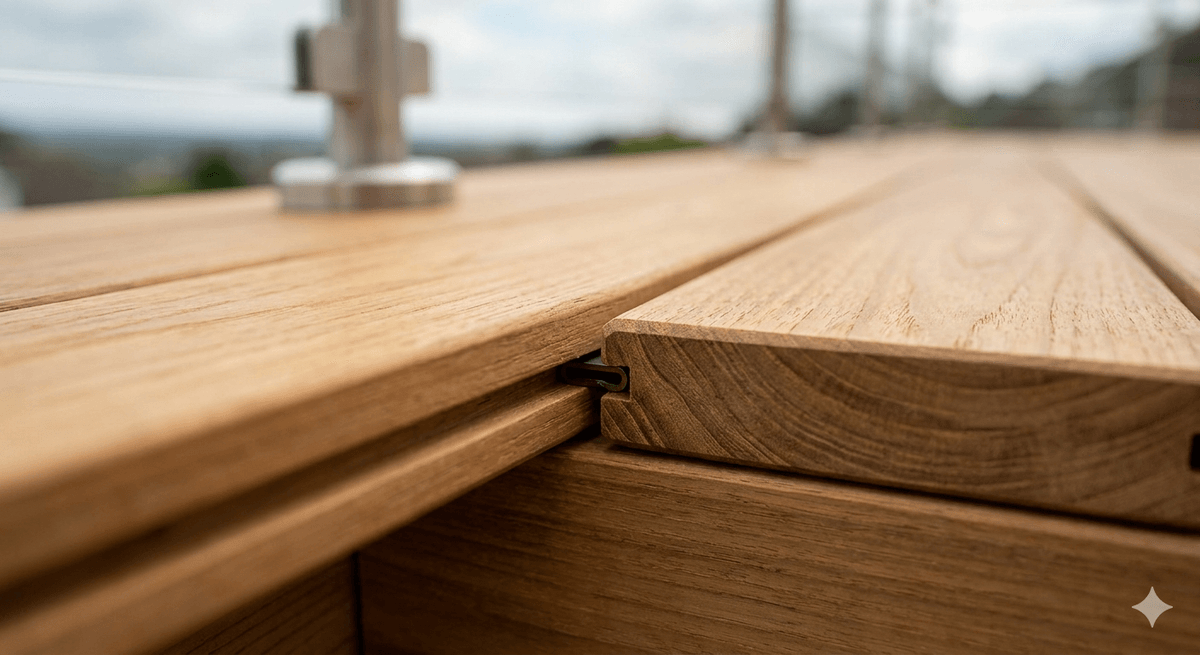
Teak buyers should also pay attention to where the boards come from and how clearly the supplier describes grade, moisture condition, and intended use. A strong species name does not eliminate the need for careful product vetting. If the decking will be exposed to full sun, standing water, or frequent foot traffic, clarity on specification is just as important as the word teak on the quote sheet.
That is another reason it helps to compare teak against a modern composite alternative at the same time. One option may win on natural character, while the other may win on predictability, installation system, or maintenance burden. The better comparison is not romance versus practicality. It is which material best fits the way the deck will actually be used.
How to Compare Teak Against Composite Alternatives
Teak and composite answer different priorities. Teak usually wins when natural grain, prestige, and real hardwood character are the top goals. Composite often wins when the priority is predictable maintenance, broad color consistency, and lower routine upkeep. Composite products also make it easier to compare dimensions, fastening systems, and stocked lengths in a repeatable way.
If that sounds like your decision point, it makes sense to review adjacent Composite Deck Pro content such as its composite decking overview, its composite wood explainer, and its article on decking for sunny exposures when relevant.
Questions to Ask Before Buying Teak Decking
A good teak decision usually starts with a few honest questions. Do you want a wood that will weather naturally, or do you want to preserve a fresh color? Are you building a smaller statement deck, or a large entertaining area where maintenance time matters? Are you comfortable paying more for the material and potentially more for fabrication? And do you have a reliable supplier who can explain grade, source, and expected appearance variation?
Those questions matter because teak is rarely chosen by accident. When it is the right fit, it can look exceptional. When the real goal is low maintenance and predictable ownership, a high-quality composite system may align better with the project.
Conclusion
Teak decking remains a compelling choice for outdoor projects that prioritize natural hardwood character, durability, and a premium finish. But it is not the universal answer. Buyers who understand the cost, weathering, and installation realities are much more likely to be satisfied long term. Compare teak against your maintenance expectations, deck size, and overall design goals, and the right choice usually becomes clearer.