
Low Price Is Not the Same as Good Value
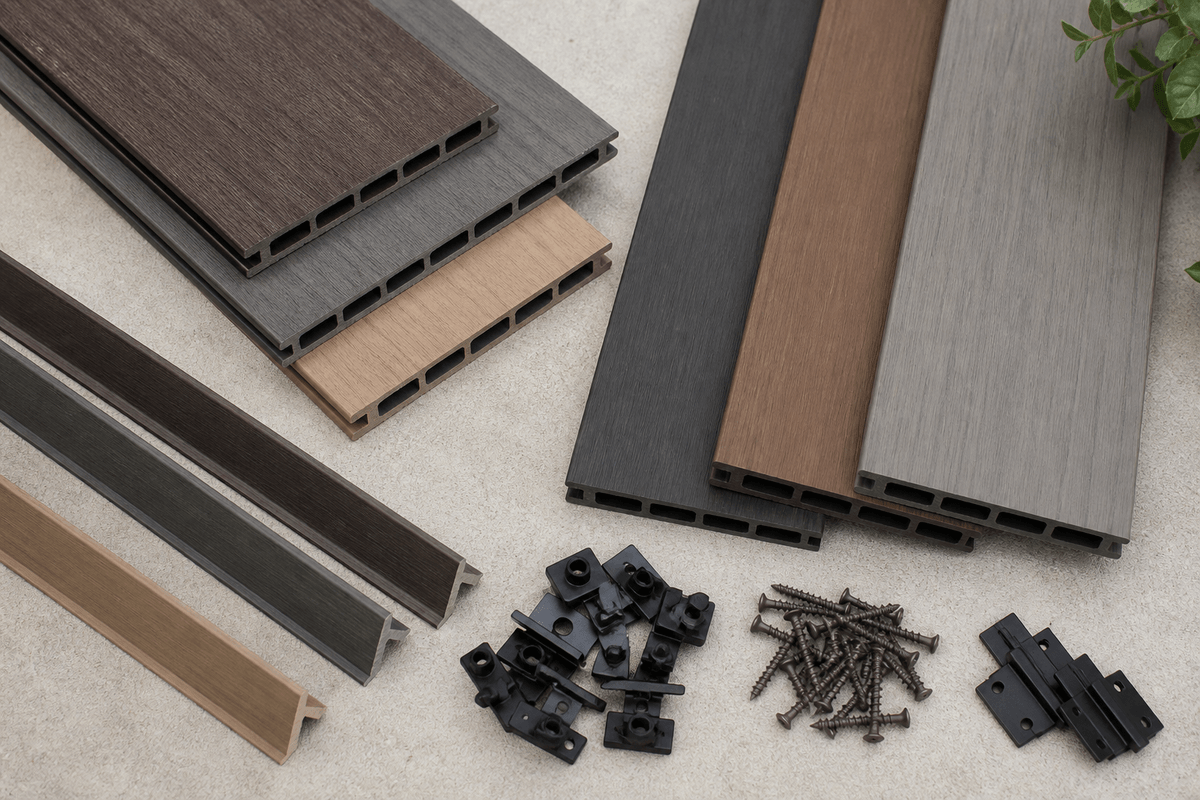
Cheap composite decking material can be the right choice for some projects, but only when the buyer understands what is being traded away. A lower price may come from a simpler color, thinner profile, scalloped underside, limited cap coverage, shorter board lengths, fewer accessories, or lower brand support. None of those details is automatically bad. They just need to match the project.
The mistake is buying on price alone for a deck that will carry heavy furniture, pool traffic, rental use, or a highly visible outdoor room. A budget board in the wrong place can cost more later through extra waste, difficult installation, early dissatisfaction, or replacement. Use the composite deck board guide, wood plastic composite decking guide, composite decking versus wood comparison, low-maintenance decking overview, and composite decking layout article to compare the whole system instead of only the board price.
Where Budget Boards May Work
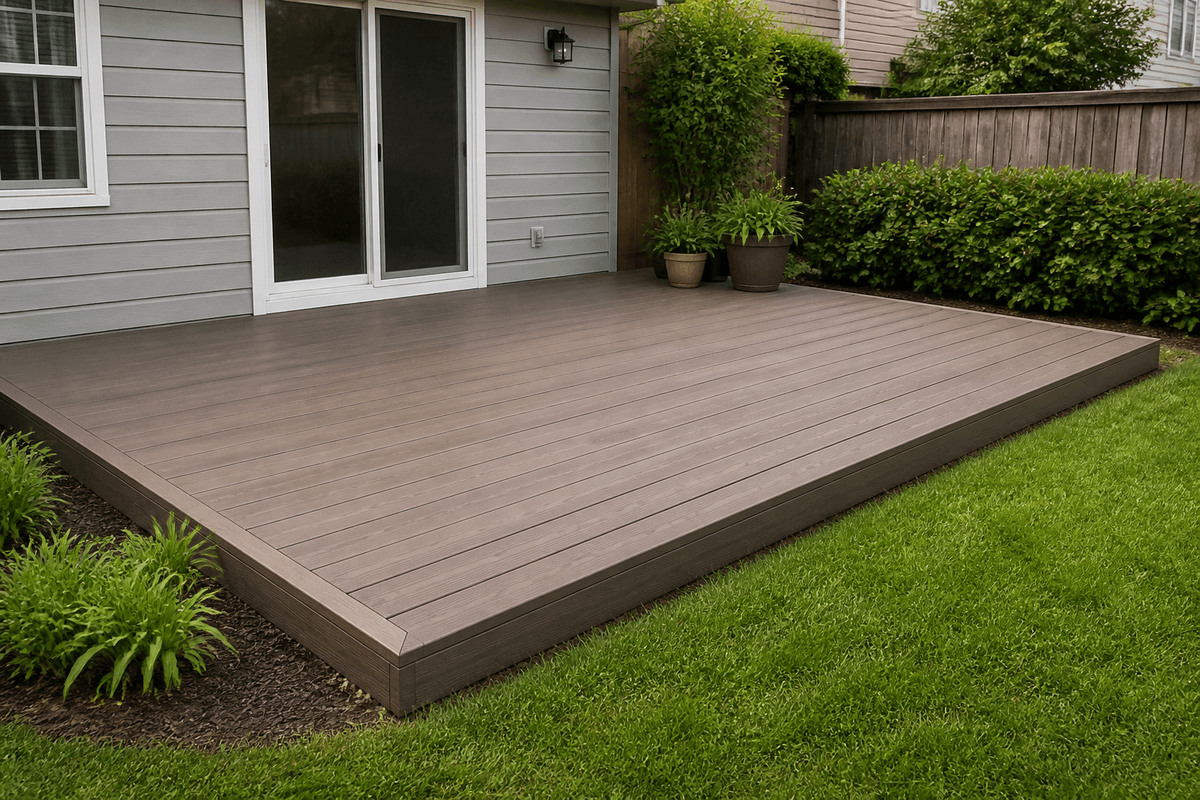
Lower-cost composite boards can make sense for low-traffic platforms, simple rectangular decks, utility areas, temporary upgrades, or projects where the owner accepts a plainer appearance. A clean, modest board installed correctly can still look better than an overcomplicated deck built with expensive materials and poor details.
The key is to keep the design honest. Simple field boards, straightforward edges, and limited cuts can help a budget material perform within its strengths. Problems begin when a low-cost board is asked to handle complex stairs, elaborate borders, intense sun, heavy commercial traffic, or constant wet use without enough support.
- Compare installed cost, not just board price.
- Ask whether matching fascia, stair, and edge boards are available.
- Check cap coverage, texture, and board profile before buying.
- Include clips, screws, joists, waste, delivery, and trim in the budget.
- Use samples outdoors before committing to a large order.
The Hidden Costs Are Often Accessories
A cheap board price can look less impressive once accessories are counted. Hidden clips, starter clips, fascia, stair treads, breaker boards, joists, edge trim, and extra waste can change the final number. If the board comes in lengths that do not suit the deck, cut waste may erase the savings.
Installation time also matters. Boards that require more sorting, more careful fastening, or more edge improvisation can cost more in labor. A slightly higher-priced board with a complete accessory system may be easier to install cleanly. That does not mean expensive is always better. It means the budget should include the finished deck, not only the field boards.
Delivery and storage can also affect value. If a low-cost board needs a larger minimum order, arrives in inconvenient lengths, or must be protected carefully before installation, the savings may shrink. Ask how the material will arrive, where it will be stored, and whether damaged or short pieces can be used in less visible areas.
Color and Texture Can Reveal the Compromise
Lower-cost composite decking often uses simpler color blending or less realistic texture. That may be fine in a shaded side deck or utility zone. It may be less satisfying on a large entertainment deck visible from the kitchen every day. Samples should be judged in the actual light where the deck will live.
The composite decking color guide, slip-resistant composite decking guide, and composite decking cleaning routine resources are useful here. A board should not only look acceptable when new. It should also feel comfortable underfoot, hide ordinary dirt reasonably well, and be easy enough to clean. A bargain surface that constantly annoys the owner is not a bargain for long.
Spend More Where Failure Is Expensive
If the project includes stairs, pool edges, second-story decks, heavy furniture, high sun exposure, or difficult access, the cheapest option deserves extra scrutiny. These are places where repairs can be inconvenient or safety-related. Better texture, stronger profiles, compatible fasteners, and clearer installation support may be worth the extra cost.
For a simple ground-level platform, a budget-friendly board may be entirely reasonable. For a complex outdoor room, the smarter savings may come from simplifying the layout rather than downgrading the material. The contact Composite Deck Pro link is useful if the project needs help deciding where to save and where not to.
Buy the Cheapest Material That Still Fits the Job
Cheap composite decking material is not automatically a bad choice. It becomes risky when the price is treated as the only specification. Compare board construction, accessory support, installation details, texture, color, waste, and maintenance. The best budget decision is not the cheapest board in isolation. It is the least expensive system that still fits the deck's real use.