
The Name Can Be Misleading
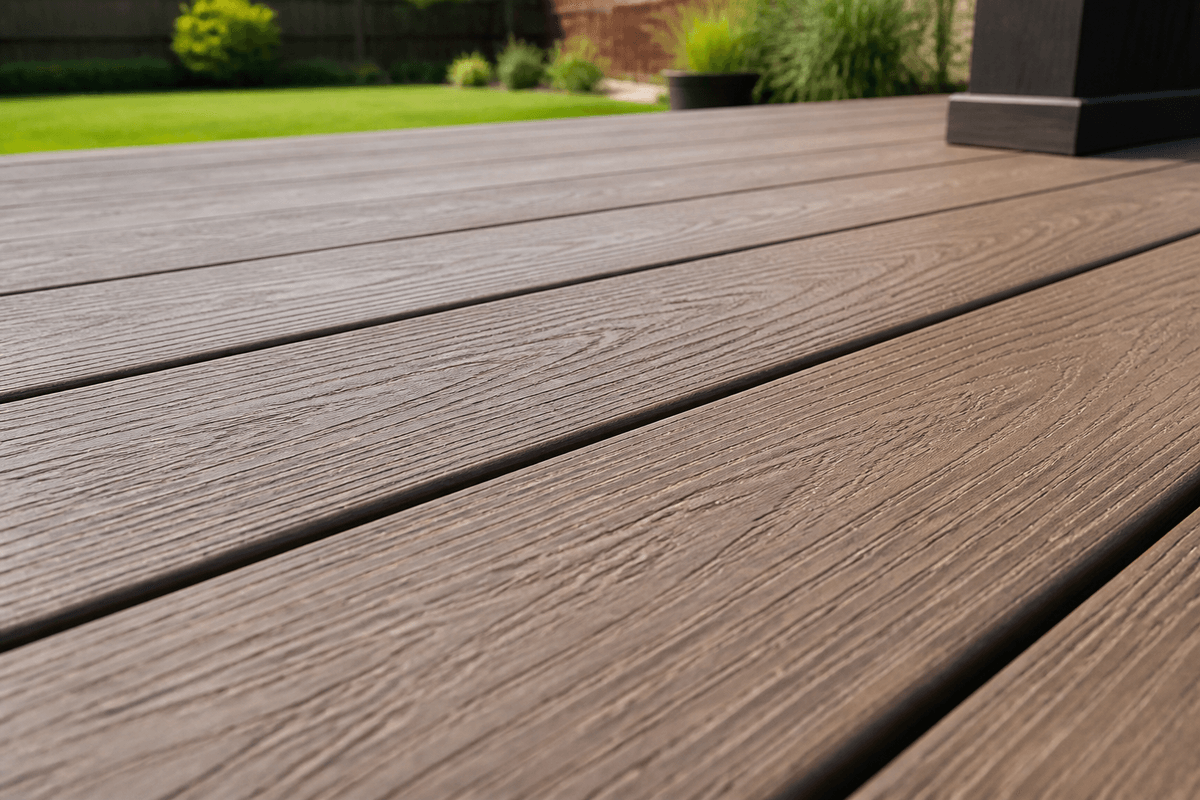
Composite wood is often described as a substitute for timber, but that shortcut can create confusion. In outdoor decking, the phrase usually points to boards made from a blend of wood fiber or wood flour with plastic polymers and additives. The goal is not to behave exactly like natural lumber. The goal is to create a more controlled outdoor surface with a wood-like appearance and a different maintenance routine.
That distinction helps buyers ask better questions. Instead of asking whether composite wood is "real wood," ask what the board is made from, how it is capped, how it handles moisture, how it fastens, and what kind of cleaning routine it needs. The wood plastic composite decking guide, composite decking versus wood comparison, composite deck board guide, decking and flooring options, and low-maintenance decking overview are useful starting points.
Where Wood-Look Composites Help
Composite wood can be useful when homeowners want the warmth of a timber look without the same cycle of sanding, staining, sealing, and repainting. It is common in deck boards, balcony flooring, cladding accents, fencing, and outdoor screens. The best uses are places where appearance, weather exposure, and routine maintenance all matter.
It is still not a magic material. Composite surfaces can get dirty, heat up in sun, scratch under furniture, and require correct installation. Boards may expand and contract with temperature. Fasteners, joists, drainage, and edge details still shape performance. A composite material reduces some wood-related maintenance, but it does not remove the need for a well-planned outdoor system.
- Use composite wood when reduced staining and repainting are priorities.
- Compare surface texture for wet areas, stairs, and poolside use.
- Check whether boards are capped, hollow, scalloped, or solid.
- Plan cleaning access around planters, furniture, and shaded corners.
- Follow installation guidance for gaps, fasteners, and ventilation.
Appearance Comes From More Than Color
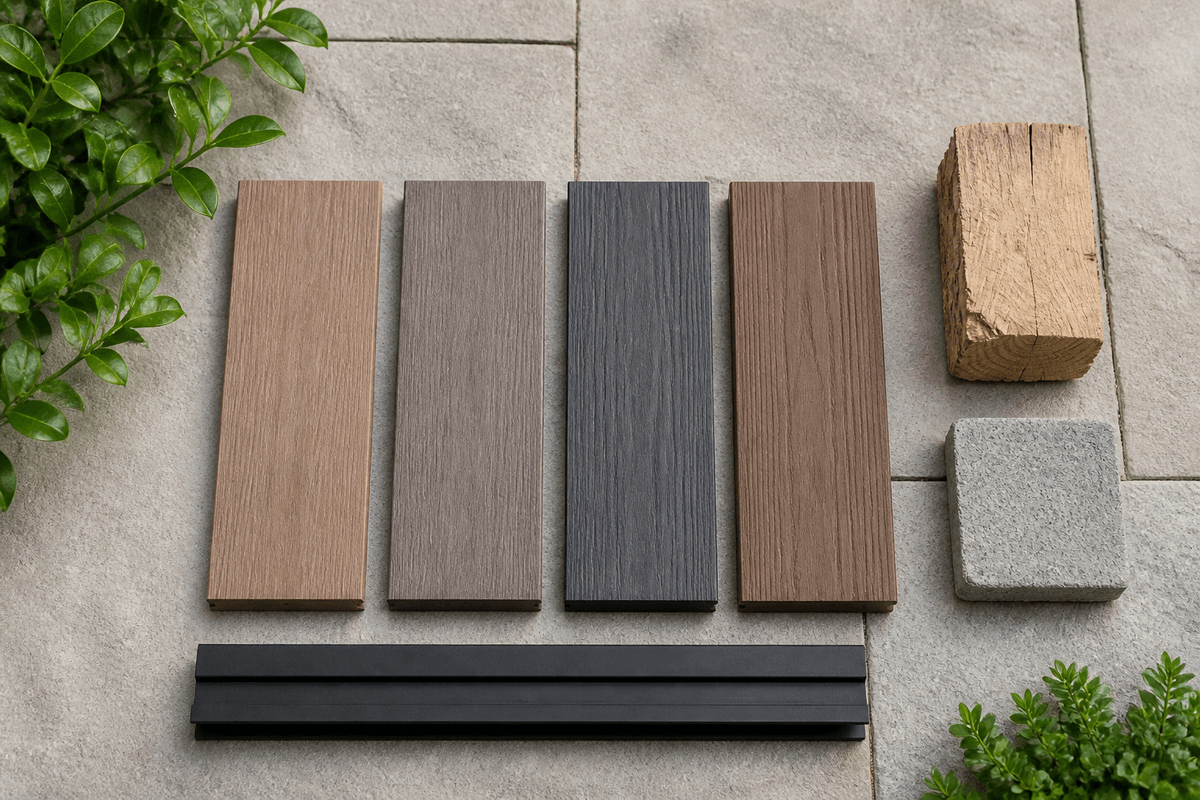
The wood look of a composite board comes from color, grain pattern, embossing, streaking, and finish sheen. A flat brown board can look artificial even if the color is close to timber. A well-balanced board uses texture and variation to create depth without becoming too busy. The right choice depends on the house, yard, and how large the surface will be.
Large decks make color stronger. A dramatic sample may feel heavy across 300 square feet. A subtle sample may look richer once installed in full daylight. Use the composite decking color guide to test boards outside, beside siding, railing, stone, and planting. Composite wood should support the overall outdoor room, not steal attention from it.
Finish sheen is easy to overlook. A very glossy surface can read as plastic in strong sun, while a matte finish often feels calmer and more architectural. Texture should also match the cleaning routine. A realistic grain is useful only if the owner can keep it looking good in the actual yard.
Moisture Behavior Is Different From Lumber
Natural wood absorbs and releases moisture in ways that can lead to checking, cupping, swelling, or rot if the species, finish, and installation are poorly matched to the site. Composite wood behaves differently because polymers and manufacturing control change the moisture profile. That is one reason many buyers consider composite decking for outdoor use.
Different does not mean careless. Water should still drain. Boards need gaps. Debris should not sit in seams for months. Shaded decks need cleaning. The waterproof composite decking guide, composite decking cleaning routine, and slip-resistant composite decking guide guides help keep expectations realistic, especially around pools, covered patios, and damp garden edges.
Think in Systems, Not Single Boards
A composite wood deck includes boards, joists, clips, screws, fascia, stairs, edge trims, and cleaning access. If any one part is ignored, the finished project can feel less solid than the material promised. For example, a good board installed with poor spacing can still look uneven. A beautiful surface with weak edge details can still feel unfinished.
Before choosing a board, decide whether the project needs grooved edges, square edges, stair boards, fascia boards, or matching wall accents. If the deck will connect to cladding, fencing, or balcony tiles, sample those materials together. contact Composite Deck Pro if the project needs help turning material options into a coordinated outdoor plan.
A Better Way to Read the Label
Composite wood is not simply fake timber, and it should not be bought as if it were ordinary lumber. It is a manufactured outdoor material with its own strengths, limits, and installation details. Buyers who understand that difference can compare boards more calmly: look at construction, cap, texture, color, fastening, moisture management, and upkeep. That is where the real value shows up.