
Cladding Changes the Vertical Plane
Composite wall cladding is often discussed as an exterior finish, but it also has a design role. Decking shapes the floor plane; cladding shapes the walls that frame the outdoor space. A privacy wall, garden backdrop, outdoor kitchen surround, or entry accent can feel warmer and more intentional when the vertical surface relates to the deck below it.
For Composite Deck Pro projects, think about wall cladding alongside decking and flooring options, composite decking color guide, wood plastic composite decking guide, composite decking versus wood comparison, and low-maintenance decking overview. The goal is not to cover every surface. It is to use texture where it helps the architecture, protects the wall assembly, or makes an outdoor room feel finished.
Use It Where Texture Has a Job

The strongest cladding applications usually solve a visible problem. A blank stucco wall behind a seating area may need warmth. A garden wall may need a cleaner backdrop. A side yard may need privacy without feeling like a fence. A covered patio may need a durable accent near doors and furniture.
Treat cladding as a focal surface rather than wallpaper. One intentional wall can do more than several busy walls competing with each other. This is especially true when the deck already has board lines, railings, furniture, and planting.
- Use cladding behind seating to create an outdoor-room backdrop.
- Repeat deck color lightly instead of matching every surface exactly.
- Leave drainage and ventilation paths clear behind exterior assemblies.
- Coordinate with trim, windows, doors, and railing color.
- Avoid high-heat or code-sensitive locations unless the product is approved for that use.
Horizontal, Vertical, or Slatted
Direction changes the mood. Horizontal cladding can make a wall feel wider and relaxed, which suits long patio backdrops. Vertical cladding can make a low wall feel taller and more architectural. Slatted layouts can create rhythm, shadow, and partial privacy, but they need careful spacing and a dark background if the goal is visual depth.
The deck layout should influence the wall. If the deck boards run long and clean, a vertical accent wall may provide contrast. If the deck has a busy border or tile-like format, a calmer wall may feel better. The composite decking color guide guide helps connect these choices without forcing an exact match.
Weather Details Matter Behind the Beauty
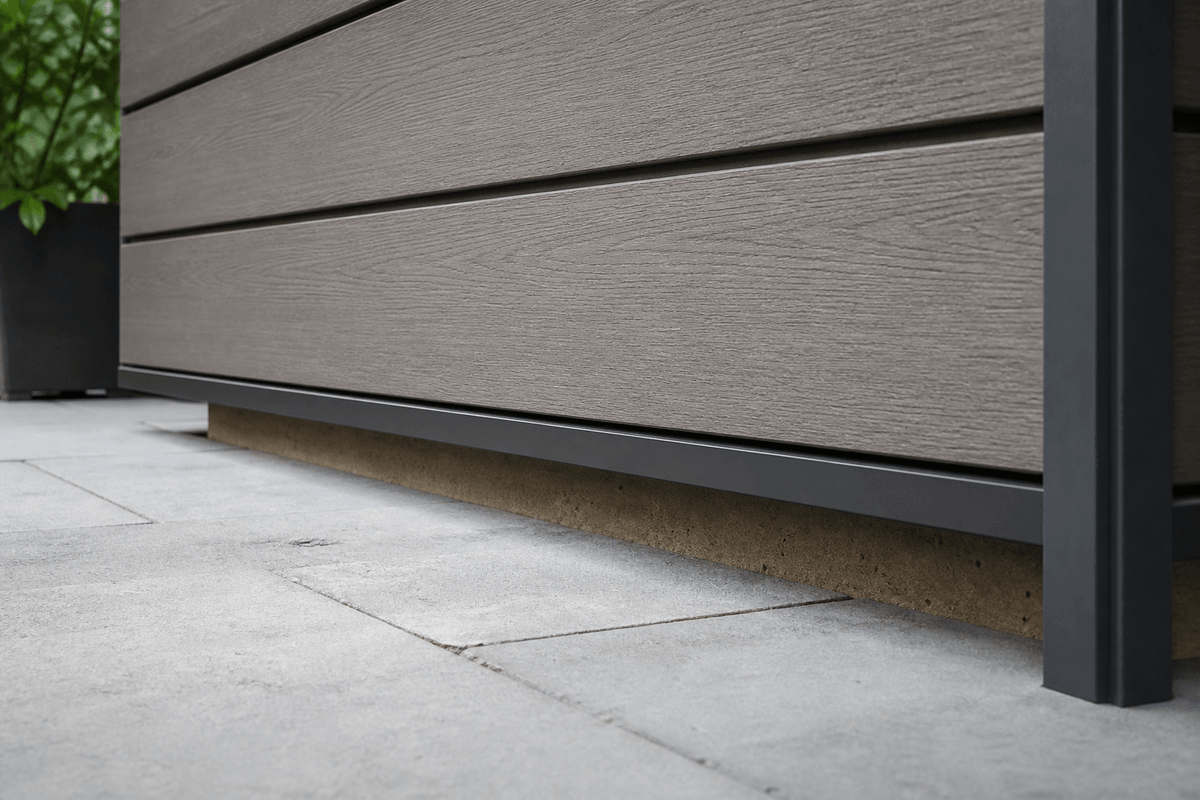
Exterior cladding must respect the wall behind it. Water needs a path out, fasteners need appropriate support, and the assembly should not trap moisture against sheathing or masonry. Manufacturer instructions, local code, and wall type all matter. A decorative panel can still create problems if it blocks drainage or ventilation.
This is one reason to separate visual inspiration from installation decisions. Photos can help choose direction and color, but they do not show the rain screen, attachment method, or flashing. If the project involves an exterior home wall, professional review is sensible before committing to a system.
Coordinate With Decking Without Overmatching
A deck and cladding surface can relate without being identical. Matching too closely can make the outdoor area feel heavy, especially when the same color covers the floor, walls, fascia, and privacy screens. A better approach is to choose one dominant surface and one supporting surface.
For example, medium composite decking can pair with a slightly darker cladding accent behind a sofa. Gray-brown boards can pair with warm vertical cladding to soften a modern exterior. Dark cladding can repeat a railing color while the deck remains lighter underfoot.
Maintenance Access Is Part of the Design
Wall cladding collects less foot traffic than decking, but it still sees dust, rain splash, pollen, and occasional stains. Design for cleaning access, especially behind grills, planters, and furniture. Avoid placing soil or mulch directly against lower boards, and leave enough clearance where walls meet hardscape.
Use care habits from the composite deck maintenance tips and low-maintenance decking overview, adjusted for vertical surfaces. A soft brush, gentle rinse, and regular debris removal are usually more appropriate than harsh scrubbing. If you need help aligning decking, cladding, and outdoor living materials, contact Composite Deck Pro.
Let One Wall Carry the Atmosphere
Composite wall cladding works best when it gives a specific outdoor area shape: a seating backdrop, privacy screen, garden wall, entry accent, or transition from house to deck. Choose the wall with a reason, coordinate the color with restraint, and make sure the assembly handles water correctly. Done well, the vertical surface becomes the quiet background that makes the whole deck feel designed.