
Screens Work Best When They Solve One Real Problem
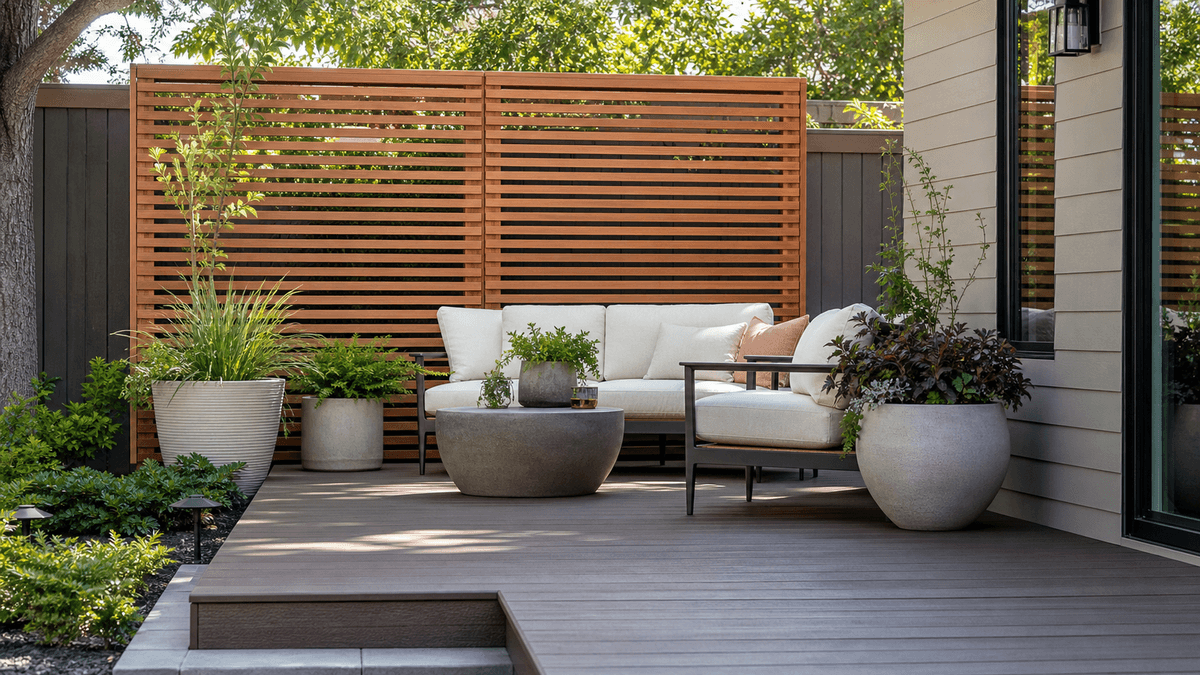
Garden screens ideas can drift quickly into decoration, but the best screens usually begin with a specific outdoor problem. A neighbor's window faces the dining table. Afternoon sun makes one corner too bright. A deck feels exposed from the driveway. Wind keeps blowing cushions across the seating area. Once the problem is clear, the screen becomes part of the layout instead of an afterthought.
Composite decking makes that planning more important because the deck surface often becomes the cleanest, most permanent-looking part of the yard. If the screen feels temporary, too tall, or unrelated to the boards underfoot, the whole space can look patched together. Use the Composite Deck Pro, decking and flooring options, composite deck board guide, composite decking color guide, and composite wall cladding article as design context when choosing screen color, spacing, and material direction.
Privacy Does Not Always Require a Full Wall
A common mistake is assuming privacy means blocking every view. Full-height screening can help in narrow side yards or close urban gardens, but many decks only need partial screening at eye level. A waist-high planter, a slatted corner screen, or a short vertical panel behind a sofa can interrupt sightlines without making the deck feel boxed in.
Think about where people sit and stand. A screen that hides a seated dining area may not need to be as tall as one that protects a hot tub or a second-story balcony. Slat spacing also changes the mood. Tight spacing gives stronger privacy. Wider spacing keeps air, light, and garden depth moving through the space.
- Use full-height screens for close sightlines, hot tubs, and narrow yards.
- Use partial screens behind seating where the goal is comfort rather than complete enclosure.
- Choose vertical slats to make low spaces feel taller.
- Choose horizontal lines when you want a calmer, wider backdrop.
- Leave room for planters, lighting, and cleaning access at the base.
Match the Screen to the Deck's Visual Weight
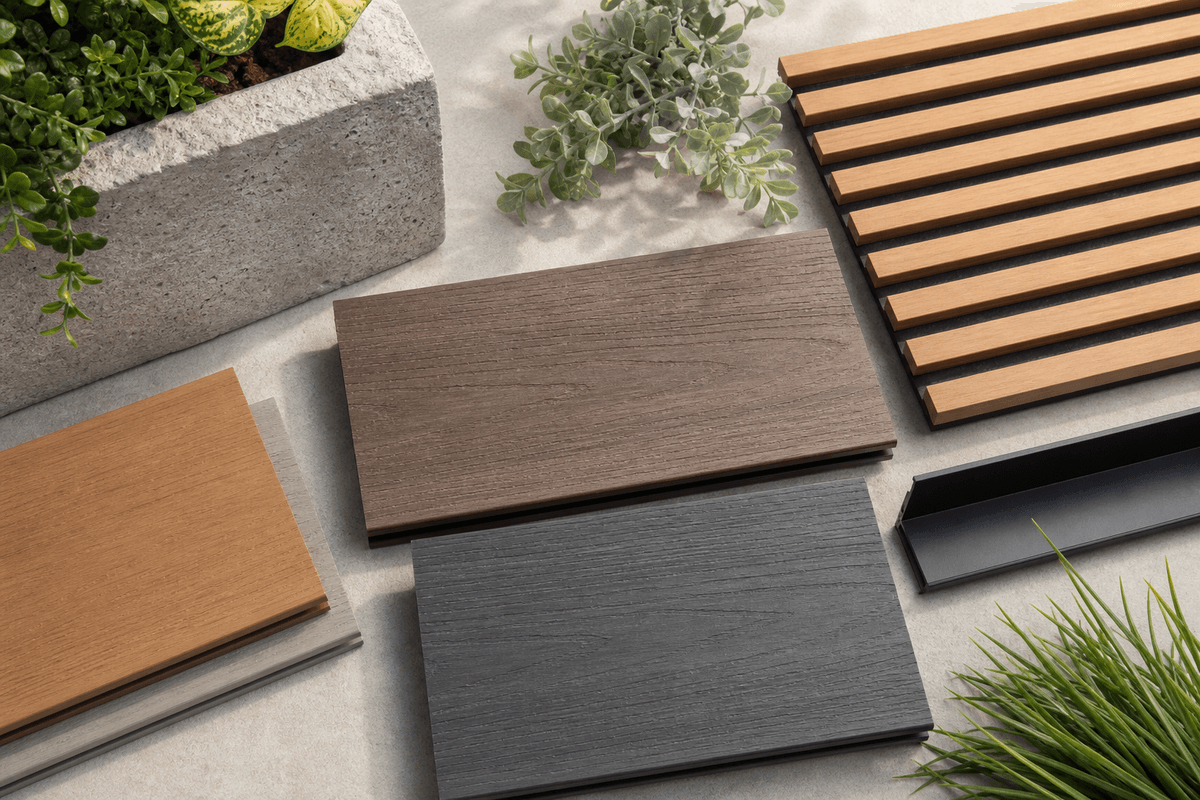
A light gray deck, black railing, and pale house siding can support a crisp charcoal or warm gray screen. A brown composite deck with natural planting may look better with warmer wood-look panels. The screen does not have to match the decking board exactly. In fact, a small contrast often feels more intentional than using one color everywhere.
Sample viewing matters because a screen is vertical and highly visible. A board that looks subtle underfoot can appear much darker or stronger as a wall. Before choosing a large run of screening, compare samples in morning light, shade, and late afternoon sun. The composite decking color guide can help organize that decision so the deck, screen, fence, and wall accents stay in the same visual family.
Screens Can Add Shade and Wind Control
Privacy is only one reason to use a garden screen. A slatted screen can soften sun, reduce glare, and make a seating corner feel cooler without fully roofing the deck. In breezy areas, a screen can also slow wind enough to make dining or reading outside more comfortable. The key is moderation. A totally solid screen can create turbulence or trap heat, while a spaced screen filters conditions more gently.
If the screen is attached near a deck edge, plan structure carefully. Posts need stable support, and any attachment should respect the deck framing and product instructions. A decorative panel that wobbles after the first storm does not feel decorative for long. Use the composite decking layout article and low-maintenance decking overview articles to keep the screen decision connected to practical outdoor construction.
Planting Makes Hard Screens Feel Softer
The most successful garden screens often combine hard material with planting. Climbing plants, raised planters, ornamental grasses, and small trees can soften the screen and make the deck feel more connected to the yard. This is especially useful when the screen uses composite, metal, or dark cladding panels that would otherwise feel too architectural for a small garden.
Keep maintenance realistic. Vines may need trimming. Planters need drainage. Soil should not stay packed against composite boards or wall panels. A low-maintenance deck surface still benefits from clean edges and airflow, especially around damp planting zones.
A Finished Deck Usually Has Edges
A deck without edges can feel exposed even when the materials are attractive. Garden screens give those edges purpose. They define the view, frame furniture, hide utilities, and help outdoor rooms feel settled. Start with the comfort problem, choose the lightest screen that solves it, then coordinate color and texture with the deck. For help matching screen ideas to decking, flooring, or wall cladding, contact Composite Deck Pro with photos of the space.