
Panels Should Solve a Design Problem
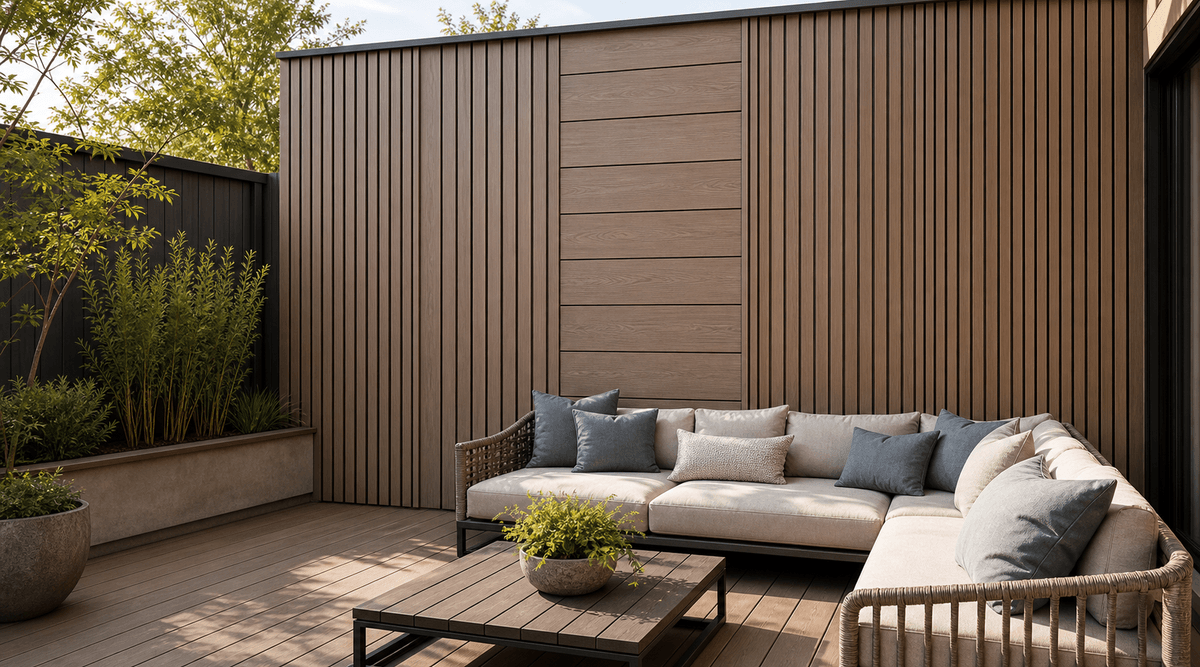
WPC panel wall design is most successful when the panels have a clear job. They might warm up a blank patio wall, create a privacy backdrop, frame an entry, soften a garden structure, or add texture to a covered outdoor room. Without a purpose, panels can become decoration that fights the rest of the space.
The safest starting point is to connect the wall to the floor and outdoor layout. Review the composite wall cladding article, exterior WPC cladding guide, decking and flooring options, composite decking color guide, and Composite Deck Pro before choosing a panel direction or color. A wall panel should support the outdoor room, not shout over it.
Choose the Wall That Needs Texture
Not every wall needs panels. A seating backdrop, outdoor kitchen wall, balcony side wall, or garden privacy screen may benefit from texture. A wall already filled with windows, doors, lights, and furniture may not. The best panel wall is often one strong surface rather than several weaker ones.
Before installing, stand where the wall will be viewed most often. That might be from the sofa, kitchen door, dining table, or garden path. Design for that view first. Product samples on a table do not reveal how a full wall will feel at human scale.
- Use vertical panels to add height or a modern rhythm.
- Use horizontal panels to make a wall feel wider and calmer.
- Use slatted panels where partial privacy and shadow matter.
- Keep panel color connected to decking, trim, or furniture.
- Plan edges, corners, outlets, and lights before ordering.
Outdoor Panels Need Weather-Aware Details
If WPC panels are used outdoors, drainage and ventilation matter. A panel wall near a deck, planter, grill, or pool area can collect splash, heat, dust, and leaves. The assembly should not trap moisture behind the panels or create unreachable dirt pockets.
Use the waterproof composite decking guide and composite decking cleaning routine as reminders that outdoor surfaces need system thinking. Material resistance helps, but placement, gaps, fasteners, and cleaning access decide how the wall behaves over time.
Interior Walls Need Restraint Too
WPC wall panels are also used indoors for feature walls, hallways, reception areas, and utility spaces. Inside, the concerns shift toward impact, acoustic feel, fire requirements, cleaning, and how the panel color works with flooring. A dramatic wall can be effective, but it should not make the room feel narrow or visually noisy.
Coordinate panel texture with the floor. If the floor has strong grain, a quieter wall may work better. If the floor is plain, a textured wall can add depth. The same restraint that helps deck-and-cladding combinations outdoors also helps interior panel design.
Lighting Can Make or Break the Wall
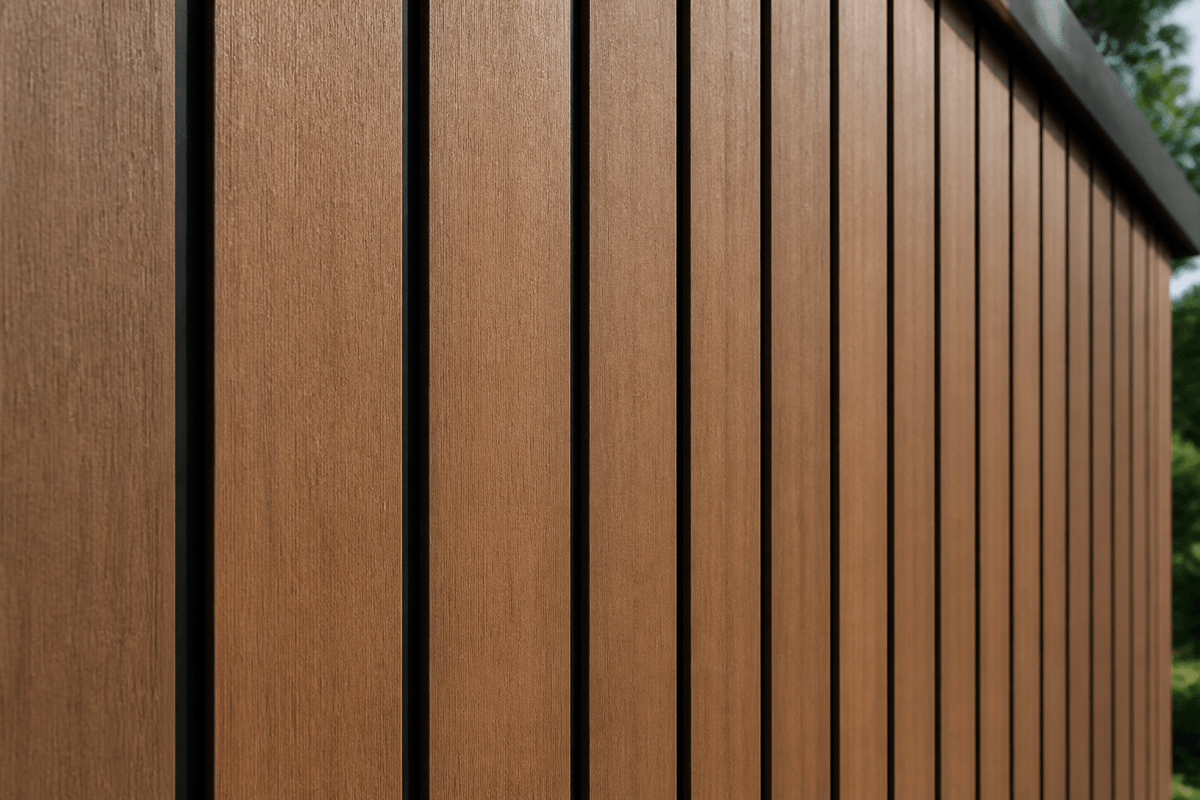
Panel walls change dramatically under light. Grazing light can emphasize grooves and texture. Overhead light can flatten the surface. Warm wall washers can make brown panels feel richer; cool light can push gray panels sharper. Test samples under the actual lighting if possible.
If the wall includes sconces, strip lighting, or outdoor fixtures, plan wiring and mounting points early. Cutting around lights after the layout is set can make the panel rhythm look accidental. Clean alignment gives the design confidence.
Edges Are Where Design Becomes Real
The panel field may be simple, but edges need decisions. How does the panel stop at the floor? What happens at corners? Are there trims, shadow gaps, or returns? Does the wall meet decking, cladding, tile, or painted drywall? These transitions decide whether the project looks built-in or pasted on.
For outdoor panel walls, check lower clearances and avoid soil contact. For indoor walls, check baseboards, outlets, switches, and door casing. If the design connects with composite decking or exterior cladding, contact Composite Deck Pro to keep the material palette from becoming too busy.
Good WPC Panel Design Feels Intentional
WPC panel wall design works when the wall has a role, the color supports the room, and the installation details are planned before the first cut. Choose one surface that deserves texture, test light and color, protect the edges, and keep cleaning access in mind. The result can feel polished without becoming fussy.