
PVC Is Often Considered for a Reason
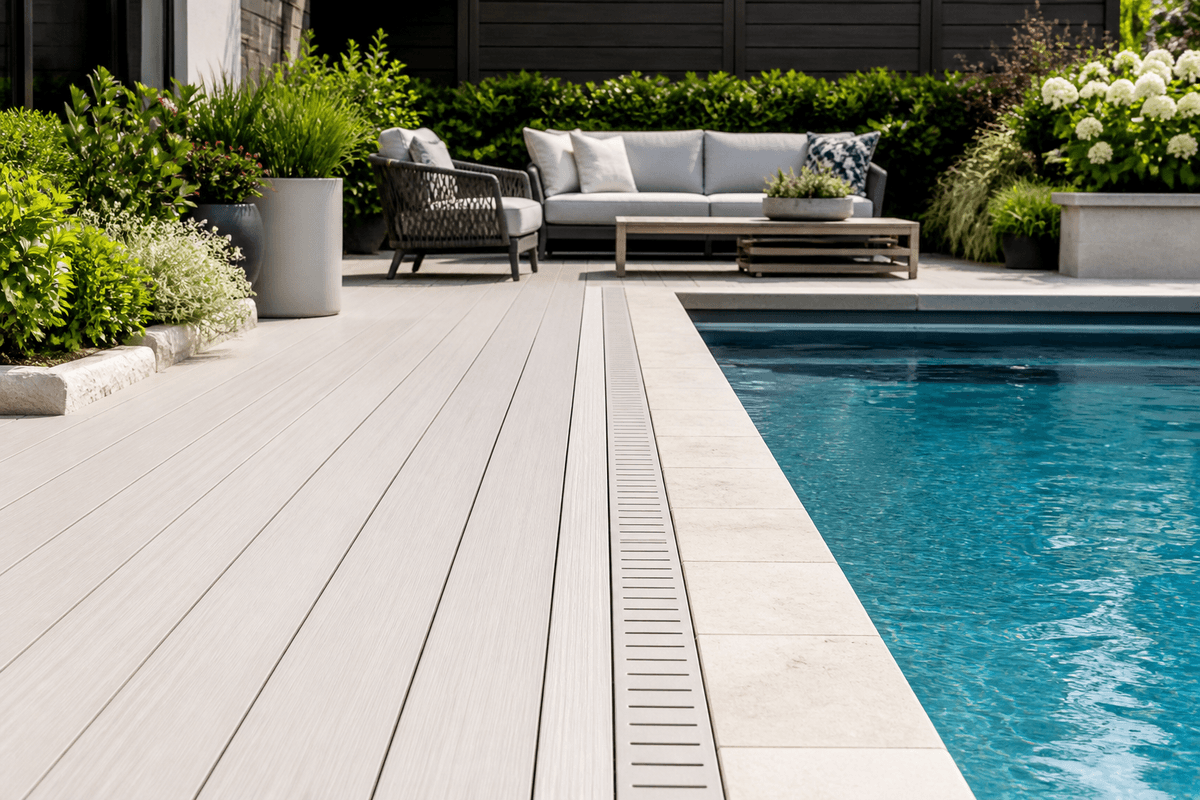
PVC decking material comes up often when buyers are worried about moisture, pool areas, coastal exposure, or very low-maintenance outdoor surfaces. Unlike wood-plastic composite boards, PVC boards are typically made without wood fiber in the core. That difference can matter in wet-use conversations, but it does not make PVC automatically better for every deck.
A useful comparison looks at the whole project: surface comfort, heat, traction, fastening, stiffness, appearance, edge details, and cleaning. The waterproof composite decking guide, slip-resistant composite decking guide, composite deck board guide, wood plastic composite decking guide, and decking and flooring options articles help frame PVC as one option inside a broader decking decision.
Wet Areas Need More Than a Water-Resistant Board
PVC decking can be attractive around pools, docks, and damp spaces because buyers want a board that handles water exposure confidently. But a wet area still needs slope, airflow, drainage, slip-aware texture, and clean gaps. A board can be moisture resistant while the deck system still traps debris or drains poorly.
The best wet-use deck details are boring in the best way. Water moves off the surface. Gaps stay clear. Furniture does not trap puddles. Planters do not sit directly in wet soil against the edge. Cleaning is easy enough that the owner actually does it.
- Check surface traction for poolside and rainy traffic.
- Plan drainage and airflow below the finished boards.
- Compare heat comfort in full sun before choosing dark colors.
- Confirm fastener and trim compatibility with the board system.
- Keep cleaning access clear near planters, furniture, and walls.
Heat and Feel Deserve a Sample Test
PVC surfaces can vary widely in texture, color, and heat comfort. Some boards feel light and easy to handle. Others feel more substantial. Dark colors may look sharp but can become uncomfortable in strong sun. Lighter colors may feel easier around pools but may not match every house style.
Always test samples outside. Place them in direct sun, shade, and the area where bare feet will walk. If the deck will be used by children, pets, or pool guests, comfort should be part of the material decision. A board that looks good but discourages people from using the deck has missed the point.
Furniture should be part of the test as well. Chair legs, loungers, grill carts, and storage boxes can scuff or mark any outdoor surface. Look for a texture and color that handle daily movement without making every small mark obvious.
PVC and WPC Solve Different Problems
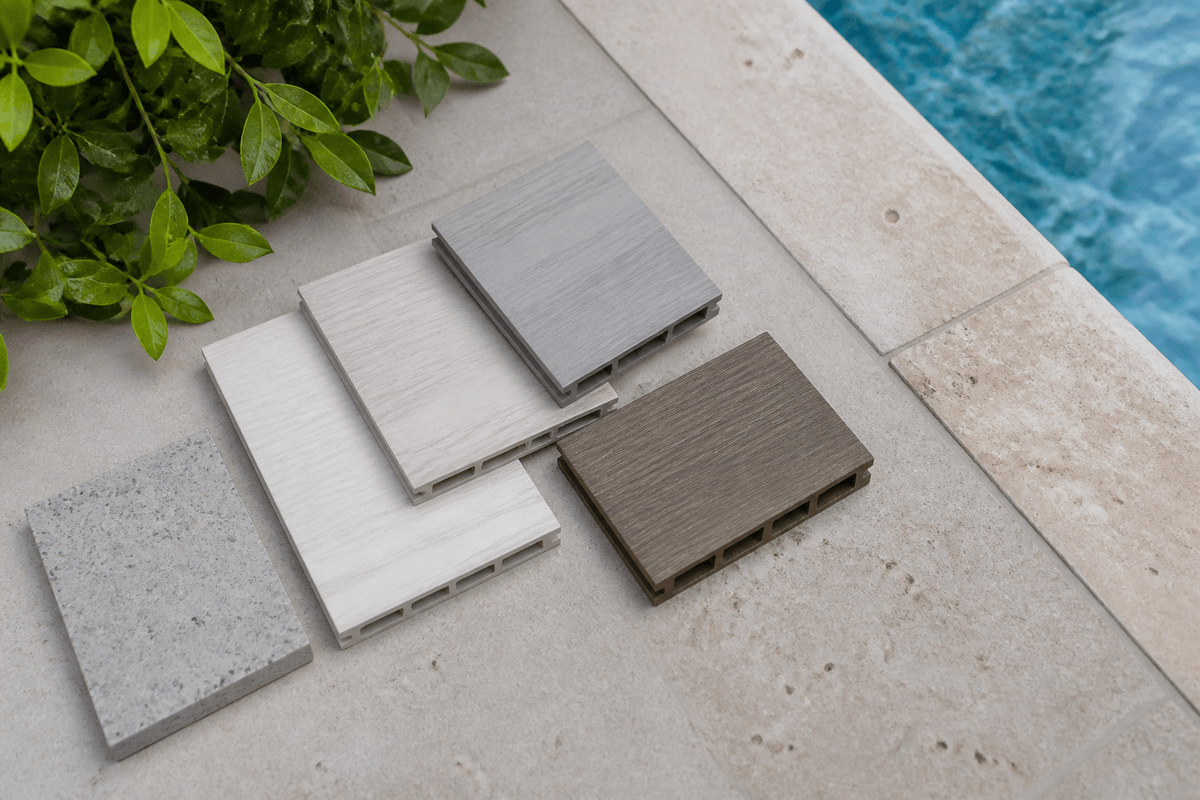
PVC and WPC are often grouped under "composite decking," but they do not have the same composition. WPC blends wood fiber and plastic. PVC is a plastic-based decking category. WPC may appeal to buyers who want a warmer wood-like feel. PVC may appeal where moisture concerns are high and wood fiber content is less desirable.
Neither category should be judged only by the name. Board quality, cap technology, surface texture, fastener system, and installation details can matter more than the broad material label. A well-planned WPC deck may outperform a poorly detailed PVC deck in daily use, and the reverse can also be true.
Appearance Is More Realistic Than It Used to Be
Older plastic decking products sometimes looked obviously synthetic. Modern PVC decking material can offer more refined colors, grain patterns, and matte finishes, but buyers should still judge samples carefully. Some surfaces look convincing in shade but too reflective in strong sun. Some embossed textures look good up close but busy across a large deck.
Use the composite decking color guide, composite decking versus wood comparison, composite decking cleaning routine, and contact Composite Deck Pro when comparing PVC with composite wood or WPC options. The right board should suit the house and the maintenance routine, not just the product category.
Edges are another place where appearance becomes real. Ask how stair nosing, fascia, picture frames, and exposed ends are finished. A board that looks convincing in the field can still feel unfinished if the transitions are awkward.
Choose PVC When the Use Case Supports It
PVC decking material deserves serious consideration for wet-use and low-maintenance projects, but it should still be chosen through the same practical lens as any deck board. Check heat, texture, fastening, drainage, trim, and long-term cleaning. When the material fits the site and the details are planned well, PVC can be a strong option. When the label does all the work, the deck is still underdesigned.