
WPC Is a Decking System, Not Just a Label
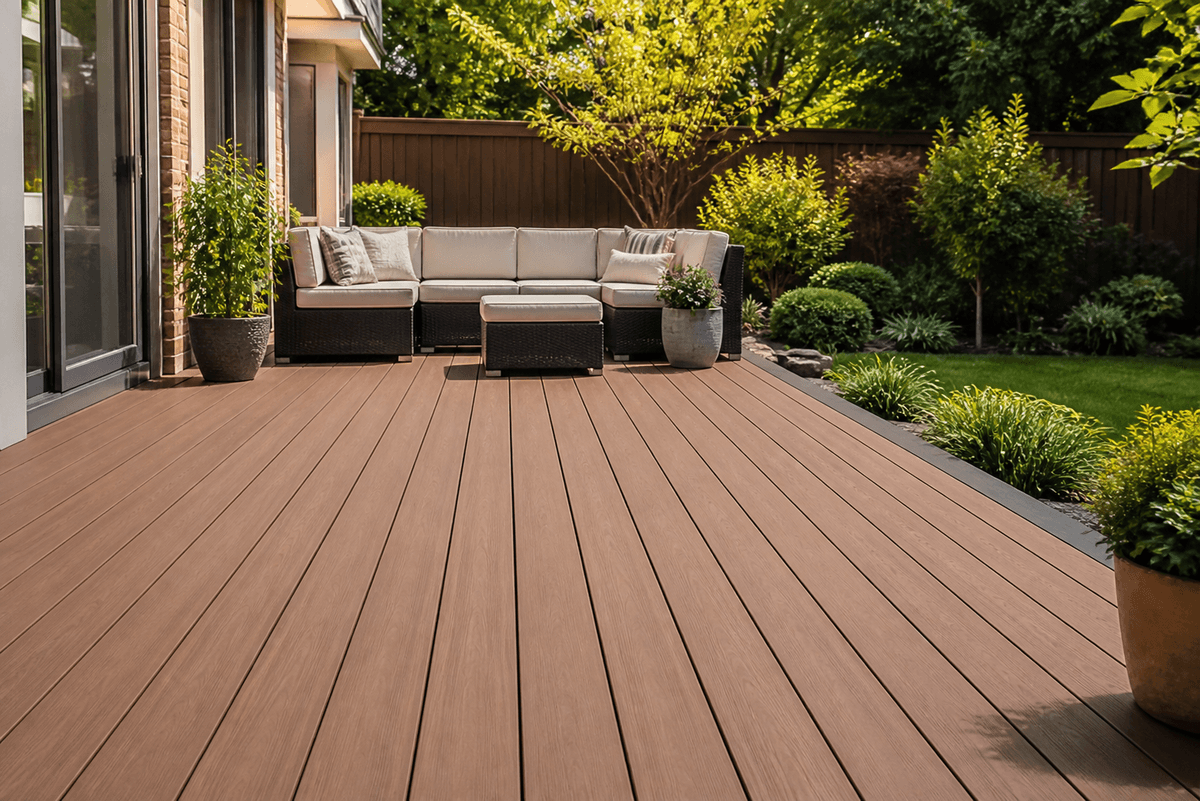
Decking in WPC usually means boards made from wood fiber or wood flour blended with plastic polymers and additives. The phrase can sound technical, but the buyer question is simple: will this material create the kind of outdoor floor the deck needs? A WPC board is not bought only for the material recipe. It is bought for how the board feels underfoot, drains, fastens, cleans, and looks after weather exposure.
For homeowners comparing composite options, WPC is often the middle path between natural timber and fully synthetic boards. It can offer a wood-like look with a lower finishing routine than lumber, while still needing correct installation and realistic care. The wood plastic composite decking guide, composite deck board guide, composite decking versus wood comparison, decking and flooring options, and low-maintenance decking overview resources are useful starting points before narrowing a board profile.
Where WPC Decking Often Fits
WPC decking can suit patios, garden decks, balconies, outdoor seating areas, and low-maintenance backyard upgrades where a warmer material look is preferred. It is especially useful when the owner wants to avoid regular staining or painting but still wants boards that feel visually close to wood. The best results come when the deck has enough airflow, drainage, and practical cleaning access.
It is less useful when buyers expect the material to solve every design problem by itself. WPC boards still need joists, clips, gaps, edge trims, and compatible details. A good material can look mediocre if board direction, stairs, and borders are improvised at the end.
- Use WPC where a wood-look surface and reduced refinishing are priorities.
- Check board profile before planning stairs, borders, or exposed edges.
- Keep airflow and drainage in the substructure design.
- Choose surface texture based on wet traffic, shade, and cleaning habits.
- View color samples outside before choosing a large deck surface.
Moisture Details Still Matter
WPC decking is often chosen because buyers want better moisture resistance than ordinary wood, but moisture management is still a system detail. Water should move away from the deck, not sit in clogged gaps or beneath low-clearance boards. Shaded decks need regular sweeping. Planters should not trap wet soil against edges. Sprinklers should not soak the same boards every morning.
This is where the waterproof composite decking guide, composite decking cleaning routine, and slip-resistant composite decking guide guides help keep expectations grounded. WPC may reduce some wood-related maintenance, but it still lives outdoors. A deck that dries quickly and can be cleaned easily will usually look better than one that traps debris in corners.
The Board Profile Changes the Deck
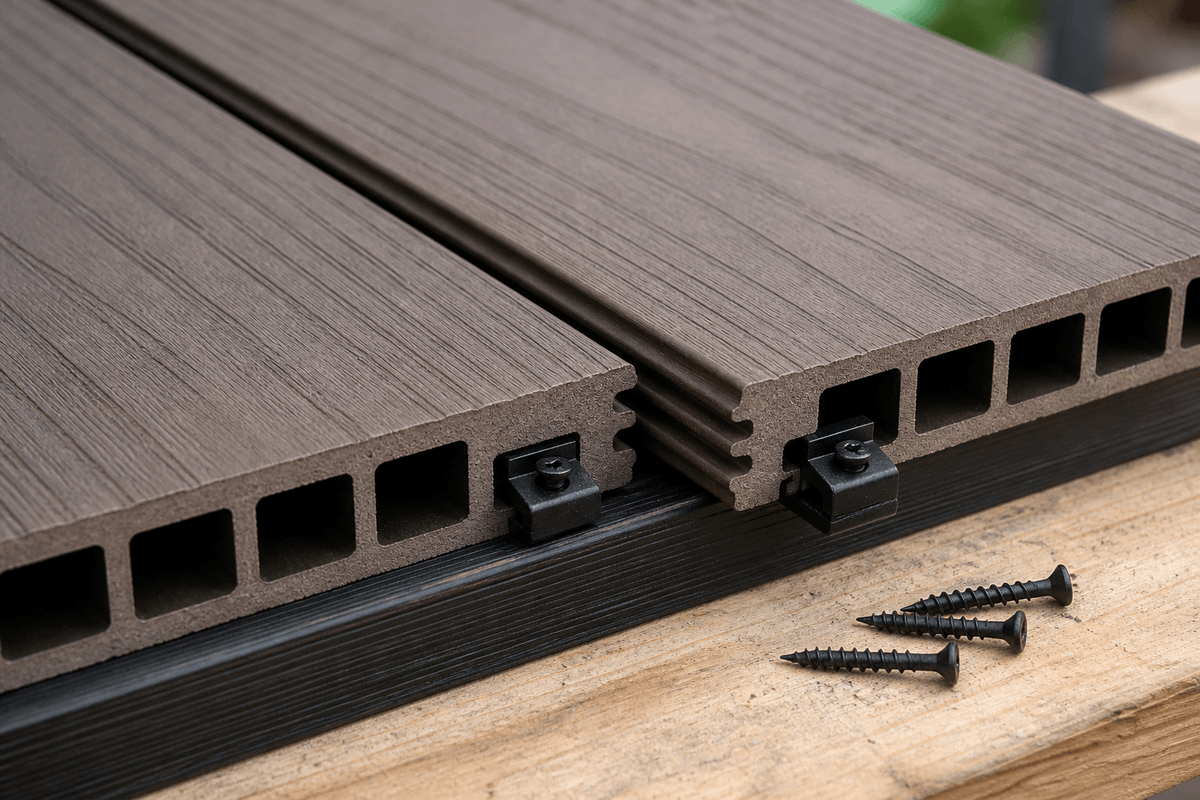
WPC boards may be hollow, scalloped, or solid. They may have grooved edges for hidden clips or square edges for face fastening and borders. Those differences affect installation, cost, feel, and edge finishing. A hollow board can be practical in the main field but may require careful trim planning. A solid board may feel more substantial but can cost more and add weight.
Do not choose a board profile only by looking at the top surface. Ask how the board handles stairs, fascia, picture framing, and end cuts. If the deck will be visible from the yard or house, edge details are not minor; they are part of the finished design.
Color Should Match the Yard's Temperature
The color of WPC decking affects more than style. Dark boards can create a modern backdrop but may feel hotter and show dust more clearly. Light boards can keep a small deck airy but may reveal soil near planting beds. Mid-tone browns and grays often hide ordinary outdoor life better. The right choice depends on sun, shade, house color, railing, fencing, and planting.
Use the composite decking color guide, composite decking layout article, composite wall cladding article, and contact Composite Deck Pro when coordinating a deck with wall accents, screens, or outdoor furniture. WPC should make the outdoor room feel easier to use, not force every other material to compete with it.
Choose WPC for the Whole Outdoor Floor
Decking in WPC makes the most sense when the board's look, profile, fastening method, drainage plan, and maintenance routine all support the same goal. Think beyond the label. Compare how the boards install, how the surface feels in real weather, and how the finished edges will look from the yard. A good WPC deck is not just a material choice; it is a complete outdoor floor decision.