
Start With the Moment You Want Outside
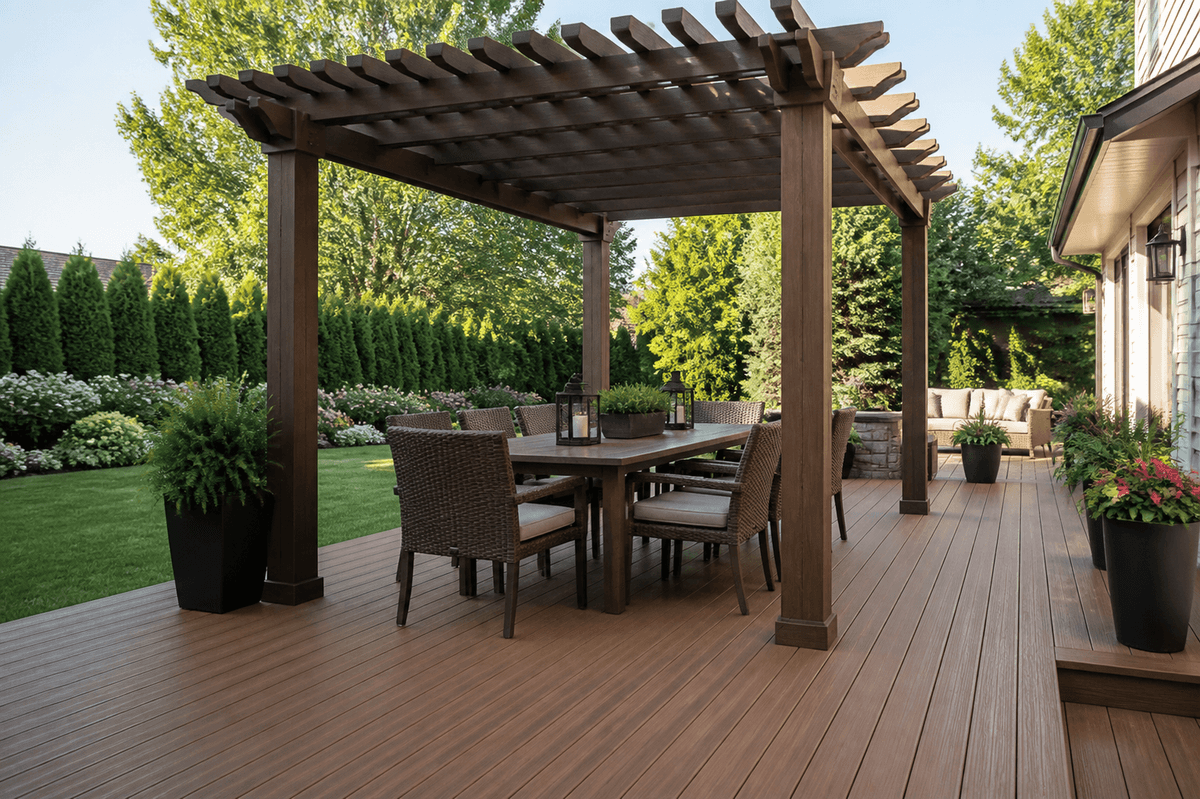
A deck pergola works best when it is designed around a real outdoor habit. Maybe the goal is a shaded breakfast corner, a more comfortable grill zone, or a dining table that no longer feels exposed in the middle of the yard. A pergola should not be treated as a decorative frame dropped onto a finished deck. It should explain how the deck is meant to be used.
That matters even more with composite decking because the deck surface often looks clean, flat, and intentional. If the pergola posts interrupt furniture, block stairs, or fight the board layout, the whole space can feel awkward. Use the Composite Deck Pro, decking and flooring options, composite deck board guide, composite decking color guide, and composite decking layout article as context before deciding where the structure belongs.
Shade Direction Comes Before Style
Pergola style is tempting to choose first, but shade direction should lead the conversation. A pergola that looks perfect in a product photo may cast shade in the wrong place if the deck faces west, sits beside a tall wall, or already has a covered porch nearby. Watch the deck in morning, afternoon, and early evening before deciding on post locations.
The best placement often covers the most-used sitting or dining area while leaving part of the deck open. A fully covered feeling is not always better. Some homeowners want shade over the table, sun near planters, and an open path to the lawn. That mix makes the deck feel flexible instead of boxed in.
- Place the pergola over the activity that needs shade most.
- Keep stairs, doors, and main walking paths free of posts.
- Check whether rafters will cast useful shade or only decorative lines.
- Leave open deck space for sun, planters, and movable seating.
- Coordinate pergola color with deck boards, railing, fencing, and trim.
Posts Need a Layout, Not Just Corners
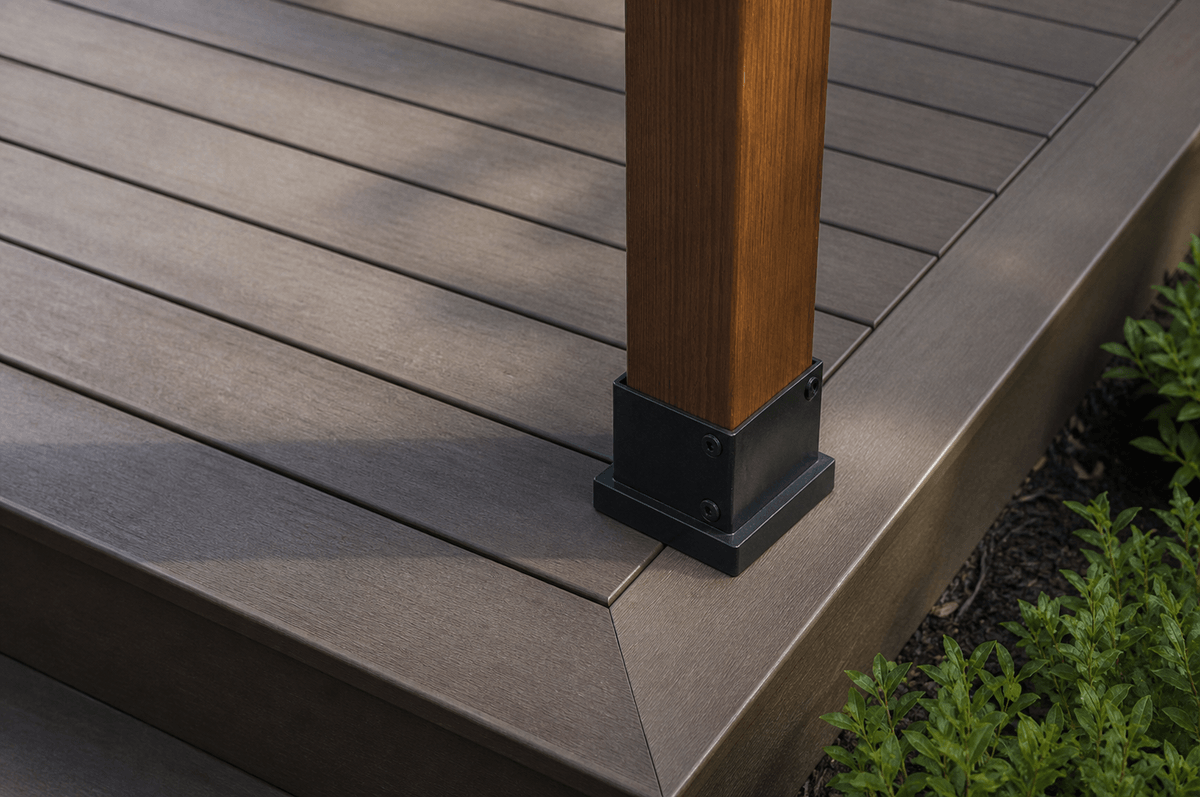
Pergola posts are visual and structural, so they deserve more planning than a quick corner placement. Posts may need to align with deck framing, avoid hidden utilities, and preserve comfortable walking space. They also affect how the deck looks from inside the house. A post that lands in the middle of a window view can feel heavier than expected.
If the deck uses picture framing, breaker boards, or a border layout, post bases should be coordinated with those details. A pergola can make a composite deck look more architectural, but only when the post locations and surface pattern seem to belong together. The composite decking layout article guide is a useful reminder that finished details are usually decided before boards go down.
Furniture Should Fit Before the Pergola Is Built
A pergola can make a dining area feel wonderful, but the table still needs chair clearance. A sofa still needs side-table space. A grill zone still needs room for safe movement and prep. Tape the furniture footprint on the deck before finalizing the pergola size. This simple step prevents a structure that looks generous on paper but feels tight in daily use.
Think vertically too. Hanging lights, fans, heaters, and climbing plants can all make the pergola more useful, but each one changes the ceiling feel. Keep the design clean enough that the deck remains easy to sweep, rinse, and rearrange. Low-maintenance outdoor living comes partly from choosing good materials and partly from avoiding cluttered details.
Color Can Make the Structure Feel Lighter
Dark pergolas can look sharp against pale siding and gray composite boards, but they may feel visually heavy over a small deck. Warm wood-look tones can soften a garden setting, while white or light neutral structures can connect to trim and railings. The pergola does not need to match the deck exactly. It needs to make the deck, house, and yard feel like one plan.
Use the composite decking color guide, low-maintenance decking overview, composite decking cleaning routine, composite wall cladding article, and contact Composite Deck Pro when comparing samples. A pergola is vertical and overhead, so color reads differently than a board underfoot. Check samples from the yard and from inside the house before committing.
A Pergola Should Make the Deck Easier to Use
The right deck pergola is not just a pretty structure. It improves shade, defines a destination, organizes furniture, and makes the deck feel more complete. Start with the outdoor moment you want, then plan shade, posts, furniture, color, and maintenance around that use. When the structure supports daily life, the deck feels finished without feeling overbuilt.