
The Board Carries the Whole Experience
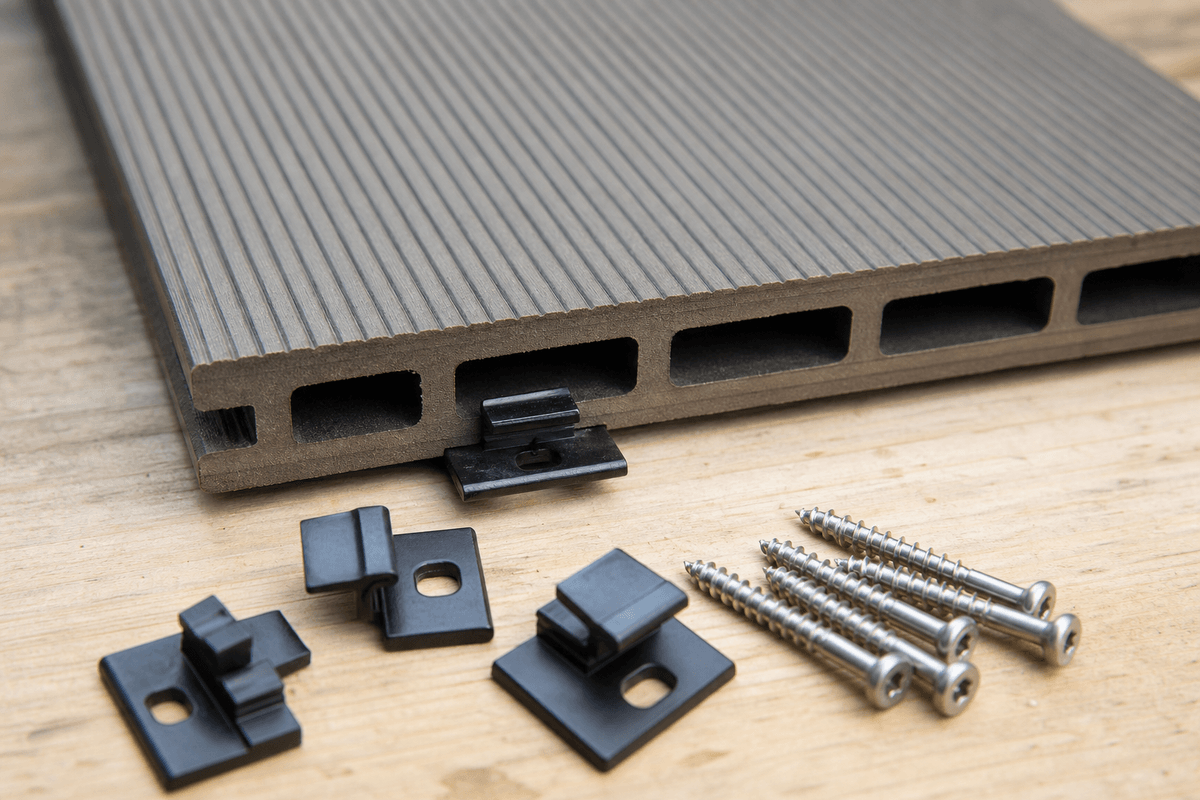
Composite deck boards are easy to compare by color first, but the board underfoot does much more than set the look. It affects grip, heat comfort, drainage, fastening, edge details, cleaning, and how the deck feels after years of weather. A beautiful color can disappoint if the board profile is wrong for the layout or the surface does not suit the way the family uses the deck.
Start with use. A quiet reading deck, a poolside platform, a rental property, and a grilling area do not ask the same things from a surface. Composite decking can be a smart low-maintenance choice, but the best board is the one that fits the site, not simply the one that looks good in a sample photo.
Look Below the Color
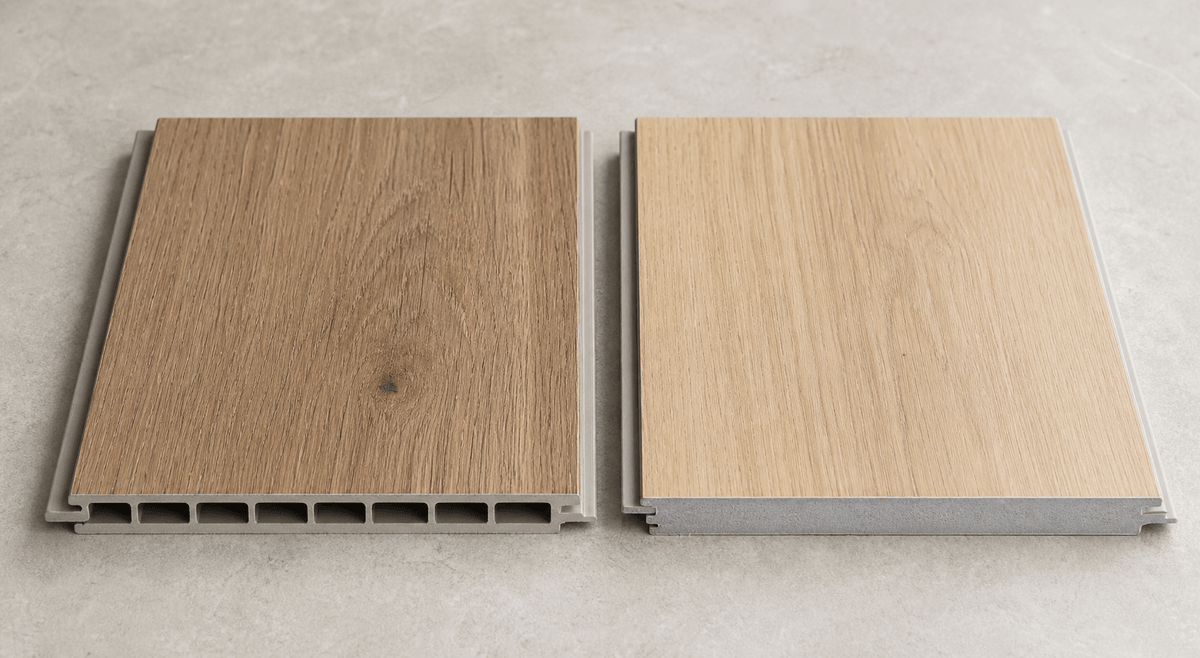
Color and grain are visible, but board construction deserves attention. Some boards are capped on multiple sides. Some have scalloped or hollow profiles. Some are solid. Some are grooved for hidden fasteners, while others are square-edge for face fastening or border details. These differences influence cost, installation, feel, and where the board makes the most sense.
Use the composite deck board guide, wood plastic composite decking guide, decking and flooring options, composite decking layout article, and composite decking versus wood comparison to compare boards as part of a complete deck system. If the plan includes stairs, picture framing, fascia, or diagonal layouts, board profile and fastening options should be reviewed before the final color is chosen.
- Check whether the board is solid, scalloped, or hollow.
- Confirm whether edges are grooved, square, or available in both styles.
- Compare cap coverage and surface texture before judging durability.
- Ask how board width affects layout, waste, and border design.
- Review expansion gaps and fastening instructions before installation day.
Texture Should Match Traffic
A deck surface needs enough texture to feel secure, especially around pools, stairs, and shaded areas. At the same time, very aggressive embossing can hold dirt, pollen, and grill residue. The right texture depends on the traffic pattern. Barefoot pool users, pets, outdoor dining, and frequent furniture movement all change the surface priorities.
The slip-resistant composite decking guide and composite decking cleaning routine guides can help frame that tradeoff. Grip, cleaning, and appearance are connected. A board that looks richly grained in a showroom should also be easy enough to maintain in the actual yard.
Furniture is part of the texture test too. Dining chairs, loungers, and storage boxes are dragged, lifted, and shifted across the deck more often than owners expect. A surface that hides light scuffs and dirt in the main traffic path may stay better looking than a dramatic finish that shows every mark.
Grooved and Square-Edge Boards Do Different Jobs
Grooved boards are commonly used in the main field because they work with hidden clips and create a clean fastener-free surface. Square-edge boards are useful around borders, stair treads, fascia transitions, and places where a hidden clip cannot hold the edge cleanly. Many polished deck layouts use both, even when the color is the same.
That mix should be planned early. If the order includes only grooved boards, the installer may need to improvise at stairs or perimeter details. If the design includes picture framing, breaker boards, or flush access panels, ask how many square-edge boards are needed before materials are purchased.
Board direction also changes waste. A simple rectangular deck may use material efficiently, while a diagonal pattern or framed border can require more cuts. That extra material can be worthwhile when it makes the deck look finished, but it should be counted before the order is placed.
Color Choice Is a Maintenance Choice Too
Light, mid-tone, and dark boards each have practical tradeoffs. Lighter boards can keep small spaces feeling open and may be more comfortable in sun. Mid-tone browns and grays often hide dust better than very pale colors. Dark boards can look modern, but they may show pollen, water spots, and heat more clearly depending on the setting.
Samples should be viewed outside, not only indoors. Place them beside siding, railing, stone, soil, and furniture. Look at them after a quick rinse and after a dusty day. The composite decking color guide, low-maintenance decking overview, and contact Composite Deck Pro are good next steps if the deck needs to coordinate with cladding, fencing, or outdoor flooring.
Choose the Board After You Know the Deck
Composite deck boards should be selected after the owner understands the layout, traffic, sunlight, drainage, fastening method, and edge details. That order may feel slower than choosing a color first, but it prevents the common mistake of buying a board that looks right and installs awkwardly. A better deck starts with the board underfoot, but the right board starts with the whole outdoor plan.