
Panels Change the Space Around the Deck
Wood panel composite is usually searched by people who want a wood-look surface without building every outdoor detail from natural lumber. That may mean cladding an accent wall, finishing a privacy screen, wrapping a planter face, or coordinating a vertical surface with composite decking. The important point is that panels are not just background decoration. They shape how the deck feels from the first step outside.
A deck surface may be horizontal, but the eye often reads the vertical surfaces first. A plain wall, exposed fence, or mismatched screen can make new boards feel disconnected. A coordinated panel can make the outdoor area feel calmer and more intentional. The composite wall cladding article, deck privacy wall ideas, composite decking color guide, composite deck board guide, and decking and flooring options resources are useful when the goal is to make decking, wall surfaces, and yard boundaries work as one outdoor room.
Use Panels Where the Eye Already Stops
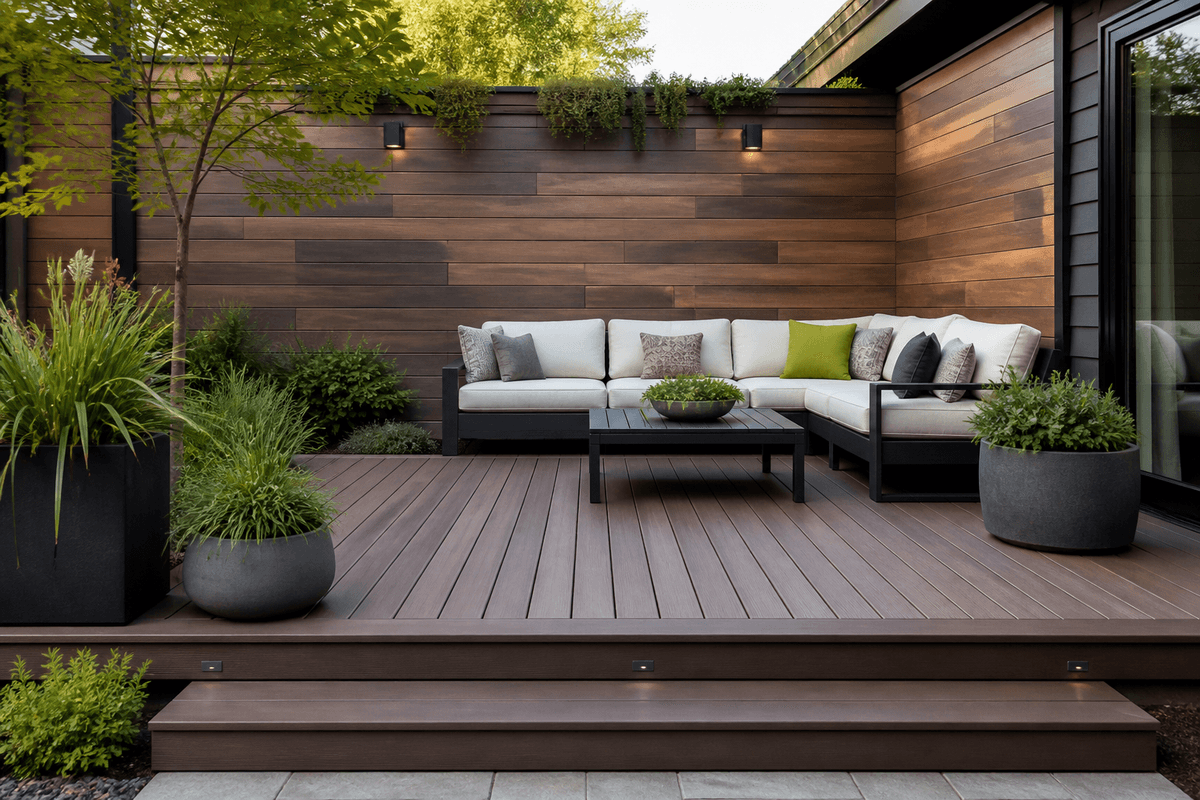
The best place for wood-look composite panels is often the place people already notice: the wall behind a dining table, the side of a raised platform, the return beside a sliding door, or the view from the kitchen window. Covering every surface is not always more attractive. A smaller, carefully placed panel area can create a focal point without making the yard feel boxed in.
Before choosing a panel color, stand in the main viewing spots and ask what needs to be softened, framed, or hidden. If the deck is surrounded by stone, siding, shrubs, and fencing, the panel should bridge those materials. It does not need to match the deck boards exactly; slight contrast often looks more natural.
- Use composite panels behind seating or dining zones to create a finished backdrop.
- Coordinate panel color with deck boards, siding, trim, and planting beds.
- Leave drainage and airflow clearance at lower edges.
- Avoid trapping leaves, soil, or irrigation spray behind panel details.
- Test panel samples vertically because upright color reads stronger than flat samples.
Outdoor Panels Need Practical Edges
A clean wood panel composite installation depends heavily on edge planning. Corners, bottom clearance, top caps, fastener lines, and transitions into siding or posts determine whether the finished surface looks professional. On a deck, the same principle applies to boards and fascia. Small trim choices can either sharpen the design or expose every compromise.
Moisture planning matters too. Composite panels may be selected for lower upkeep than painted wood, but they still live outdoors. Water should be able to drain away from the wall. Dirt should not sit in a tight bottom groove. If panels sit near a grill, planter, or hose area, cleaning access should be part of the design.
Fastener visibility is another quiet design decision. Some panel layouts look best with hidden or color-matched fastening, while others can tolerate a more straightforward mechanical pattern. Either way, the fastening plan should look deliberate. Random screw lines can make an otherwise polished outdoor wall feel unfinished, especially when the panel sits close to a new composite deck surface.
Color Can Make the Yard Feel Larger or Smaller
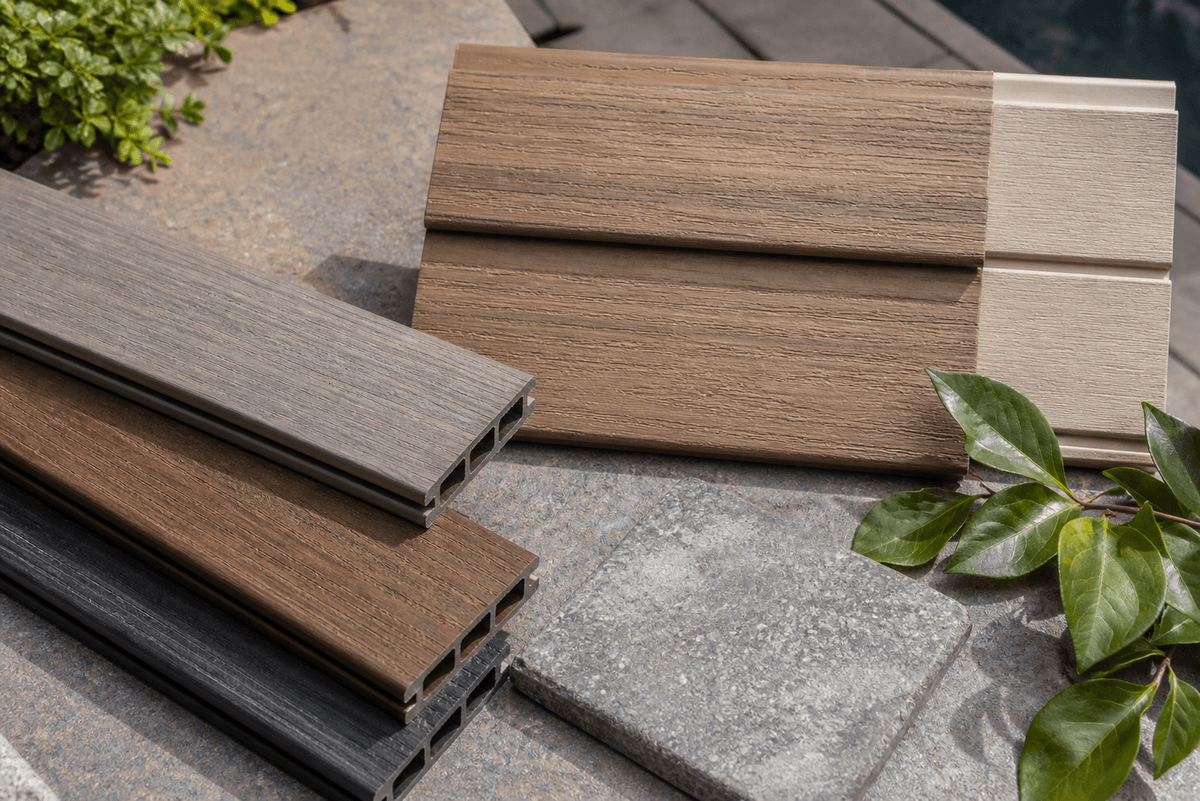
Dark panels can look modern and dramatic, especially behind green planting or light composite boards. They can also make a small space feel more enclosed. Light wood-look panels can brighten a narrow patio, but they may show soil splash near garden beds. Medium browns and warm grays often work well because they add texture without overwhelming the deck.
The composite decking color guide, composite decking cleaning routine, low-maintenance decking overview, and waterproof composite decking guide guides help keep the color choice grounded. A panel color should be tested in sun and shade, then viewed from inside the house. Outdoor surfaces are not seen only when someone is standing on the deck. They become part of the everyday view through doors and windows.
A Good Panel Detail Supports the Deck
Wood panel composite makes the most sense when it supports the deck's real purpose: outdoor living. A dining deck may need a warm backdrop. A compact urban patio may need privacy. A garden deck may need a clean edge between plants and furniture. A poolside area may need surfaces that are easier to rinse than rough wood.
Plan the panel as part of the deck package, not as a leftover design move. Decide where the eye stops, how water moves, what will need cleaning, and how colors interact. For help coordinating boards, panels, and outdoor surfaces, contact Composite Deck Pro with photos of the wall or fence area and the deck color options being considered.