
150mm vs Common Composite Board Widths
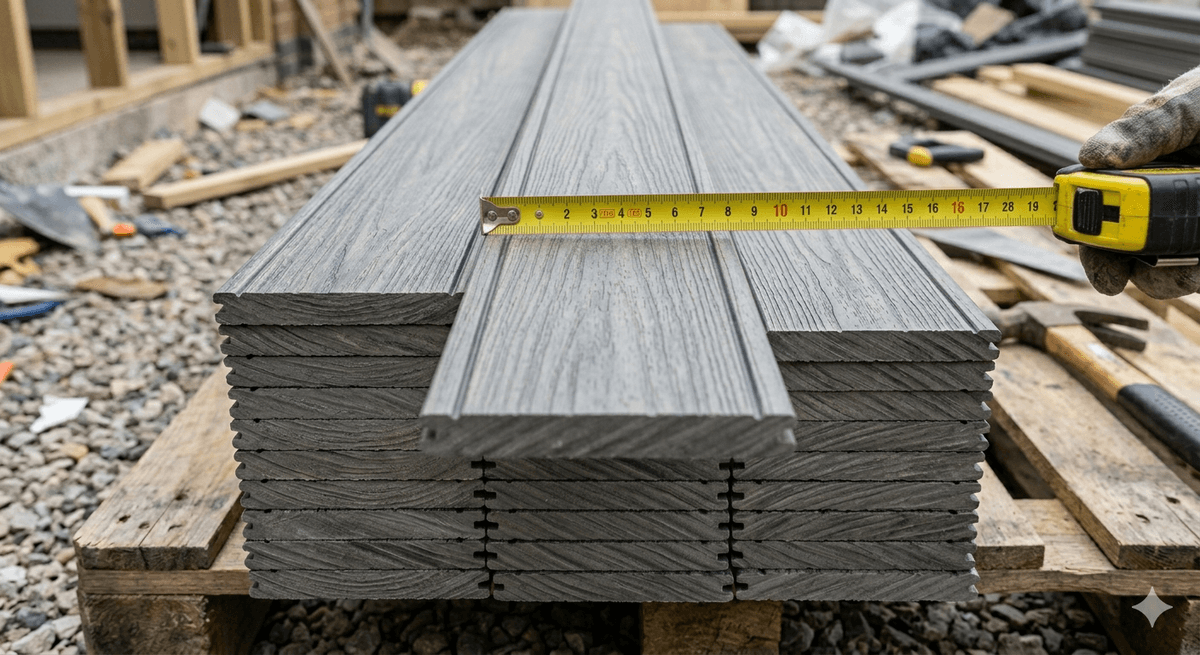
Trex publishes many of its composite deck boards at an actual width of 140 mm, which is roughly 5.5 inches. At the same time, some metric-market composite products are sold at a full 150 mm width. That means a shopper looking for 150mm wide decking boards may see both exact-width products and near-equivalent products depending on brand and market.
The practical difference is not huge visually, but it matters for coverage and quantity calculations. A board advertised as 150 mm may cover the deck differently than a 140 mm actual-width board once spacing is added. That is why actual dimensions and recommended gaps should always be confirmed before ordering.
When 150mm Wide Boards Work Well
- Medium to large deck surfaces where fewer visible seams improve the look.
- Contemporary layouts where clean board lines matter more than a traditional narrow-board rhythm.
- Projects where you want a balance between broad coverage and manageable installation handling.
- Decks with simple rectangular geometry that benefit from consistent field lines.
- Outdoor rooms that mix decking with planters, built-ins, or a picture-frame border.
150mm boards can feel especially balanced on everyday residential decks because they are substantial without becoming oversized. They usually read as deliberate rather than bulky.
What to Check Before You Buy
Width alone does not tell the whole story. You still need to look at board thickness, edge profile, stock lengths, and fastening method. A 150mm board in a grooved profile may install very differently from a square-edge board of a similar face width. That is why it helps to compare width and length together rather than treating them as separate decisions.
If you are still narrowing those choices, Composite Deck Pro's article on decking lengths, its grooved decking guide, and its installation guide are useful companion reads.
A Quick Coverage Reality Check
A simple way to think about 150mm boards is to separate advertised width from installed coverage. The label may say 150 mm, but the deck field will cover less than that per row once the recommended gap is included. On a full-width deck, that small difference adds up across dozens of rows, which is why board count estimates should always use actual dimensions and spacing rather than a rough guess.
This also helps when you are centering a layout on a doorway, stair landing, or border. A plan that looks symmetrical using nominal numbers can shift once real face width and gap allowances are applied. Spending a few extra minutes on that calculation is usually cheaper than reordering boards or accepting a narrow final rip at the perimeter.
Spacing, Drainage, and Actual Coverage
Decks.com points out that width affects board movement and spacing strategy. Wider boards require discipline in layout, and actual face width plus gap allowance determines the real coverage per row. That matters when you are estimating material, aligning border details, or trying to center a layout on a stair or doorway.
For example, 150mm is just under 5.91 inches. But your installed coverage per board will be lower once you include the recommended gap. In other words, a width label helps you compare categories, while actual field coverage is what determines the final material count.
How Composite Deck Pro Fits the Decision
Composite Deck Pro is most useful here as a planning resource. Its composite decking overview, board width content, and Floor page can help you compare how a wider board might fit your overall project style. If you are building a cleaner-lined patio deck or a low-maintenance outdoor zone, those resources make it easier to connect board width with the final look.
Conclusion
150mm wide decking boards can be an excellent choice when you want broader visual lines without jumping into an unusually large profile. The main discipline is verifying the actual width, stocked lengths, and installed coverage instead of relying on the label alone. Once you do that, it becomes much easier to judge whether 150mm is the right fit for the deck you are actually building.