
The Interlock Is Convenience, Not Magic
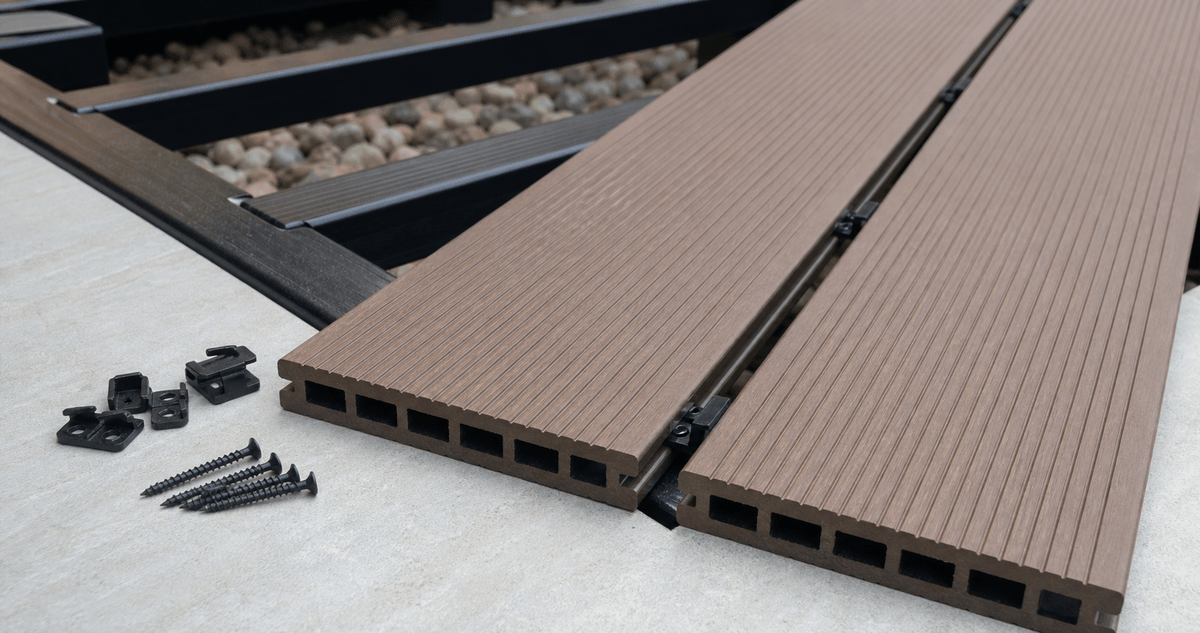
Interlocking composite deck tiles are designed to connect quickly, usually with a plastic base that snaps to adjacent pieces. That makes them attractive for balconies, rooftop corners, rental patios, and small outdoor areas where a full framed deck would be too much. The click system helps alignment, but it does not remove the need for planning.
Think of these tiles as a modular surface finish. They need a stable base, a sensible layout, and room for water to move. If your project may need full boards instead, compare the tiles with the decking and flooring options, wood plastic composite decking guide, composite deck board guide, composite decking installation guide, and waterproof composite decking guide.
Where Interlocking Tiles Make the Most Sense
This format works best where the surface already exists and the goal is comfort, appearance, and a warmer underfoot feel. A plain concrete balcony can become more inviting. A small patio can gain definition. A temporary outdoor lounge can be assembled without fastening boards into a permanent frame.
The format is less suitable when the base is uneven, drains poorly, or needs structural correction. The tiles follow the surface below them. If the substrate dips, moves, or traps water, the interlock may be stressed over time. Fix the base first or choose a more appropriate system.
- Good candidates include flat balconies, small concrete patios, and tidy rooftop zones.
- Poor candidates include soft ground, rotten wood, loose pavers, or waterproofing that cannot be covered.
- High-traffic commercial areas may need a product specifically rated for that use.
- Edges should be planned before the first tile is snapped together.
- Building or rental rules should be checked before covering a balcony surface.
Layout Is a Design Decision
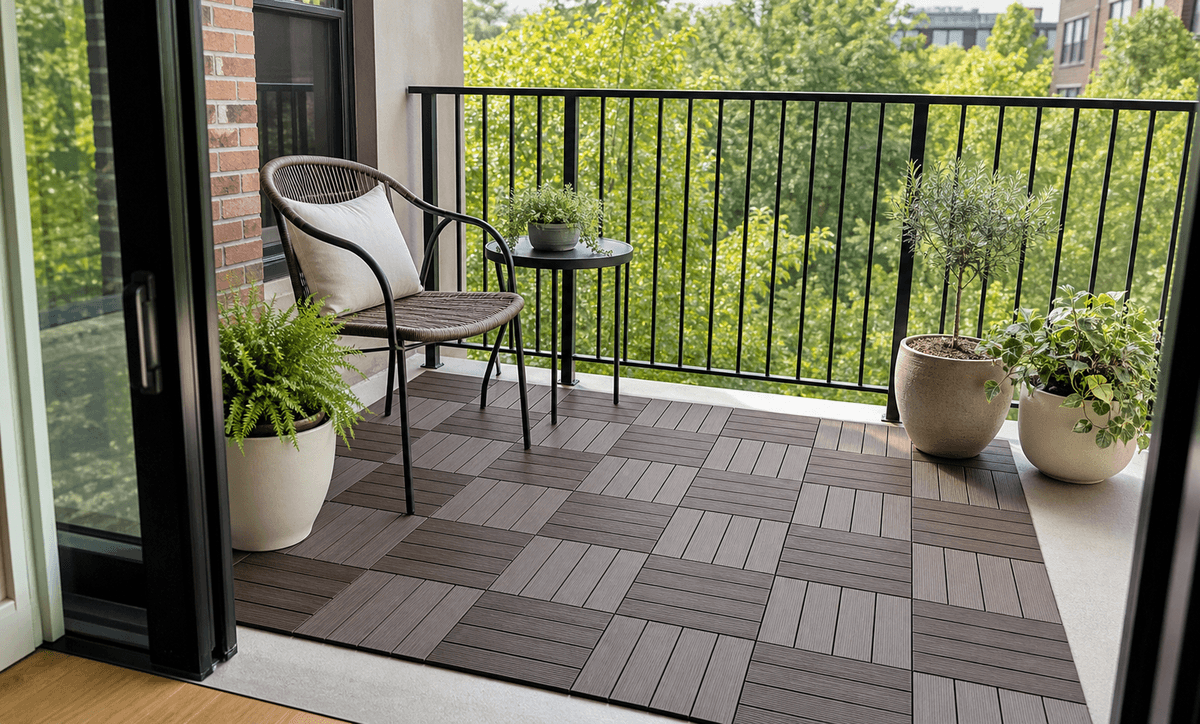
Interlocking tiles can run in one direction, alternate direction, or create a border depending on the product. Alternating direction can hide slight color variation and add texture to a small floor. A single-direction layout can make a narrow balcony feel longer and calmer. Neither is universally better; the right choice depends on the view from the door and the furniture plan.
Use full tiles in the most visible areas and push cuts toward walls or less important edges when possible. Before trimming anything, lay the tiles loose and test the pattern. Moving a few rows early is painless; discovering the mistake after cutting perimeter pieces is not.
Drainage and Thresholds Need Breathing Room
The base grid under interlocking tiles is meant to let water pass through, but water still needs somewhere to go. Keep drains open, leave small gaps at walls, and avoid creating a dam at the balcony edge. If the existing surface slopes toward a drain, confirm the tile layout does not interrupt that path.
Door thresholds are just as important. Tile thickness can create a higher walking surface, which may affect door clearance or create a toe-catching transition. Measure before ordering and plan a clean edge where people step onto the tile area.
Choose Color for a Small Visual Field
Because interlocking tiles have frequent seams, high-contrast colors or very busy grain can feel stronger than expected. On a compact balcony, a calm medium tone often feels more generous. Warm browns soften urban concrete; gray-browns coordinate with black railings and modern siding; deeper colors can look tailored but may feel warmer in direct sun.
The composite decking color guide, slip-resistant composite decking guide, and pool deck planning guide articles are useful when the tile area will be wet, sunny, or connected to outdoor entertaining. A small sample should be viewed as a group because one tile does not show the finished rhythm.
Cleaning Below the Tile Matters
From above, composite tiles can be swept and gently rinsed. Below, the grid may collect grit, leaves, and pollen. Plan to lift sections occasionally or leave an edge that allows flushing debris out. This is especially important near trees, planters, bird feeders, or dusty streets.
Follow gentle cleaning guidance from the composite deck maintenance tips. Avoid harsh scraping, aggressive pressure washing, or cleaners not intended for composite surfaces. If a tile becomes damaged, modular replacement can be easier than replacing a full deck board, but only if the product remains available. Keep a few spare tiles if the color is important.
Fast Upgrade, Still Worth Planning
Interlocking composite deck tiles are one of the fastest ways to make a hard outdoor surface feel finished. The best results come from treating that speed with respect: inspect the base, plan drainage, dry-run the layout, finish the edges, and keep cleaning access. For small spaces, that care can turn a plain slab into an outdoor room without pretending it is a full deck rebuild.