
Poolside Decking Lives a Harder Life Than an Ordinary Patio Deck
Composite decking around pool areas is judged by more than appearance. Water, bare feet, sunscreen, moving furniture, and constant traffic change the standard immediately. A board that looks excellent in a calm backyard dining area may feel far less convincing when people are walking barefoot from the water to the seating area all weekend.
That is why the best poolside comparison starts with use patterns rather than color alone. Composite Deck Pro's maintenance-friendly decking article, Composite Deck Pro floor page, deck board width guide, decking length guide, and contact page are especially useful here because they bring surface planning, maintenance, and layout into one conversation.
The Poolside Priorities Are Very Specific
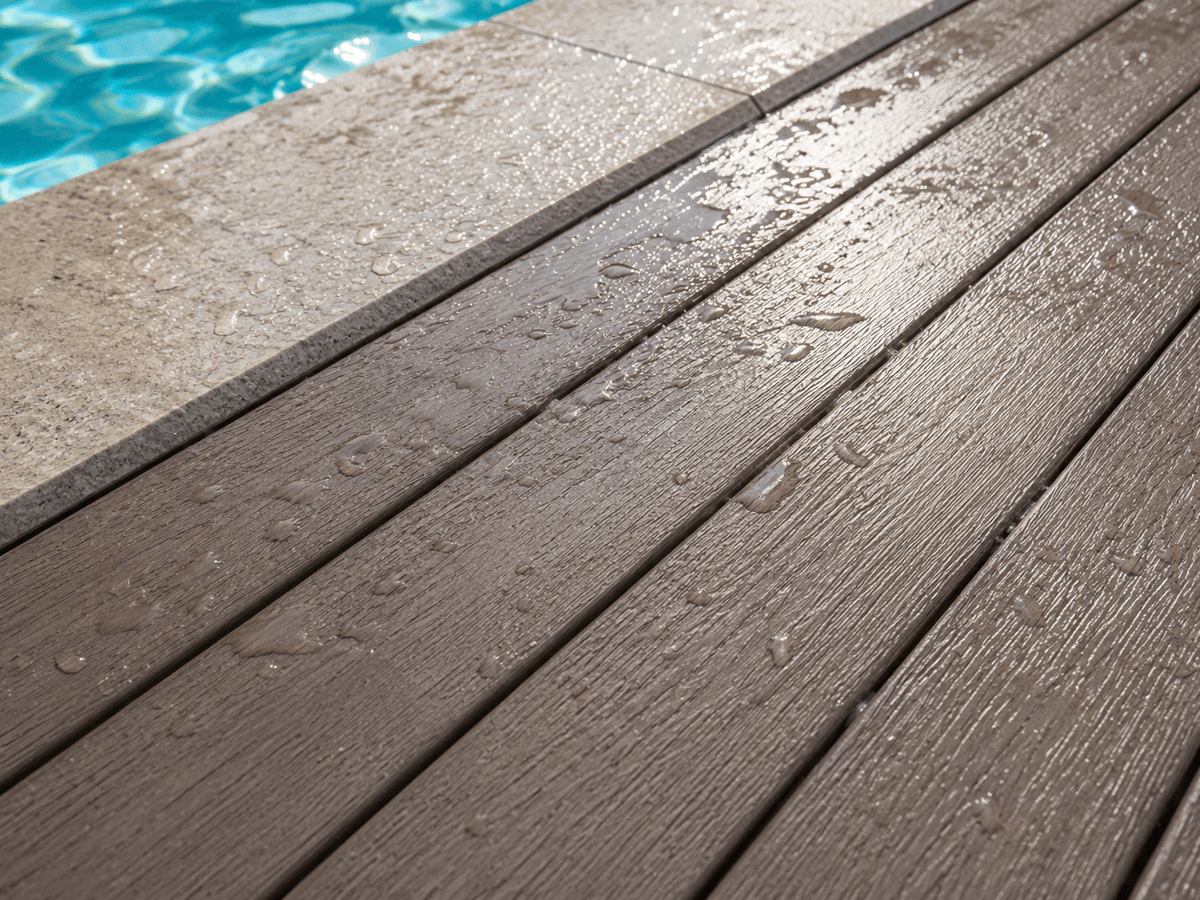
A pool deck has to feel comfortable, drain well, and remain practical when wet. Those are different demands from the ones placed on a quiet garden deck. Heat becomes more important. Slip behavior matters more. Edge details and transitions matter more because people are moving quickly, often barefoot, and not thinking about the material under them.
That is also why pool decks should never be chosen from a sample board alone. The project has to be imagined as a live wet environment, not as a dry design board.
- Compare barefoot comfort, not just appearance.
- Check surface texture with wet use in mind.
- Think about drainage paths around the pool edge and furniture zones.
- Use board colors that support comfort, not only dramatic contrast.
- Plan clean, safe transitions at steps, coping edges, and seating zones.
Why Heat and Slip Need to Be Judged Together
Poolside conversations often focus on slip first, but heat can become just as important in strong sun. A deck that is secure underfoot but uncomfortable to cross barefoot still fails part of the brief. That is why the best poolside surface is usually the one that balances both issues rather than maximizing only one.
This is where the broader resources help. maintenance-friendly decking article, wood versus composite decking article, non-wood decking alternatives article, composite board manufacturer guide, and Composite Deck Pro homepage all support a more realistic evaluation by reminding buyers that a pool deck is a complete outdoor system, not only a color selection.
The Edge Details Decide Whether the Area Feels Premium
Many pool decks are judged visually by the board color, but they are judged physically by the edges. Steps, borders, drain zones, and transitions next to coping are where a project starts feeling either considered or improvised. Composite decking around a pool works best when those details are part of the design from the start.
That is also why pool decks benefit from disciplined seam planning. Cleaner lines, predictable drainage, and clear circulation paths reduce the sense of clutter and make the whole area feel more like a deliberate outdoor room.
The Weakest Pool Decks Usually Fail at the Margins
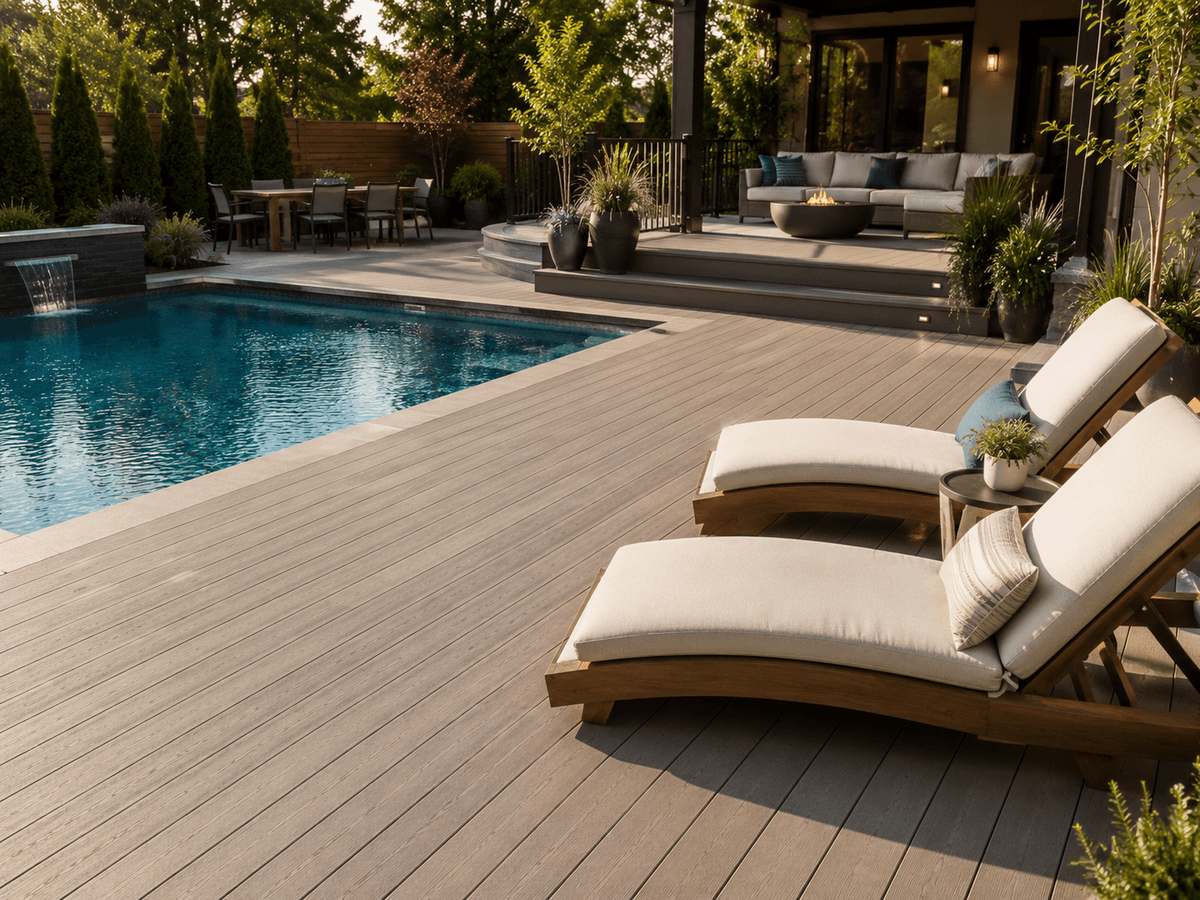
Most poolside frustration does not come from the middle of the deck. It comes from the margins where water gathers, where loungers drag across corners, where people pivot on steps, and where wet traffic changes direction between the pool and the house. Those edge conditions deserve disproportionate attention because they shape both safety and the sense of quality.
When buyers think this way early, the material comparison becomes more intelligent. They start asking better questions about board texture, drainage paths, border treatments, and how easy it will be to keep the deck clean during the busiest season. They also become less likely to choose a dramatic finish that looks impressive at first but becomes tiring when the area is wet, hot, and in constant use.
A good pool deck should feel calm under pressure. That means the surface is visually coherent, comfortable enough for real summer use, and detailed carefully enough that wet movement feels natural instead of awkward. Composite can serve that brief very well, but only when the project is judged as a demanding circulation space rather than as a normal patio with a little extra water nearby.
Conclusion
Composite decking around pool areas needs to solve more than splashing. It has to handle heat, wet use, drainage, and movement gracefully while still looking good. The strongest decisions come from treating the pool deck as a functional environment first and a decorative surface second. When that order is respected, the material choice becomes much easier to get right.