
Dry Samples Can Be Misleading
Slip resistant composite decking sounds like a straightforward feature request, but a deck is rarely judged when it is perfectly dry and newly swept. It is judged after rain, around planters, near the pool, under fallen leaves, and on mornings when shoes are wet. That is why slip performance has to be understood in context.
A strong comparison starts with realistic use. Composite Deck Pro's maintenance-friendly decking article, Composite Deck Pro floor page, deck board width guide, composite decking installation guide, and contact page all help because they keep texture, drainage, and upkeep tied to the way the deck will actually behave.
Surface Texture Helps, but It Is Not the Whole Answer

Texture is obviously important. Some boards feel more secure because of grain embossing, micro-texture, or a less glossy finish. But slip performance is never only about the board surface. Water, algae, pollen, leaf film, and poor cleaning habits can turn a reasonable surface into a risky one.
This is why the idea of a permanently slip-proof deck is not realistic. The more useful goal is a surface that remains dependable when combined with good drainage and sensible maintenance.
- Choose texture with wet use in mind, not just visual style.
- Keep drainage paths clear so water does not linger in the walking zone.
- Clean leaf film, pollen, and grime before they become a surface problem.
- Use steps and transitions that are easy to read and easy to cross safely.
- Treat slip resistance as a deck-system issue, not just a board label.
Where Slip Risk Usually Increases
Slip risk is usually highest in transition areas: near steps, around pools, under planters, at shaded corners, and anywhere water stays longer than expected. Those are the places where buyers should pay closest attention, because the main deck field may feel fine while the real problem is gathering at the margins.
That is one reason layout matters so much. decking length guide, wood versus composite decking article, non-wood decking alternatives article, composite board manufacturer guide, and Composite Deck Pro homepage are all useful because they push the buyer to think beyond the sample and into the actual movement paths of the finished deck.
A Lower-Maintenance Deck Is Often a Safer Deck Too
This is an underrated point. A deck that is easier to clean and easier to keep visually in order is often easier to keep safer too. If the ownership model makes regular sweeping and occasional washing realistic, the surface is less likely to drift into the kind of neglect that increases slip risk.
That is why the slip discussion often overlaps with the maintenance discussion. A board does not need to be perfect to perform well. It needs to stay cleanable, usable, and sensible under the conditions it actually faces.
Safety Depends on Habits as Much as Texture
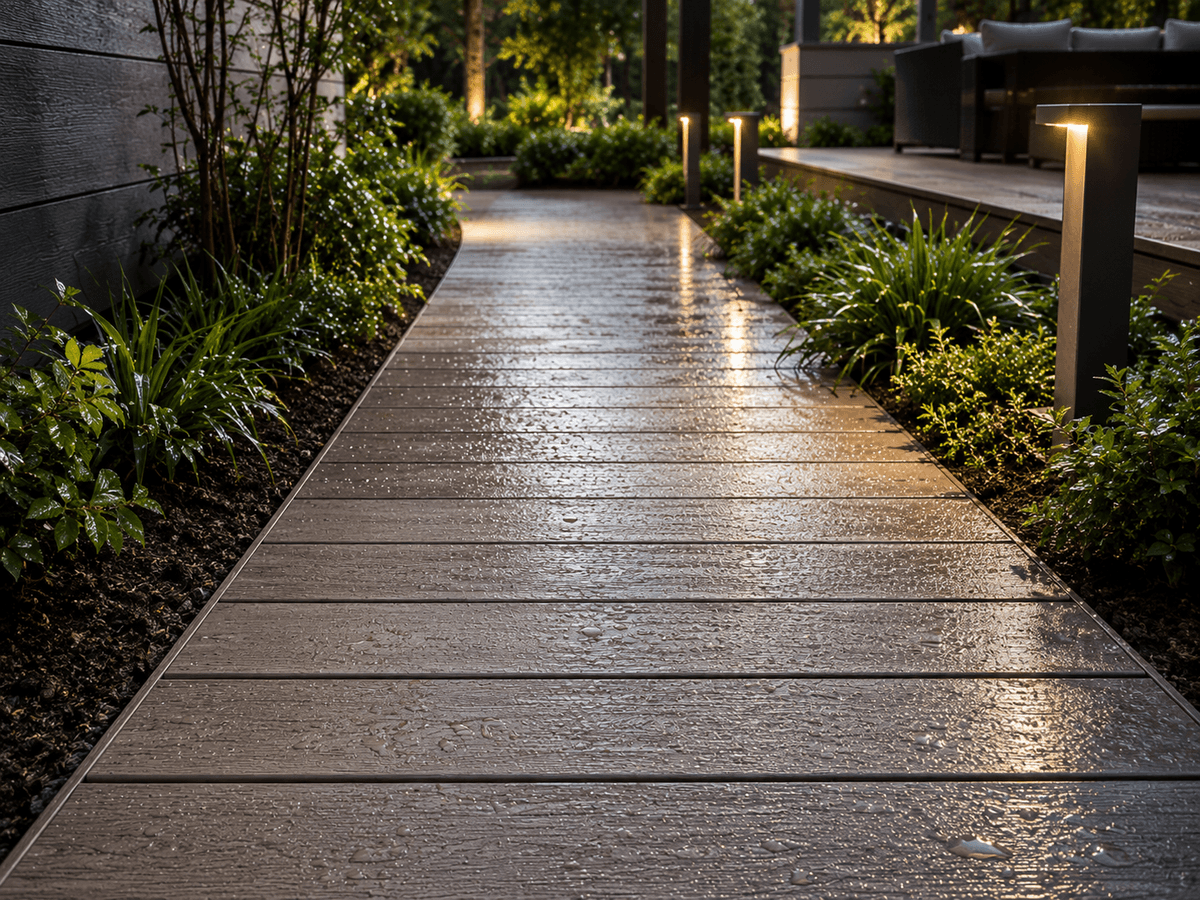
Two decks made from similar boards can perform very differently simply because one is cared for more consistently. Wet leaves left in place, algae growth in shaded areas, or grime gathering in circulation paths can undermine the benefit of an otherwise sensible surface. That is why slip resistance is never just a material property. It is also an outcome of how realistic the maintenance routine is for the owner.
This matters especially on family decks and pool-adjacent decks where people move quickly and often barefoot. If a surface is easy enough to keep clear, then its texture and drainage advantages remain available in daily use. If the maintenance burden is slightly too high, the deck can drift into a condition where even a good board feels less secure than it should.
A reliable deck is usually one that supports good habits. Cleanable detailing, sensible board spacing, and clear drainage all make it easier for the owner to preserve the surface the way it was meant to work. Once that relationship is understood, buyers can evaluate slip resistance much more realistically and avoid being overly impressed by dry, showroom-only demonstrations.
Conclusion
Slip resistant composite decking should always be judged with water, debris, and real use in mind. Texture matters, but drainage and cleaning matter too. Once those pieces are compared together, it becomes much easier to choose a surface that feels dependable instead of simply well marketed.