
Nominal Width Is Not Always Actual Width
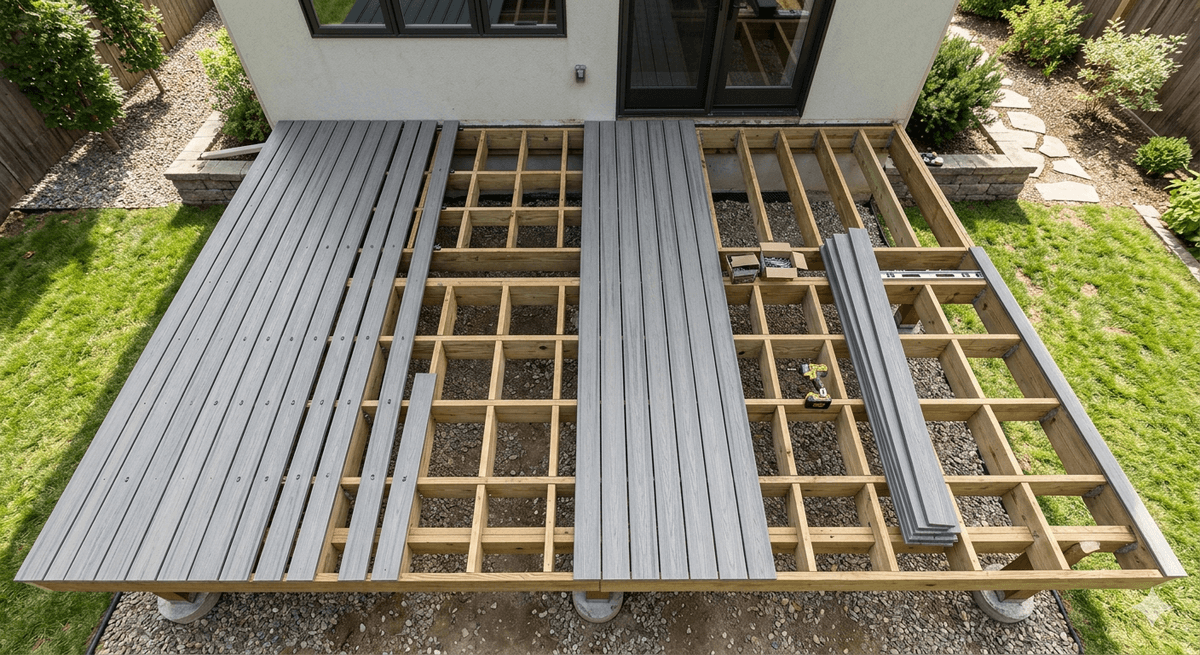
Deck boards are often discussed with simple labels like 4-inch, 5-inch, or 6-inch boards. In practice, the actual finished width can be different from the shorthand name. A board described casually as six inches wide may have a smaller actual face width depending on the product and manufacturer.
That difference matters when calculating coverage. If you plan a 300-square-foot deck using nominal width only, the final board count may be off. Always check the product sheet or supplier details for actual width before estimating cost, ordering boards, or planning border pieces.
Width Changes the Personality of the Deck
Narrower boards create more lines across the surface. That can make a deck feel classic, detailed, and rhythmic. Wider boards reduce the number of lines, which can make the same space feel calmer and more contemporary. Neither choice is automatically better. The right answer depends on house style, deck size, and the amount of visual detail you want.
A small balcony or compact backyard deck may benefit from a clean, quieter board pattern. A larger traditional deck may look balanced with standard-width boards because the repeated lines help define scale. Width is a design choice as much as a measurement.
A Quick Width Planning Checklist
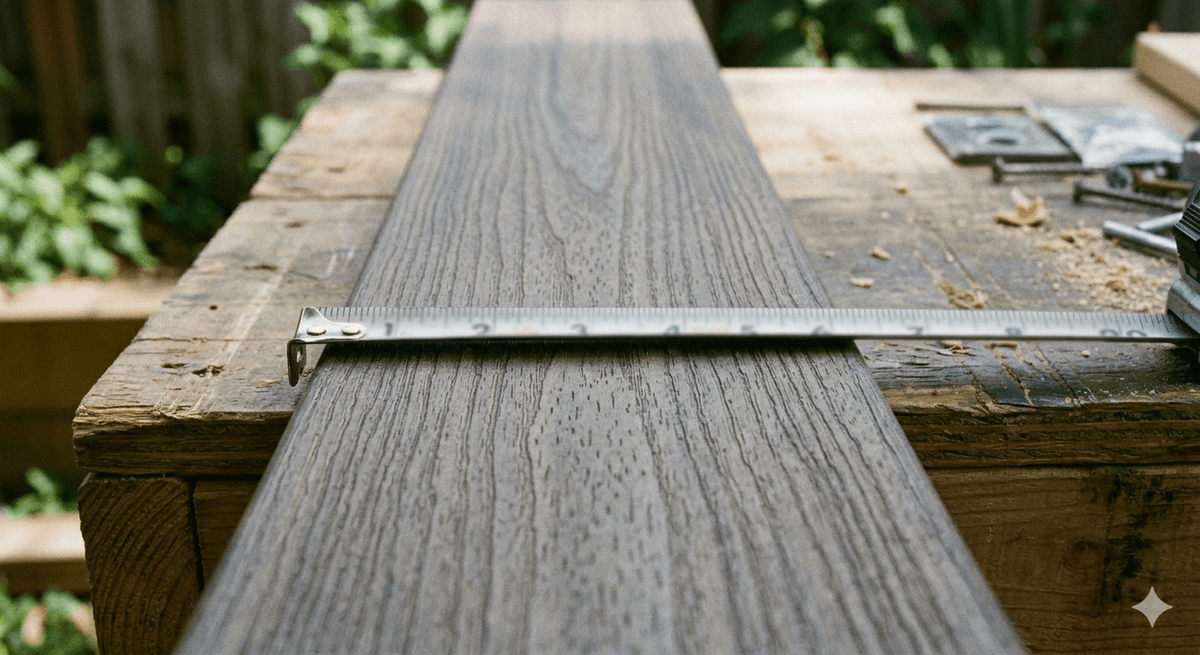
- Confirm actual width: Use the finished board measurement, not only the product label.
- Include gaps: Spacing between boards affects total coverage and visual rhythm.
- Think about borders: Board width can create awkward slivers near edges if layout is not planned.
- Match stairs and trim: Treads, fascia, and picture-frame details need their own sizing logic.
- Order with waste: Cuts, board direction, and pattern changes can increase material needs.
Spacing Makes Width Feel Different
Two boards with the same face width can look different once the installation gap is added. A wider gap makes lines more visible. A smaller allowed gap can make the surface look smoother. For composite decking, spacing is also about movement and drainage, not just appearance.
Composite Deck Pro's article on composite decking spacing explains why gaps help durability. If you are using WPC or composite boards, follow the product's spacing instructions instead of copying an old wood-deck layout.
Board Length and Width Should Be Planned Together
Width affects the crosswise layout, while length affects seams and board breaks. When both are planned together, the deck usually looks cleaner. For example, a wider board with long uninterrupted runs can create a smooth modern appearance. A narrower board with planned breaker boards can create a more structured traditional look.
If you are still choosing sizes, Composite Deck Pro's decking lengths article can help connect board size with layout, waste, and seam planning.
Furniture Can Reveal a Width Mistake
Board width may seem invisible until furniture is placed on the deck. Dining chairs, lounge sets, planters, and railings all create straight lines that interact with the board pattern. If the board layout produces a thin cut strip near a doorway or an odd border around a seating area, the deck can feel less polished even when the material itself is attractive.
That is why width should be considered before the order is placed. Sketch the deck, mark doors and stairs, then check where the final board lands. A small layout adjustment can prevent an edge that looks accidental.
Composite Board Width and Daily Use
Composite decking is often chosen for lower maintenance and a consistent finish. Width can support those goals when it matches the project. Wider boards reduce the number of gaps to sweep. Standard-width boards may be easier to coordinate with common installation details. Flat boards may help exposed edges, while grooved deck boards may support hidden fasteners across the main field.
For material context, Composite Deck Pro's article on wood plastic decking boards explains why composite options appeal to homeowners who want a finished outdoor surface with fewer wood maintenance tasks.
Final Thought
Deck board width is not just a number on a product page. It shapes appearance, spacing, cost estimates, installation details, furniture layout, and long-term maintenance. Before choosing boards, confirm actual width, add the required gap, plan borders and stairs, and compare how the surface will look from the house and yard. Composite Deck Pro can help homeowners connect board width with composite materials, WPC flooring, deck installation, and practical outdoor living design.