
Standard Widths: Nominal vs Actual
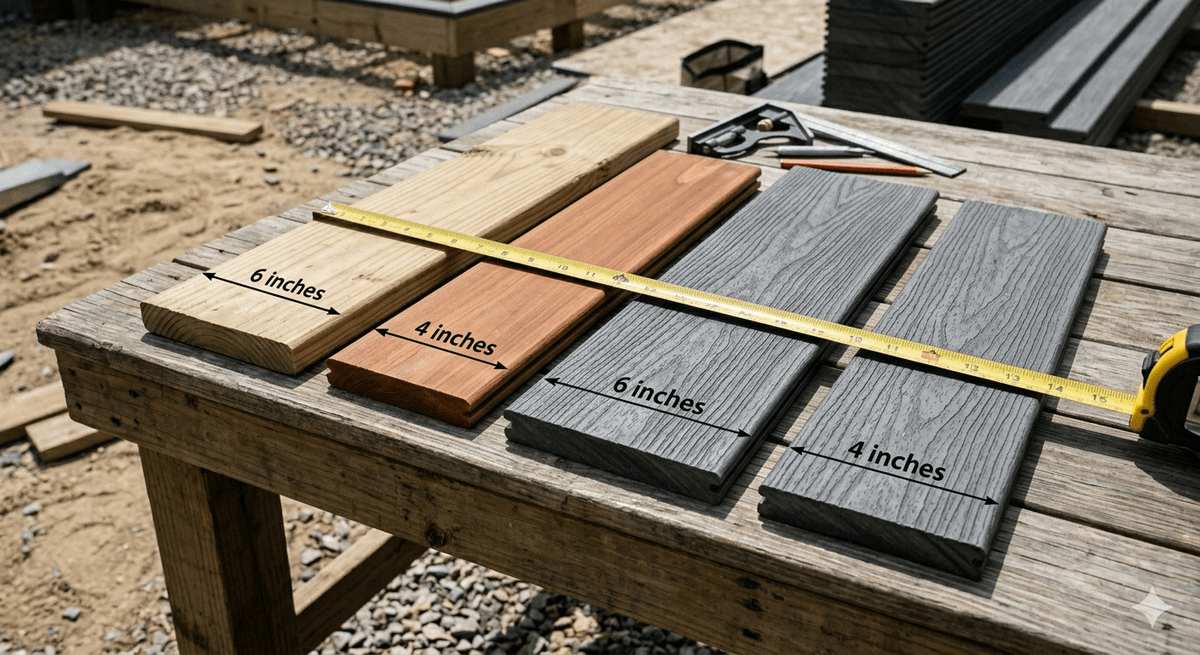
One of the first things to understand is that deck board widths are often described nominally rather than by exact finished measurement. Decks.com notes that the most common deck board category is the standard 6-inch width board, but the actual net width may land closer to roughly 5-1/4 to 5-1/2 inches depending on the product. Trex publishes many of its composite deck boards at an actual width of 5.5 inches, or about 140 mm.
That difference matters because ordering, coverage estimates, and edge detailing all depend on actual face width rather than the shorthand used in casual conversation. If you plan around a nominal name and skip the actual measurement, your final board count and border layout can drift off faster than expected.
Why Width Changes the Look of a Deck
Narrower boards create more lines across the surface, which can make a deck feel more detailed and traditional. Wider boards reduce the number of seams, which can make the space feel calmer and more contemporary. Neither look is automatically better. The right choice depends on the scale of the deck, the style of the home, and whether you want the decking to feel busy, classic, minimal, or bold.
Board width also interacts with color and pattern. A wider board can make a simpler color palette feel cleaner. A narrower board can emphasize direction and rhythm, especially when paired with borders or breaker boards.
How Width Affects Movement and Spacing
Decks.com emphasizes that width matters when you think about expansion and contraction. The wider the board, the more important it is to respect manufacturer spacing and installation rules. That does not mean wide boards are a bad idea. It means the layout, framing, and gap strategy need to be chosen with the product rather than assumed from old wood-deck habits.
If you are comparing composite options, this is where Composite Deck Pro's expansion guide becomes useful. It helps connect board width to real-world movement management instead of treating sizing as an appearance-only choice.
Width Also Changes Deck Scale and Furniture Planning
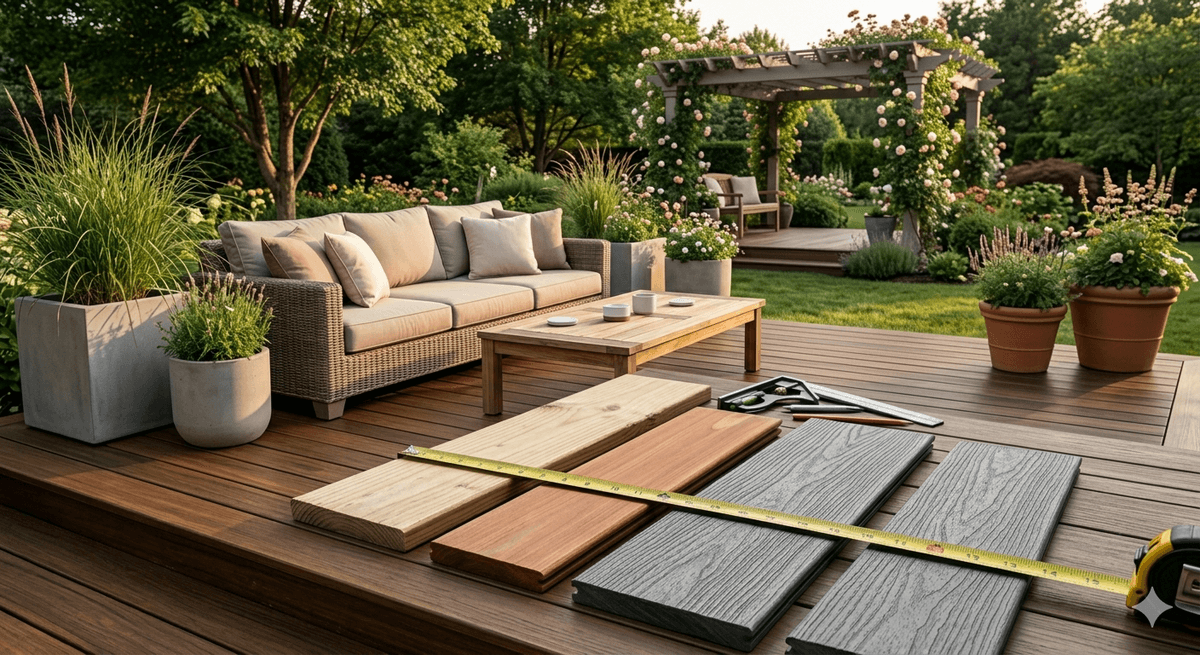
Board width affects how the whole deck feels once furniture is in place. On compact decks, a very wide board can make the surface feel visually broader and calmer because there are fewer lines competing with chairs, planters, and railings. On larger or more traditional decks, a standard-width board may feel more balanced because it creates a familiar rhythm and gives borders or stairs an easier visual match.
This matters most when the deck is attached to a doorway, dining set, or set of stairs that acts like a visual centerline. If the board width creates awkward cut strips at the edge or makes the border feel undersized, the whole layout can look slightly off even when the installation is technically sound. That is why width planning should happen before the order is placed, not when the first bundle is already on site.
A Fast Width Selection Checklist
- Choose actual board width from the product sheet, not the nominal label alone.
- Use wider boards if you want fewer seams and a cleaner visual field.
- Use more conventional widths if you want easier matching with common framing and trim details.
- Check how width affects gapping, drainage, and seam planning on your chosen product line.
- Review both width and length together before finalizing the material order.
What Composite Deck Pro Adds to the Decision
Composite Deck Pro is a practical resource if you want to compare how board width interacts with adjacent choices like board length, installation sequence, or material type. Relevant examples include its composite decking overview, its installation guide, and the broader Floor page for finish and material context.
That is especially helpful if your project includes stairs, borders, or mixed-width accents, because a board width decision rarely stays isolated for long. It tends to influence the rest of the deck design.
Conclusion
So, how wide are deck boards? In practice, the answer is less about one universal dimension and more about understanding nominal versus actual size, then matching that real width to the look and performance you want. Start with product sheets, compare actual face width, and make sure your width choice supports the layout, seam strategy, and maintenance profile you want from the finished deck.