
The Board's Care Guide Decides
Can you pressure wash composite decking? Sometimes, but not every product permits the same method. Some current capped boards allow controlled pressure washing or power-assisted rinsing. Some older composite products warn against it. Maximum pressure, nozzle type, distance, purpose, and direction vary by manufacturer and collection.
Identify the exact board before starting. A rule remembered from another brand is not enough. The warranty questions checklist, composite board selection guide, and manufacturer comparison guide guides help organize the product documents and avoid applying one collection's limits to another.
Pressure Is Only One Part of the Risk
A safe-looking pressure number can still damage a surface when a narrow nozzle concentrates the stream, the wand moves too close, or the operator pauses over one spot. Spraying across an embossed grain may leave visible streaks. Loose board edges, plugs, caulk, paint, plants, and nearby glass create additional concerns.
Treat every setting as a system: pressure, fan angle, distance, movement speed, cleaning purpose, and board condition. Never use a zero-degree tip on decking, and do not use the machine to carve out a stubborn stain.
Most Cleaning Should Begin Without High Pressure
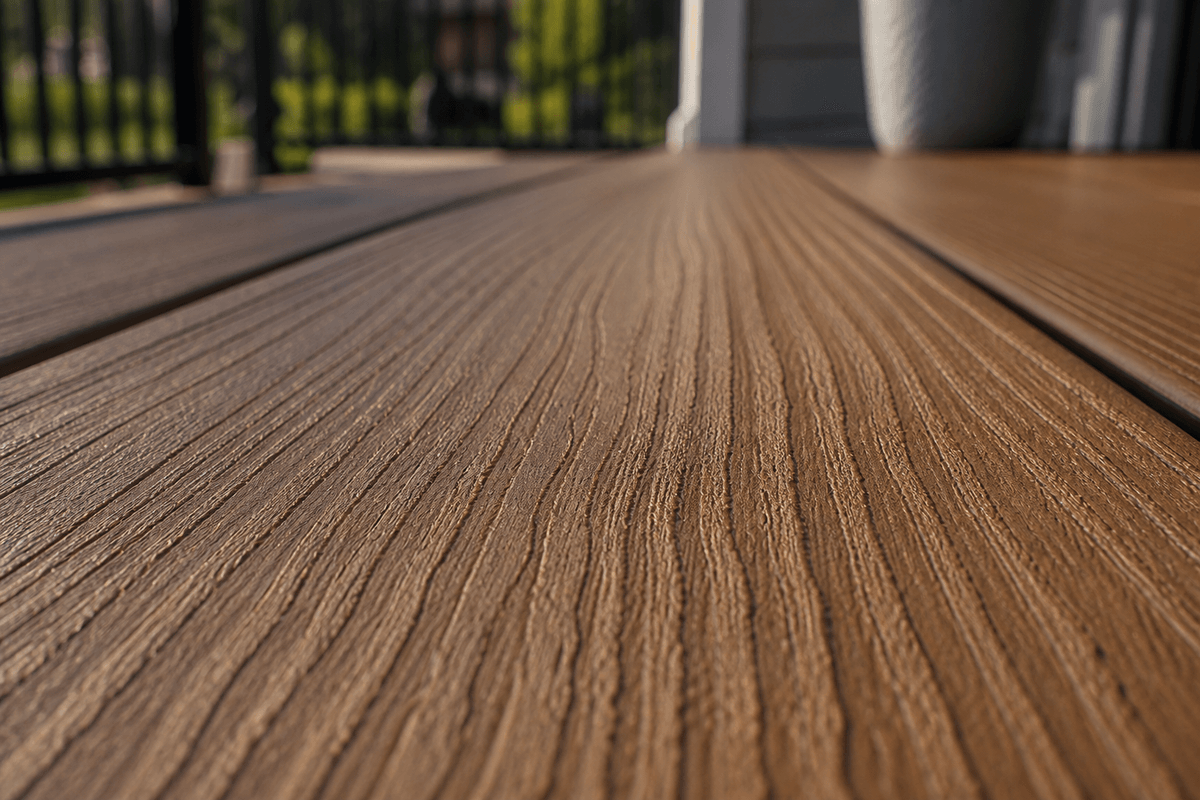
Sweep first, rinse loose dirt with a garden hose, and use the approved cleaner and brush. This removes the material most likely to become abrasive under a powerful stream. It also reveals whether pressure washing is needed at all.
Work in small sections and keep cleaner from drying. Direct sun can shorten working time and leave a film if the surface is not rinsed thoroughly. The routine cleaning guide guide and the stain-specific composite deck stain article provide gentler starting methods.
- Find the current care guide for the exact board collection.
- Confirm whether pressure washing is allowed for cleaning or rinsing only.
- Use the required fan tip, pressure limit, distance, and grain direction.
- Test an inconspicuous area and inspect it after the surface dries.
- Stop immediately if the finish changes, fibers lift, or streaks appear.
A Controlled Setup Reduces Mistakes
Inspect the hose, wand, nozzle, and trigger before entering the deck. Clear people, pets, furniture, and loose objects. Protect siding, doors, electrical fixtures, and landscaping as appropriate. Begin with the least aggressive approved configuration in an inconspicuous location.
Hold the wand at the required distance and keep it moving in smooth overlapping passes. Work with the board direction when the instructions require it. Do not sweep debris toward a door, stair, pool, or area where dirty runoff will dry on another surface.
Older and Unknown Decking Calls for Restraint
An older deck may be uncapped, previously damaged, or from a discontinued line with different instructions. Weathering can make the surface more vulnerable to an aggressive stream. If the product cannot be identified, a hose, approved mild cleaner, and suitable brush are a safer first approach.
Look beneath the deck for labels, check invoices or spare boards, and photograph the profile. Do not assume age alone makes pressure washing acceptable. The deck lifespan article and low-maintenance decking overview articles help assess the deck before choosing a cleaning method.
Pressure Washing Will Not Fix Every Mark
Rust, hard-water deposits, grease, paint, mold-supporting debris, and masonry dust require different treatments. More force may spread contamination or permanently change the cap while leaving the chemistry untouched. Diagnose the source before increasing pressure.
If a cleaner is used, verify compatibility and never mix products. Rinse according to the care guide, manage runoff, and prevent dirty water from drying back onto the boards. A pressure washer is a delivery tool, not a substitute for the right cleaning process.
Inspect the Deck After It Dries
Wet boards can hide streaking, raised texture, or uneven sheen. Let the test area dry, then view it from several angles in daylight. Compare it with an untouched section. If the finish changed, stop and document the result before attempting a repair.
Also check board gaps and the area below for displaced debris. Cleaning should improve drainage, not force material into hidden joints. The moisture-planning article article explains how surface care connects with the moisture path through the deck.
Rental Equipment Adds One More Check
A rented machine may arrive with a high-pressure tip already installed, a worn nozzle, or a gauge that does not make the delivered pressure obvious. Ask the rental provider to identify the fan tip and controls, then compare that setup with the decking instructions before leaving the store. Do not assume the previous user configured it for a deck.
Practice away from the finished surface so starting force and trigger response are familiar. Secure hoses to prevent trips, use appropriate eye and foot protection, and keep the electrical or fuel-powered equipment in a safe operating position. If the approved limits cannot be set and maintained confidently, choose the hose-and-brush method or hire a professional who will follow the product guide.
Use the Least Force That Completes the Job
Pressure washing is appropriate only when the exact product allows it and the operator follows every limit. A garden hose and brush may take longer, but they provide more control for routine dirt. Protecting the surface is more important than finishing quickly.
Review decking and flooring options choices along with their care documents before purchase. For an existing deck, contact Composite Deck Pro with the board identity, age, photos, cleaning goal, and manufacturer instructions before deciding whether a pressure washer belongs in the plan.