
Poly Is a Starting Point, Not a Specification
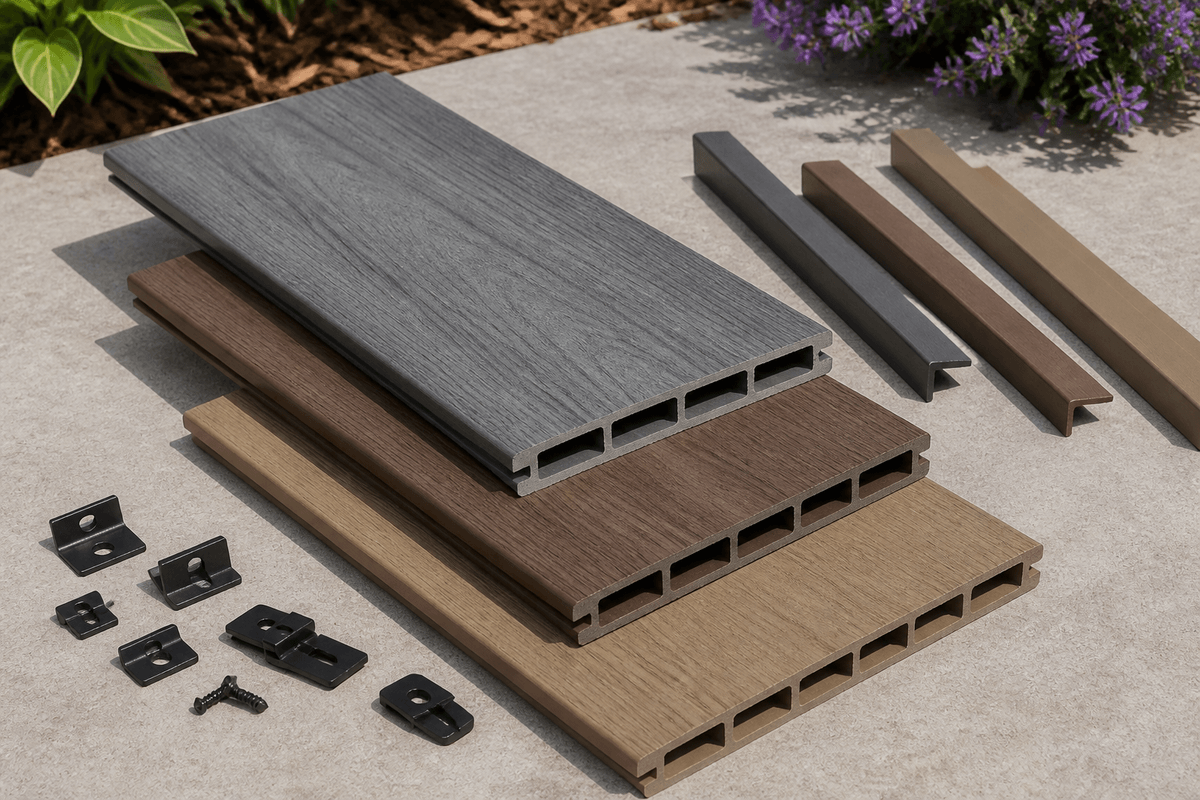
Poly decking boards can be a confusing phrase because poly may refer to several polymer-based materials. Some buyers use it loosely for PVC decking. Others mean polyethylene or polypropylene blends used in wood-plastic composite boards. Some simply mean non-wood decking. That makes the first step obvious: ask what the board is actually made from before comparing price or appearance.
This is not a vocabulary exercise. Material composition affects expectations for moisture, heat, weight, surface texture, fastening, and maintenance. A buyer using wood plastic composite decking guide, waterproof composite decking guide, composite deck board guide, wood versus composite decking comparison, and low-maintenance decking overview as comparison resources should translate "poly" into a real product type before choosing a deck system.
The Questions That Clear Up the Category
If a supplier or product page says poly decking boards, the next question should be specific. Is the board PVC? Is it a wood-plastic composite? Does it include wood fiber? Does it have a cap? Is the profile solid, scalloped, or hollow? Is it designed for hidden clips, face fastening, or both? These details say more than the broad label.
A clear answer helps prevent bad comparisons. A hollow polymer board should not be judged exactly like a solid capped composite board. A PVC board should not be assumed to feel or install like every WPC board. The deck needs a material decision, not just a category name.
- Ask whether the board is PVC, WPC, capped composite, or another polymer blend.
- Check whether wood fiber is part of the board composition.
- Confirm the board profile before planning stairs or exposed edges.
- Review compatible fasteners, clips, fascia, and trim.
- Test color and texture outside before buying a full deck package.
Moisture Performance Is Still About the Whole Deck
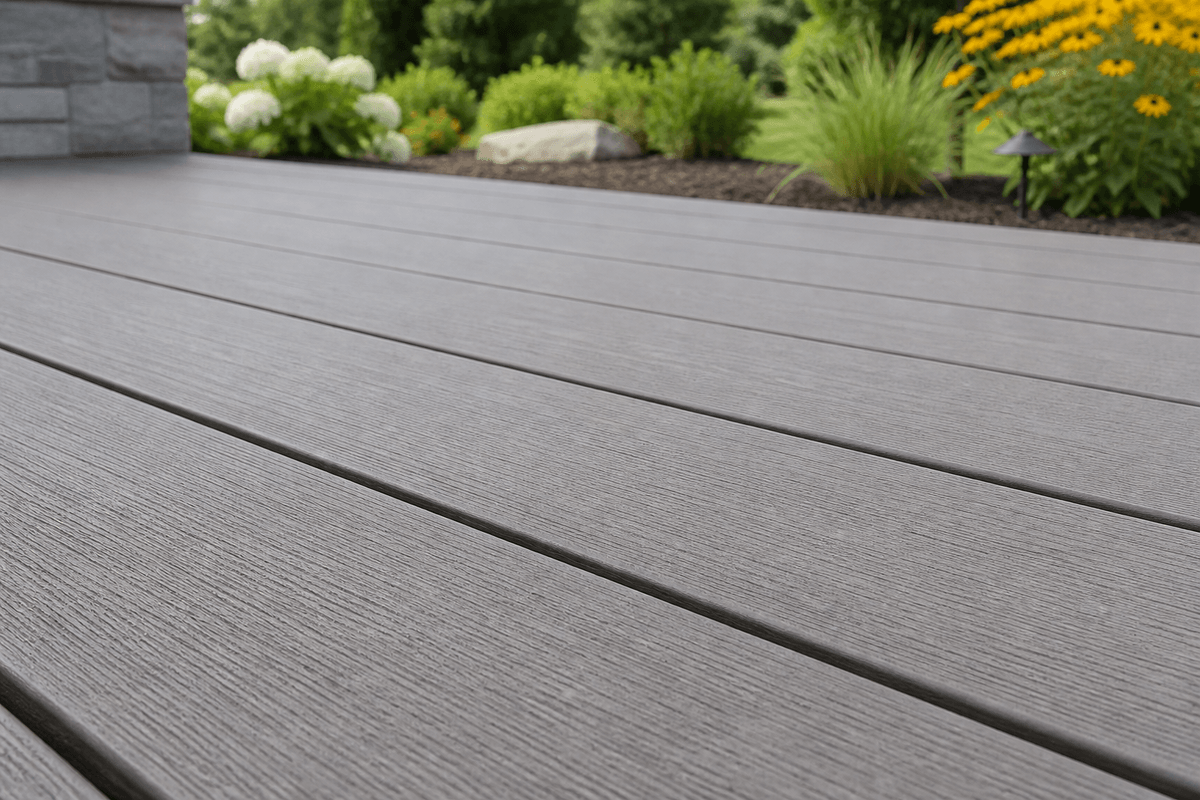
Polymer-based boards are often considered when the deck will face rain, humidity, pool splash, or ground-level moisture. That instinct makes sense, but the board is only one piece of the wet-use system. Drainage, joist spacing, ventilation, slope, and cleaning access still matter. A moisture-resistant board on a poorly draining frame can still create a frustrating outdoor floor.
The waterproof composite decking guide guide is useful here because it separates material resistance from waterproof deck construction. Most residential decks are designed to shed and manage water, not behave like a bathtub. Poly decking boards should be evaluated by how they work in that realistic setting.
Heat and Color Need an Outdoor Test
Poly decking boards can vary significantly in heat feel. Dark colors may look refined beside modern siding or black railings, but they can feel warmer in direct summer sun. Light colors may stay more comfortable but may not deliver the contrast a design needs. Mid-tone boards often strike a practical balance for busy family spaces.
The only dependable test is local exposure. Put samples where the deck will be built. Walk on them in the afternoon. Look at them beside the house, furniture, stone, and plants. If the deck will be used barefoot, treat comfort as a core requirement, not a minor preference.
Fastening Tells You How Finished the Deck Can Look
A board's fastening system affects the finished surface. Grooved boards may accept hidden clips that create consistent spacing and fewer visible fasteners. Square-edge boards may be better for borders, stairs, and face-fastened details. Some poly decking boards have profile limitations that change which fasteners or edge treatments are appropriate.
Before ordering, draw the deck with borders, stairs, breaker boards, and transitions included. Then check whether the board system supports that drawing. The composite decking layout article, composite decking color guide, composite decking cleaning routine, and slip-resistant composite decking guide resources help keep the decision connected to the way the deck will actually be used and maintained.
Do Not Buy the Label; Buy the Fit
The best reason to choose poly decking boards is not that the label sounds modern. It is that the specific board solves the project's real conditions: moisture, maintenance, color, surface feel, installation, budget, and edge detailing. Once the material is identified clearly, the comparison becomes much easier.
Ask for samples, review profile drawings, confirm accessory compatibility, and compare the total finished deck cost rather than only board price. If the project includes unusual water exposure, stairs, or tight transitions, contact Composite Deck Pro with photos and the board options being considered so the next question can be specific instead of generic.