
The Category Is Broader Than Many Buyers Expect
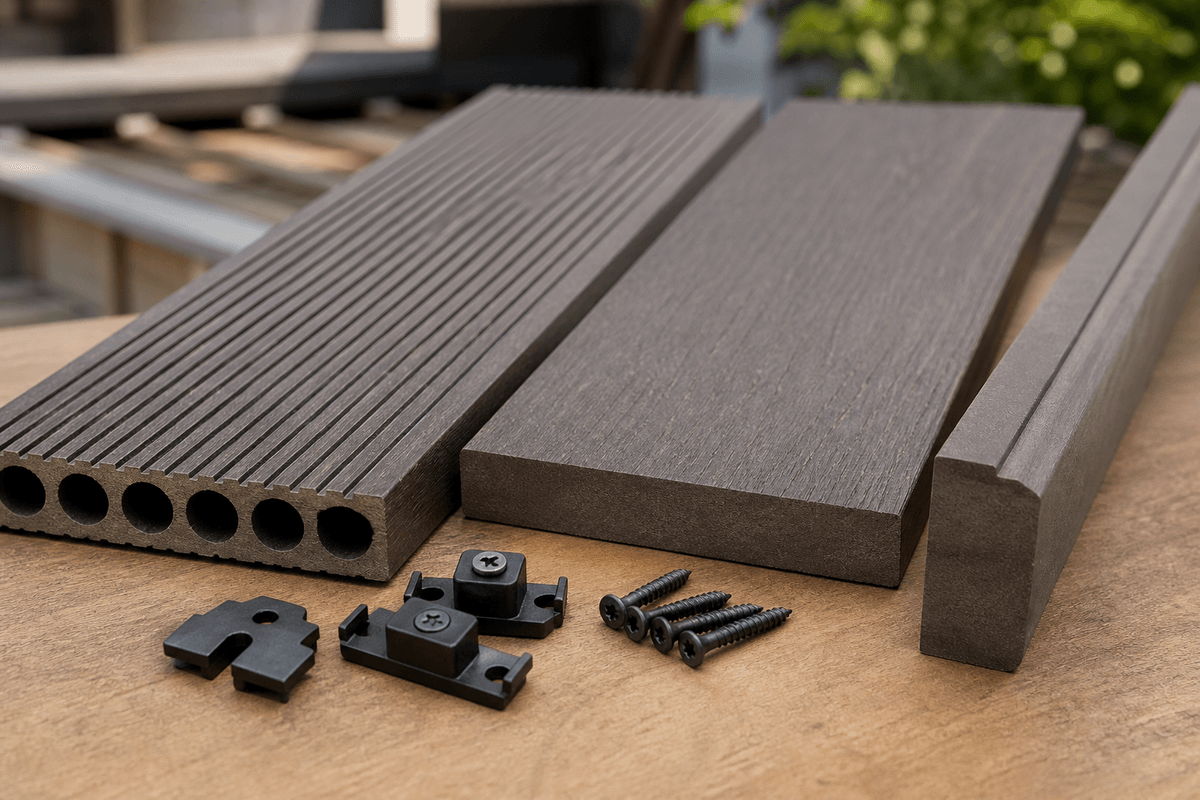
The phrase types of composite decking can mean several different things at once. One person may be asking about WPC versus PVC. Another may be asking about capped versus uncapped boards. A contractor may be thinking about hollow, scalloped, and solid profiles. A homeowner may only notice color and grain. All of those questions matter, but they answer different parts of the same deck decision.
A better way to compare composite decking is to separate material, structure, surface, and edge detail. The composite deck board guide, wood plastic composite decking guide, waterproof composite decking guide, composite decking layout article, and wood versus composite decking comparison resources are helpful because they keep the conversation practical. The goal is not to memorize every label. The goal is to match a board type to the way the deck will be built and used.
Material Families Shape the First Choice
Many composite boards are wood-plastic composites, often blending wood fiber or wood flour with plastic and additives. These boards are popular because they can offer a wood-like look with less refinishing than traditional lumber. PVC decking is another major option, usually discussed when buyers are focused on moisture exposure, low upkeep, or lighter board construction. Some boards also use protective caps or shells that change surface behavior.
Material family affects expectations, but it should not be the only decision. A well-suited WPC board can outperform a poorly chosen PVC board on a particular project, and the reverse can also be true. Look at the site first: shade, water, furniture, traffic, stairs, heat, and visibility.
Board Profile Changes Installation
Board profile is one of the most overlooked types of composite decking. Solid boards can be useful for stairs, visible edges, and heavy-use zones. Scalloped boards can reduce weight and material while still offering a finished walking surface. Hollow boards may be practical in some systems but require more attention at cut ends and trim. None of these profiles is automatically best; each creates different installation conditions.
Before choosing a profile, ask how the deck will handle fascia, picture framing, stair treads, breaker boards, and perimeter cuts. If the deck has a simple rectangular field, more profiles may work. If it has curves, steps, borders, and multiple transitions, the board's underside and edge behavior become more important.
Edge Style Is a Design Decision
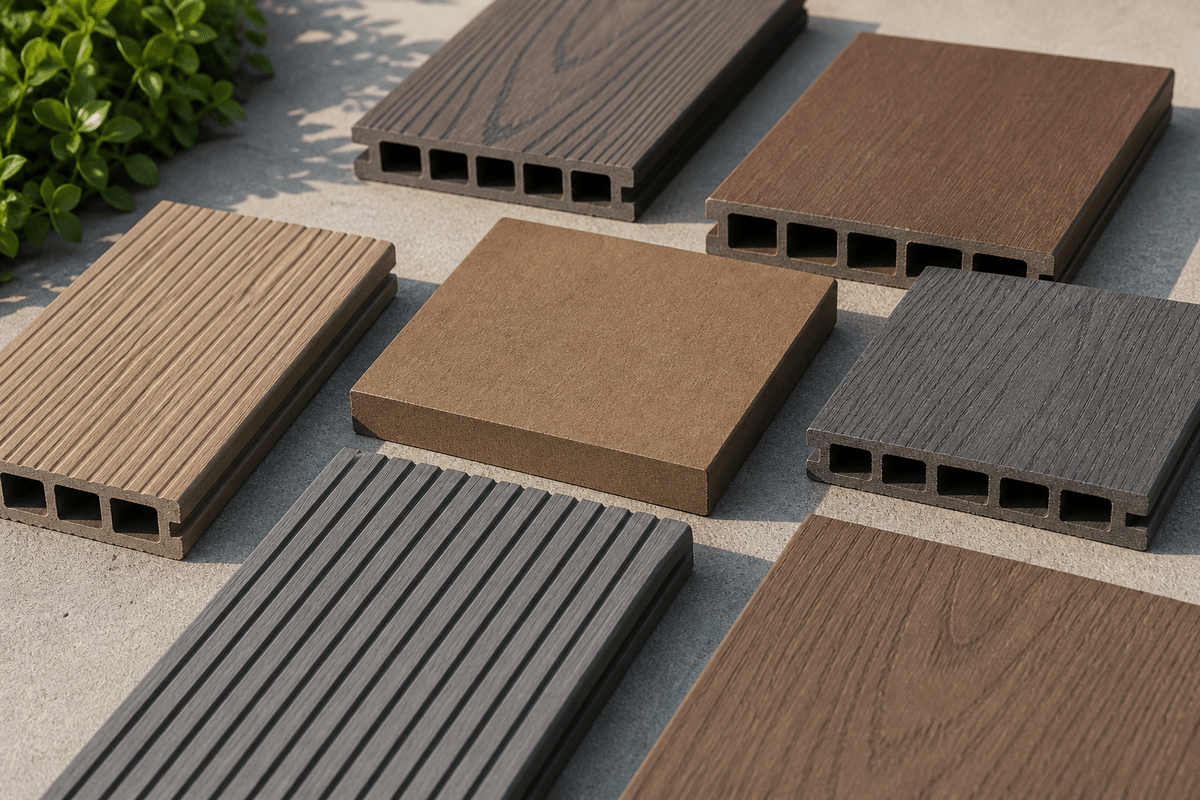
Grooved boards are commonly used with hidden fastening systems. They can create a clean deck surface with fewer visible screw heads. Square-edge boards are often useful for borders, stairs, and areas where face fastening or exposed edges make more sense. Many polished deck layouts use both. The mistake is assuming one edge style should do the entire job.
The composite decking layout article article is worth reading before finalizing the order because fastening affects spacing, board direction, and trim. A deck that looks simple on the surface may need several board types to finish properly. Planning that mix early keeps the finished deck from looking like it was solved one edge at a time.
- Use grooved boards for clean hidden-fastener field areas when the system supports it.
- Use square-edge boards for borders, stair details, and exposed edges when needed.
- Confirm clips, starter boards, screws, and fascia before installation day.
- Keep expansion gaps and drainage requirements in the layout.
- Order samples in the actual colors and profiles being considered.
Surface Texture Should Match Real Use
Texture is sometimes treated as a style choice, but it affects daily comfort. A deeply grained board may look closer to wood and feel more secure underfoot, yet it can hold dirt in shaded areas. A smoother board may be easier to clean but less appealing for wet stairs or poolside traffic. Color interacts with texture too: dark embossed surfaces can show dust differently than lighter boards.
This is where the slip-resistant composite decking guide, composite decking cleaning routine, composite decking color guide, and low-maintenance decking overview guides connect. Decking types should be judged in the real outdoor environment, with shoes, bare feet, pets, furniture, food, rain, and sun in mind. A sample board is more useful after it has spent a few days outside.
Choose the Type by Drawing the Deck
The clearest way to compare types of composite decking is to sketch the deck and label the demanding areas. Mark stairs, doors, drainage direction, grill zones, furniture movement, exposed edges, privacy screens, and heavy traffic lanes. Then choose the material family, profile, surface, and edge style around those realities.
A good deck rarely comes from asking which type is best in the abstract. It comes from asking which type solves this deck's problems with the fewest compromises. For help narrowing a board system, contact Composite Deck Pro with site photos, dimensions, and any concerns about heat, water, stairs, or maintenance.