
Think of the Fence as Part of the Living Space
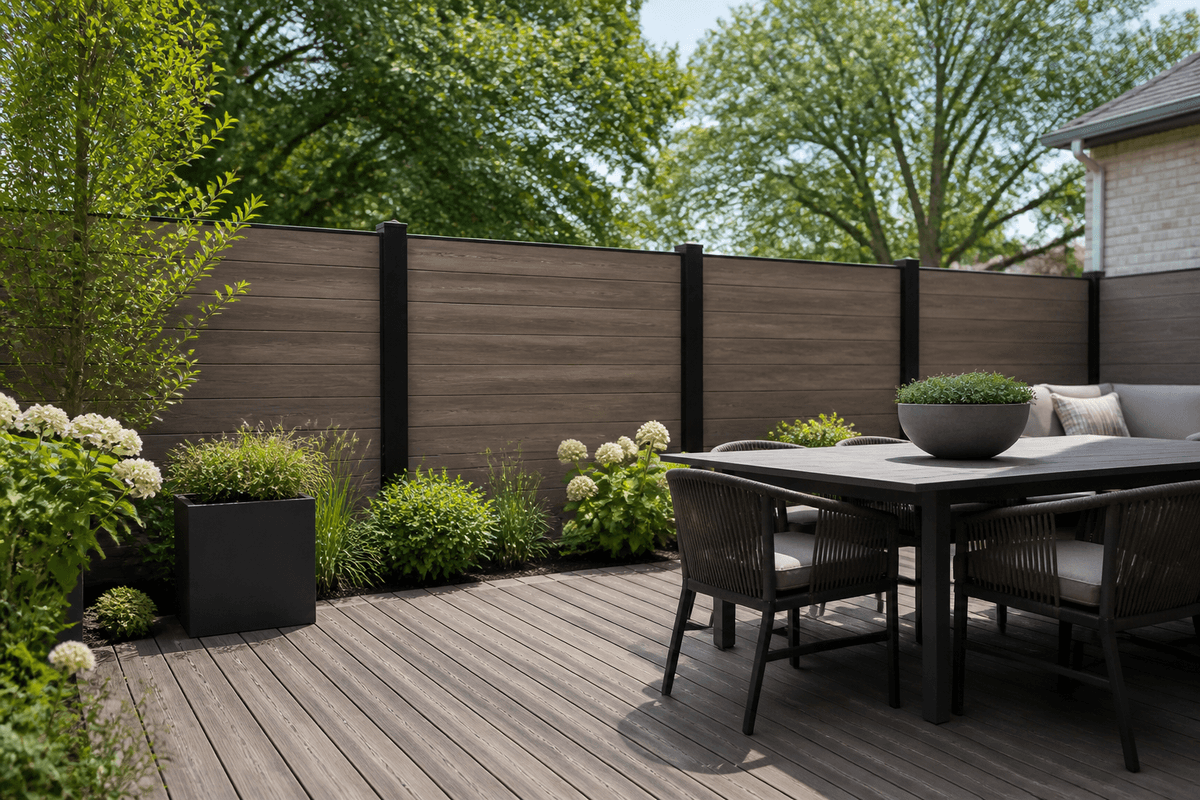
Wood plastic composite fencing is often researched by homeowners who want privacy without the repainting cycle associated with many traditional wood fences. But the better design question is bigger than maintenance. A fence is the backdrop for the whole outdoor room. It frames the deck, planting, furniture, grill, lighting, and views from inside the house. If that backdrop feels mismatched, even a good deck can feel unfinished.
Composite fencing can make sense when the owner wants a cleaner, more architectural boundary around a patio or deck. It can coordinate with the material thinking behind wood plastic composite decking guide, composite wall cladding article, deck privacy wall ideas, decking and flooring options, and composite decking color guide. The important move is to plan the fence with the outdoor space, not after every other decision has already been made.
Privacy Is Not Only Height
Many buyers start with fence height, but privacy depends on sightlines. A six-foot fence may block a neighbor's patio but not an upstairs window. A lower screen may be enough beside a dining zone if the rest of the yard stays open. A narrow side yard may need a different approach than a wide backyard. Wood plastic composite fencing should be laid out around where people sit, stand, cook, and enter the house.
Before choosing panels, walk the yard and mark the uncomfortable views. Look from the kitchen window, sliding door, deck stairs, and seating area. The fence may not need to wrap every side with the same height and density. A more targeted privacy plan often looks better and costs less than enclosing everything by habit.
- Map views from seating areas, doors, windows, and neighboring properties.
- Use taller screening where people actually gather, not automatically everywhere.
- Coordinate fence color with decking, cladding, trim, and landscape materials.
- Leave room for gates, drainage, post access, and future planting.
- Check local fence height and setback rules before finalizing the layout.
Posts and Gates Decide Whether the Fence Feels Solid
Fence panels get most of the attention, but posts and gates carry much of the real work. A composite fence system still needs a stable support plan. Post spacing, anchoring, gate hardware, wind exposure, and soil conditions all affect long-term performance. A beautiful panel can feel disappointing if the gate sags or the posts look improvised.
For deck-adjacent fencing, the connection points deserve special care. A privacy screen attached near a deck should not compromise drainage, stair movement, or cleaning access. If the screen sits near composite boards, think about how leaves and debris will collect at the base. Good fencing should make the outdoor room more comfortable without creating maintenance traps.
Color Works Differently on a Vertical Surface
A fence color feels larger than a decking color because it sits upright in the viewer's field of vision. Dark composite fencing can make greenery look dramatic and modern, but it may make a small yard feel tighter. Light colors can brighten a narrow space, but they may show soil splash near planting beds. Warm wood-look tones can soften a patio, especially when paired with stone or neutral house siding.
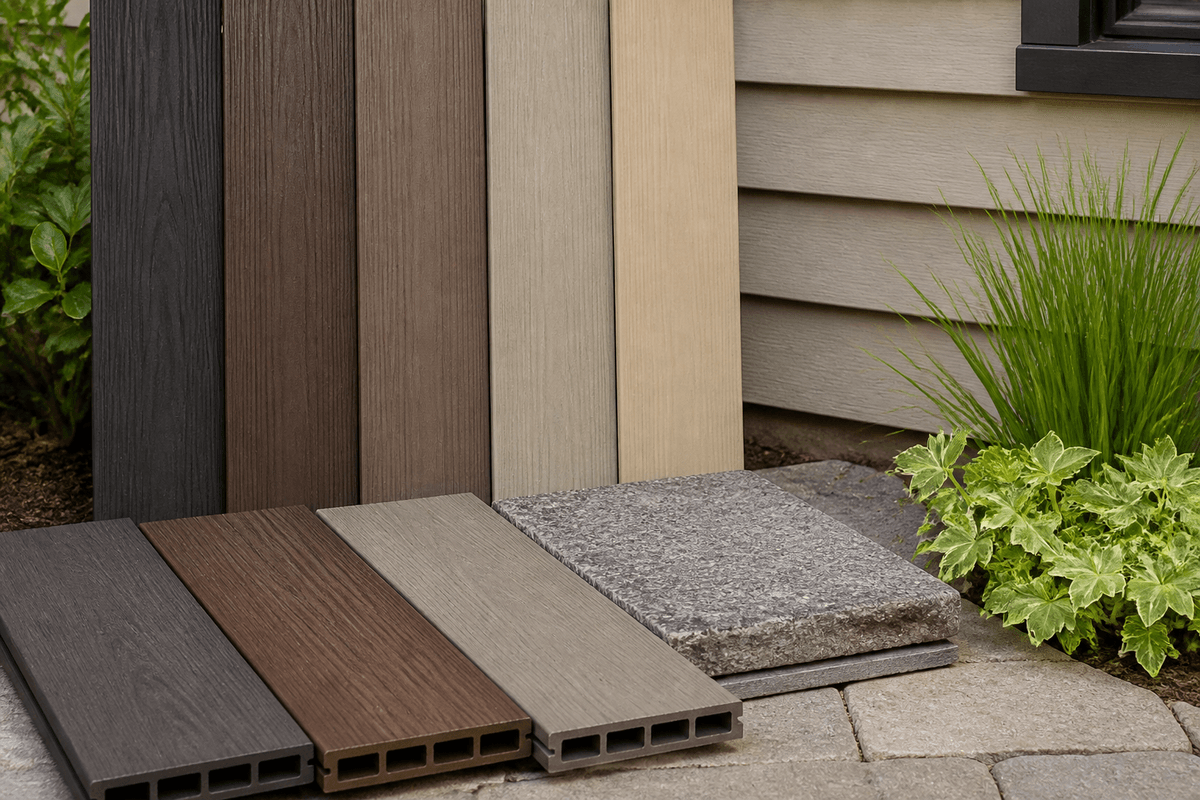
Use the composite decking color guide guide as a starting point, then test samples vertically. Place them where the fence will actually stand and view them in morning, afternoon, and evening light. A sample that looks perfect flat on a table may feel very different when it becomes a wall around the yard.
Maintenance Is Reduced, Not Deleted
Wood plastic composite fencing can reduce the need for staining or painting, but outdoor surfaces still collect pollen, dust, sprinkler minerals, mildew in shaded corners, and splashback from soil. The right expectation is simple cleaning rather than no cleaning. A fence that can be rinsed and wiped easily will age more gracefully than one packed tightly behind shrubs where nobody can reach it.
This is where deck and fence planning overlap. The composite decking cleaning routine, low-maintenance decking overview, waterproof composite decking guide, and slip-resistant composite decking guide resources focus on deck surfaces, but the maintenance logic is similar: control debris, avoid trapped moisture, clean early, and choose colors with real site conditions in mind.
Coordinate the Fence With the Deck, Not Against It
A composite patio or deck feels more intentional when the fence, floor, railing, furniture, and planting share a clear visual relationship. They do not need to match exactly. In fact, exact matching can look flat. A warm fence with a cooler deck, or a dark privacy wall behind lighter boards, can create depth. The key is to choose contrast deliberately.
Wood plastic composite fencing is strongest as part of a complete outdoor room plan. Start with privacy needs, confirm the support system, test color vertically, and leave room for cleaning and drainage. If the fence will sit beside a new deck, contact Composite Deck Pro with photos of the yard and the preferred decking direction so the materials can be coordinated before installation decisions harden.