
A Solid Board Is Usually Chosen for the Details
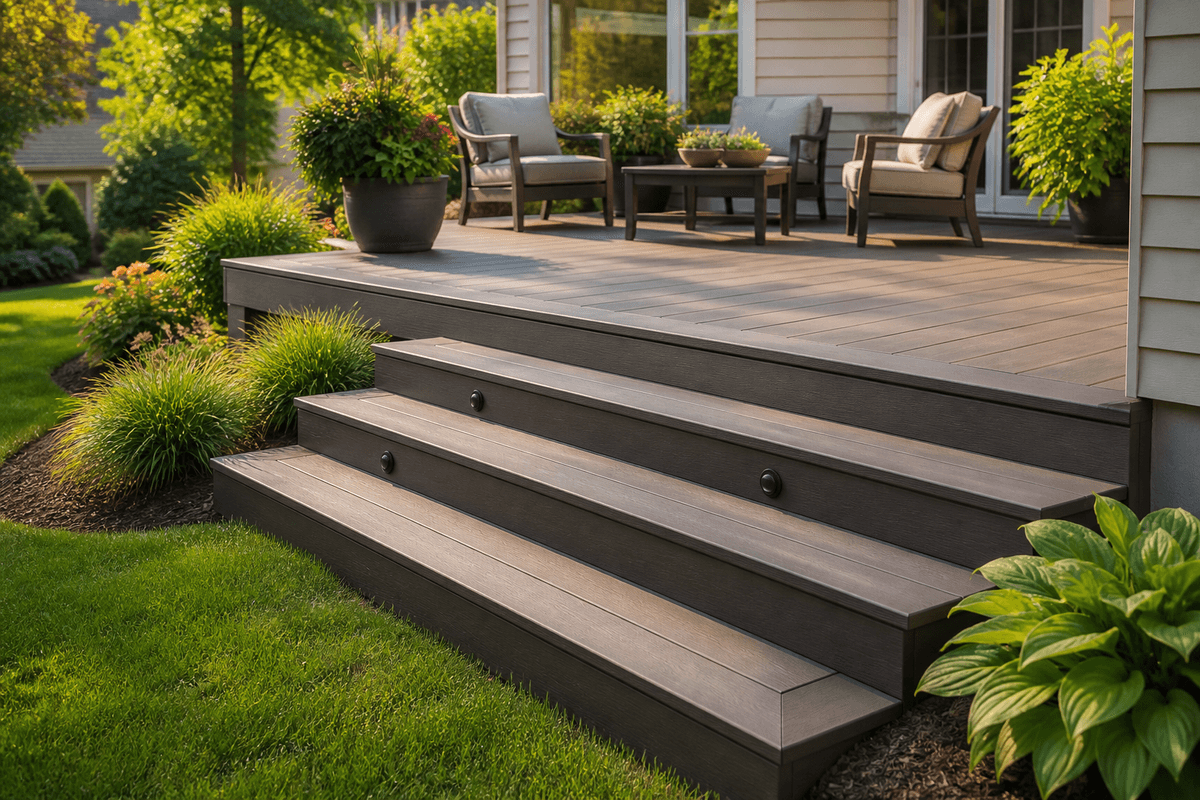
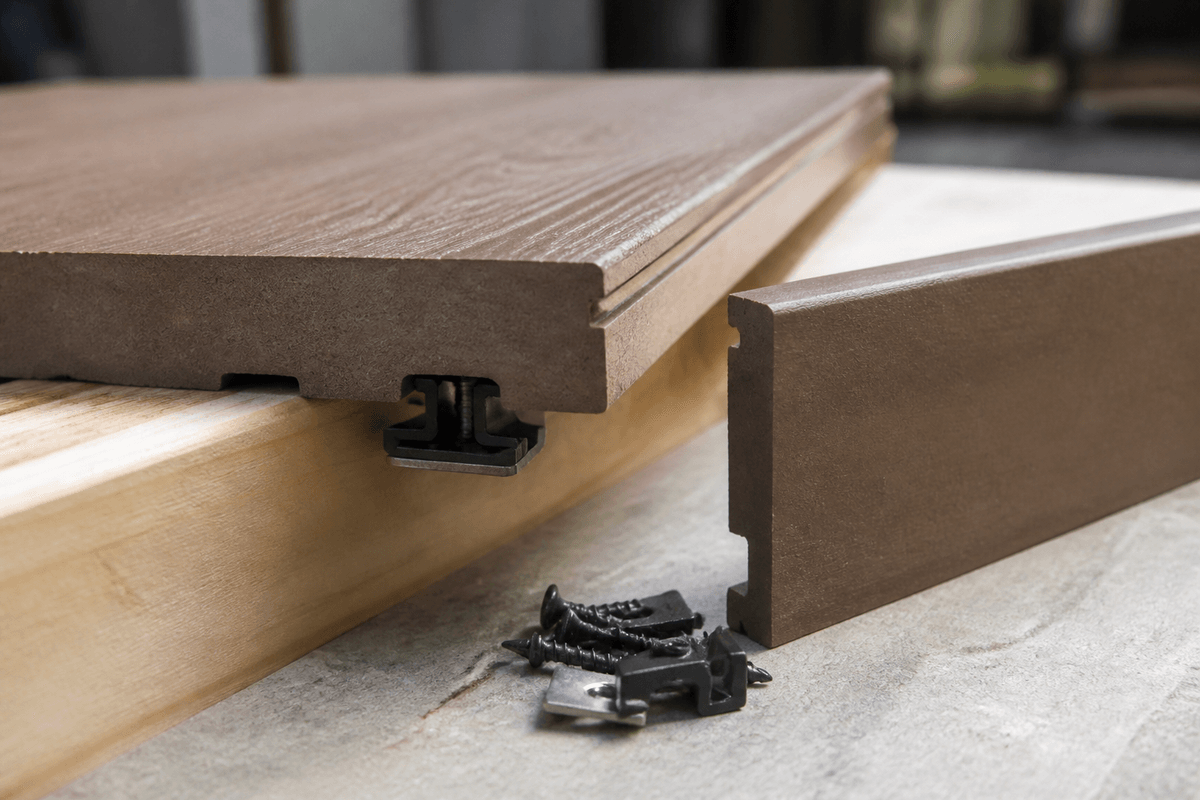
Solid composite decking is rarely chosen because every square foot of a deck must be solid. It is usually chosen because certain parts of the project ask more from the board. Stairs, picture-frame borders, exposed edges, diagonal layouts, commercial-style traffic, and detailed transitions can all make a solid profile attractive. The top surface may look similar to a hollow or scalloped board, but the underside and edge behavior can change the whole installation conversation.
That distinction matters because composite decking is not only a surface. It is a system of boards, fasteners, framing, trim, cuts, and movement gaps. A homeowner comparing options through the composite deck board guide, wood plastic composite decking guide, composite decking layout article, composite deck cost guide, and decking and flooring options resources should treat board profile as an early design decision, not a last-minute product spec. A deck that uses solid boards in the right places can feel more resolved without automatically overspending everywhere.
Stairs and Borders Expose the Profile
The easiest place to understand solid composite decking is the edge of the deck. Main field boards are often viewed from above, but stairs and borders are seen from the side. If the board has a hollow cavity or a shaped underside, the installer may need fascia, trim, end caps, or a different board type to create a clean finish. A solid board can simplify that visual problem because cuts and edges tend to look more substantial.
This does not mean every project needs solid boards throughout. Many decks combine board profiles carefully: one board type for the main field and another for trim-heavy details. The goal is not to make the material order complicated. The goal is to avoid discovering, after the framing is done, that the chosen board does not make sense at the most visible edges.
- Use solid boards where cut edges will be visible from the yard, stairs, or entry.
- Check whether the board is approved for stair treads and the required joist spacing.
- Plan picture framing before ordering clips, screws, and fascia.
- Compare how each profile handles end cuts, miters, and perimeter trim.
- Avoid mixing profiles casually unless the transition has been drawn and measured.
Weight Can Be a Feature and a Constraint
Solid composite boards often feel heavier in the hand, and that weight can create a perception of quality. On a finished deck, a more substantial board may feel reassuring underfoot, especially on stairs or narrow transitions. That is one reason some buyers gravitate toward solid composite decking when they want a deck that feels permanent rather than temporary.
Weight also has practical consequences. Heavier boards affect handling, delivery, lifting, and installation pace. They may not be the most efficient choice for every balcony, rooftop, or tight-access backyard. The framing plan still matters, and installers should follow the board manufacturer's span and fastening guidance. Solid does not mean the deck can ignore structure.
Traffic Patterns Should Guide the Upgrade
Every deck has routes that work harder than the rest. People walk from the door to the grill, from the stairs to the seating area, and from the pool to the towels. Those traffic lanes collect more foot movement, furniture shifts, and cleaning. In those zones, solid composite decking may be worth considering if the board system supports the design and the budget allows it.
The same thinking applies to rental properties, small restaurants, shared outdoor amenities, and homes where the deck is used daily. A rarely used decorative platform may not need the same board profile as a high-use entertaining space. Matching the material to actual movement is more practical than buying the thickest-looking board just because it sounds stronger.
Moisture, Cleaning, and Surface Choice Still Matter
A solid profile does not remove ordinary outdoor maintenance. Gaps still need to stay clear. Leaves still need sweeping. Grill grease, pollen, and soil still need cleaning before they become stubborn. The composite decking cleaning routine, low-maintenance decking overview, waterproof composite decking guide, and slip-resistant composite decking guide guides are useful reminders that board construction and day-to-day care work together.
Surface texture should also be tested. A solid board with the wrong color or texture is not automatically better than a lighter-profile board that suits the site. Full sun, shade, wet feet, dogs, furniture, and nearby trees all affect how the deck feels after installation. Samples should be viewed outdoors, not only under showroom lighting.
A Smarter Way to Price Solid Composite Decking
Instead of pricing solid composite decking as an all-or-nothing decision, price the finished deck in zones. First price the main deck field. Then price stairs, borders, breaker boards, and exposed edges. Finally compare the cost of using solid boards everywhere against using them only where the profile creates real value. This gives a clearer picture than simply comparing board prices by linear foot.
The smartest choice may be a full solid-board deck, a mixed-profile deck, or a different composite option altogether. The right answer depends on layout, visibility, handling, trim details, and budget. If the material decision is still unclear, contact Composite Deck Pro with deck dimensions, photos of the site, and the areas where edges or stairs will be most visible.