
Grey Is Not One Color
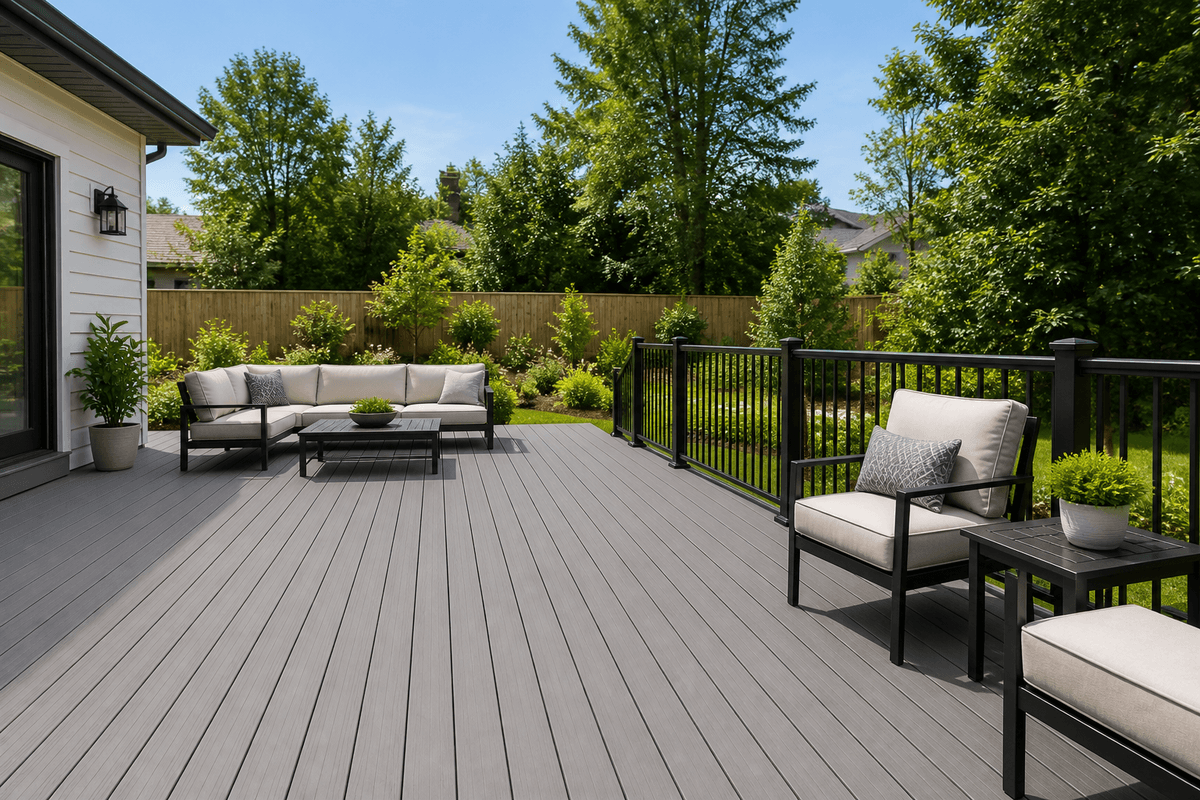
Grey composite decking is popular because it can look modern, calm, and easy to coordinate. The tricky part is that grey is not one color. Some greys lean warm and taupe. Some lean blue. Some are charcoal. Some are pale and weathered. The undertone can make the deck feel refined or strangely mismatched against the house.
Before choosing a grey board, compare it with siding, window frames, railings, stone, fencing, and furniture. The composite decking color guide, composite deck board guide, decking and flooring options, composite decking versus wood comparison, and Composite Deck Pro can help keep the decision tied to the whole outdoor room instead of one sample in isolation.
Warm Grey vs Cool Grey
Warm grey often pairs well with beige siding, brick, tan stone, cream trim, and natural planting. It can feel softer than pure charcoal and may be easier to live with in traditional yards. Cool grey can look sharp with black railings, white siding, concrete, glass, and modern architecture. Charcoal can add drama but may feel heavy on a small deck.
The right undertone usually reveals itself outdoors. Indoor lighting can make samples lie. Place the boards beside the actual house materials and check them in morning, midday, and late afternoon. A grey that looks balanced in shade may become blue or flat in strong sun.
- Use warm grey with tan, cream, brick, and natural stone palettes.
- Use cool grey with black, white, concrete, glass, and modern details.
- Test charcoal carefully on small or full-sun decks.
- Compare grey boards against furniture cushions and railing color.
- Check how dust, pollen, and water spots show between cleanings.
Sunlight Changes the Mood
Grey composite decking can feel very different depending on light. In bright sun, pale grey may look airy and relaxed, while dark grey may feel hotter and more formal. In shade, cool grey can turn cold, and charcoal can reduce the sense of space. A deck surrounded by trees may need a warmer grey to avoid looking flat.
The slip-resistant composite decking guide, composite decking cleaning routine, and low-maintenance decking overview guides are practical companions here. Shade affects both appearance and upkeep. A grey deck under trees may hide some dust but show leaf stains or mildew more clearly if cleaning is neglected.
Grey Can Make Edges Look Cleaner
One advantage of grey decking is that it can make black railings, metal furniture, concrete patios, and stone borders feel connected. A grey board often works well with modern fascia and simple trim. It can also make planting look greener by creating a quiet neutral background.
Edges still matter. Picture frame borders, stair treads, fascia, and transitions to paving should be planned before ordering boards. If the deck uses a mid-grey field board, a slightly darker border can look intentional. If the deck is already small, too much contrast may chop up the surface.
Grey also works well as a bridge between old and new materials. It can connect an older concrete patio to a newer deck, soften black-framed doors, or calm a busy garden. The trick is choosing the grey that belongs to the existing palette rather than the grey that looks most dramatic alone.
Maintenance Visibility Depends on Tone
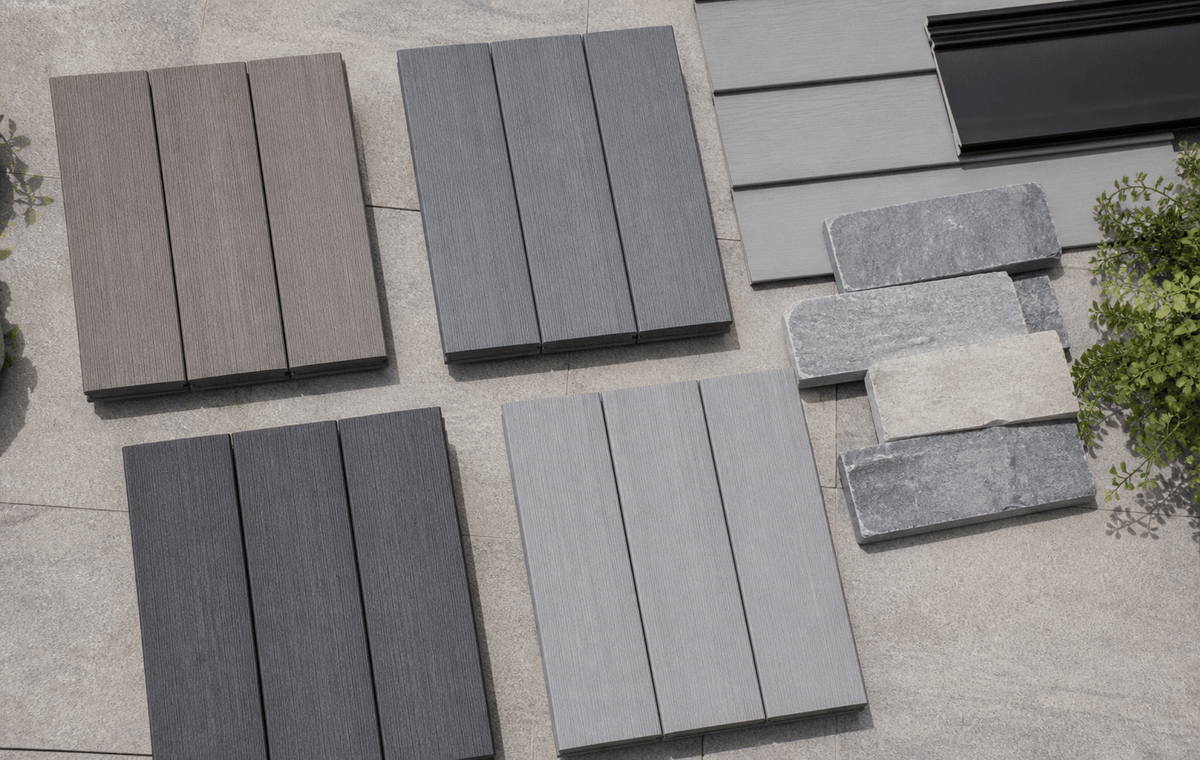
Grey is sometimes chosen because buyers assume it will hide everything. It will not. Pale grey can show soil and grill marks. Dark grey can show dust, pollen, and water spots. Mid-grey often hides ordinary outdoor life better, but the exact result depends on texture, shade, and surrounding plants.
Use the composite decking layout article, waterproof composite decking guide, composite wall cladding article, and contact Composite Deck Pro when the grey deck needs to coordinate with wall cladding, screens, or balcony surfaces. A calm palette is usually more durable than a trend-driven color picked from a single photo.
Texture can make the same grey behave differently. A brushed matte grey may hide footprints better than a flat smooth grey, while a deep embossed grey may collect more dust in shaded yards. Test samples with a little water and garden soil nearby so the color decision reflects normal use.
Let the Undertone Do the Work
Grey composite decking can be elegant, practical, and flexible when the undertone fits the house and yard. Test warm, cool, pale, mid, and charcoal samples outside. Compare them with trim, railing, stone, furniture, and planting. The best grey deck rarely shouts. It quietly makes the rest of the outdoor room feel more finished.