
The Undertone Controls the Design
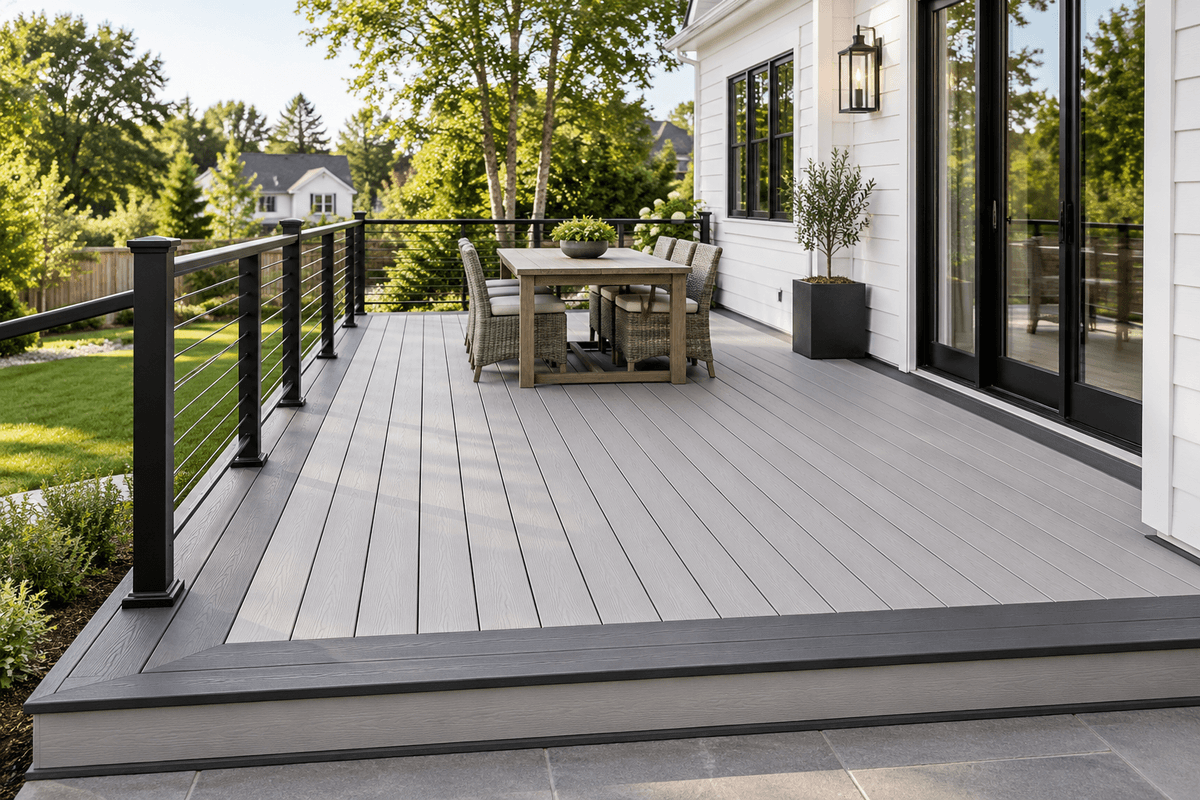
Grey composite decking can lean blue, green, brown, taupe, or nearly charcoal. That undertone determines whether the deck feels crisp beside white siding, calm beside stone, or unexpectedly cold beside warm brick. Product names are not reliable color measurements.
Place actual samples against the house materials that will remain. The outdoor color testing guide, composite board selection guide, and decking and flooring options resources provide a starting point, but the exterior light on the property should make the final decision.
Morning and Afternoon Light Can Reverse Your Preference
A cool gray may look balanced in blue morning shade and distinctly blue in open midday light. A warm gray can appear beige at sunset. Wet boards often look darker and more saturated than dry boards, while dust and pollen can soften contrast.
Leave samples outside for several days and move them among full sun, open shade, and covered areas. View them from inside the rooms that overlook the deck as well as from the yard. The deck occupies a large visual area, so a small sample needs context.
Use the House as the Fixed Color
Roofing, masonry, window frames, siding, and permanent hardscape are expensive to change. Select a gray that supports those materials instead of matching a temporary cushion or paint accent. If the house already combines warm and cool finishes, a midtone gray with subtle variation may bridge them.
Photograph samples beside each fixed material, but do not rely only on phone images. Camera processing can shift white balance. Make the choice with the physical sample, then use photos to compare layouts.
- Compare warm gray, cool gray, and neutral gray samples together.
- View each sample in sun, shade, wet conditions, and interior sightlines.
- Check the undertone against siding, brick, stone, roofing, and paving.
- Test railing and fascia colors beside the decking, not separately.
- Keep the exact product and color name attached to every sample.
Light Gray and Charcoal Create Different Outdoor Rooms
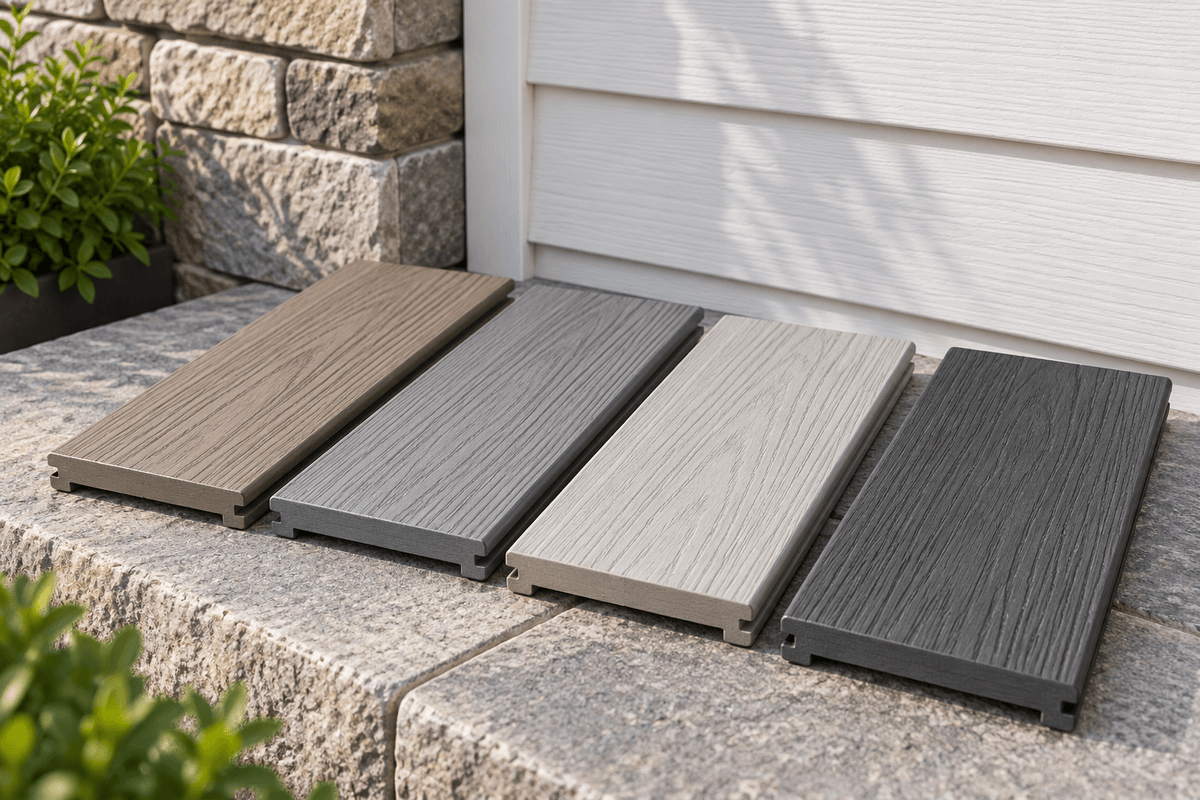
Light gray can make a compact deck feel open and often shows less heat gain than a darker color under similar conditions. It may display leaf tannins, rust, or tracked soil differently. Charcoal creates stronger contrast and can anchor a modern design, but direct sun and light-colored dust deserve attention.
Read the deck heat and comfort article, outdoor color-change guide, and routine cleaning guide articles before treating color as a purely decorative choice. Comfort, weathering expectations, and routine care affect how the finish performs in daily use.
Borders Can Keep a Large Gray Field From Feeling Flat
A darker picture frame gives a light-gray deck a defined perimeter. A warm brown border can connect gray boards with brick or timber details. Matching fascia creates a monolithic block, while contrasting fascia emphasizes the platform.
Use contrast intentionally at stairs and level changes. A border may help define edges, but it does not replace lighting or code-required safety details. The deck edge guide guide explains the framing and fastening behind the visual line.
Railing Changes the Apparent Temperature of the Color
Black railing can sharpen a pale gray deck and connect it with dark window frames. White railing creates a coastal or traditional effect but may increase visual brightness. Bronze and brown rails can warm a cool-gray surface.
Look through the railing from inside the house. Closely spaced dark balusters may dominate the view, while glass changes reflections and cleaning needs. Choose decking and railing as one elevation rather than two catalog items.
Variation Helps the Deck Look Natural
Boards with highlights, lowlights, and varied grain can reduce the flat appearance of a large single-color field. Variation also means adjacent boards need layout attention. Open several packages and mix boards across the deck according to the manufacturer's instructions.
Keep labels until the owner accepts the layout. Different collections may offer similar color names with different profiles, performance, and warranties, so use the manufacturer comparison guide and warranty questions checklist checklists to compare more than appearance.
The Landscape Will Change Around the Gray Surface
Spring foliage can push a cool gray toward blue-green, while dry summer grass and autumn leaves make the same deck look cooler by comparison. Snow, wet stone, and bare branches create another palette. Review the sample against the seasons that dominate the property instead of designing only for one catalog photograph.
Planters and outdoor fabrics can supply warmth without changing the permanent surface. Terracotta, natural timber furniture, and rust-colored textiles soften a cool gray; blue, black, and white accents reinforce a crisp modern direction. Keep large permanent elements restrained so accessories can change later.
Consider what falls onto the deck. Pale mineral dust, red soil, dark leaf tannins, and grill residue show differently across gray tones and grain patterns. A sample exposed near the actual trees, paving, and cooking area provides better evidence than a perfectly clean showroom board.
Build a Small Palette Before Ordering a Large Surface
Limit the final palette to the decking field, one border or fascia choice, railing, and a few exterior accents. Too many grays can clash because their undertones differ. A simple sample board with all permanent materials is more useful than a digital mood board.
Explore Composite Deck Pro and the available flooring options, then contact Composite Deck Pro with daylight photos, house materials, preferred undertone, exposure, and sample observations. The goal is a gray that belongs to the property in every season.