
This Comparison Is Really About How the Deck Will Be Finished
At first glance, grooved vs square Trex sounds like a simple product-profile comparison. In reality, it is a deck-detail question. The face of the board may look similar from above, but the edge format changes how the board is fastened, where it belongs in the layout, and whether the finished deck looks clip-based and seamless or more traditional and directly fixed.
Trex itself separates grooved-edge and square-edge boards clearly in its profile literature, and that is the right starting point. If you are deciding between the two, it helps to connect the choice with the way your deck will actually be built. Composite Deck Pro's grooved deck board guide, composite decking installation guide, deck board width guide, decking length guide, and Composite Deck Pro homepage make that bigger picture easier to understand.
What Grooved Boards Actually Change
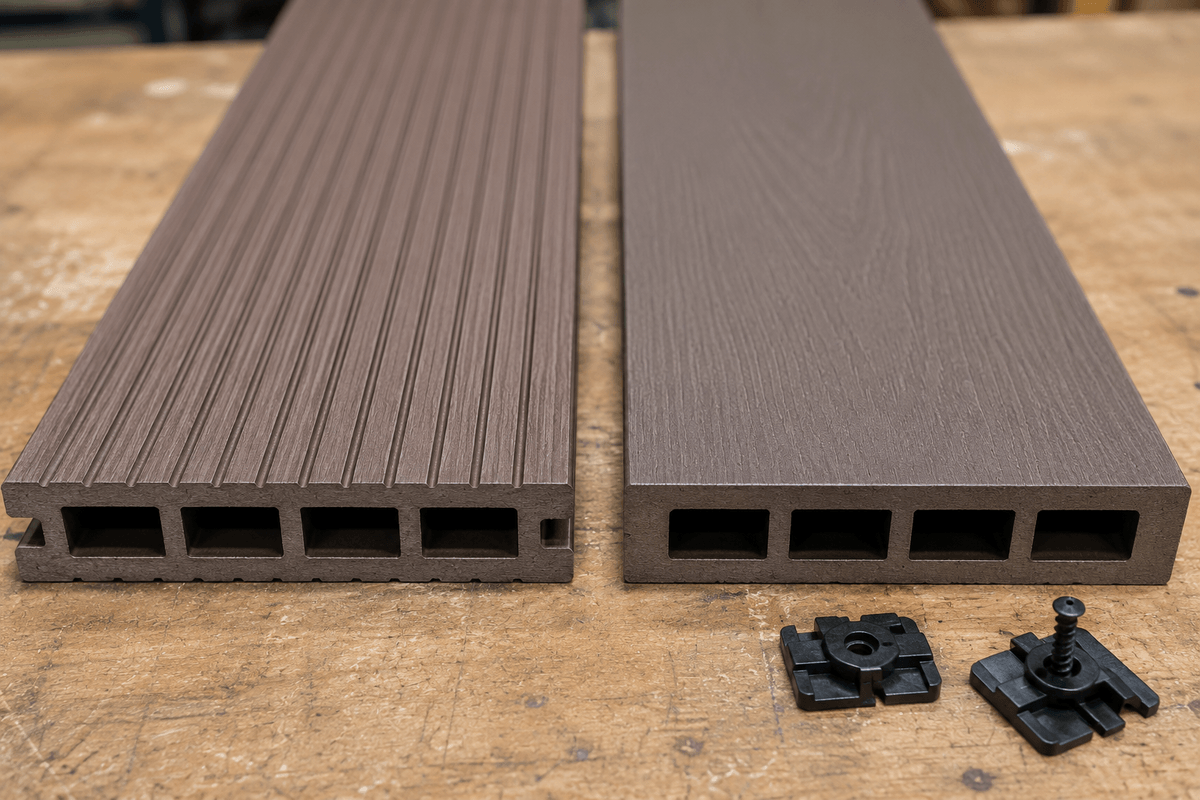
Grooved boards are usually chosen for the main field because they work with hidden fastener clips. That gives the deck a cleaner surface with fewer visible screw heads, which is one reason grooved systems are so common in contemporary backyard designs. A clip-based field can also help keep spacing consistent if the whole system is planned correctly.
The tradeoff is that grooved boards are not automatically the answer for every location on the deck. Stairs, perimeter trim, and some border details often need square-edge boards instead, because those conditions are better handled with direct fastening and more controlled edge treatment.
- Use grooved boards where a hidden-fastener field is the main goal.
- Expect square-edge boards to remain useful at borders and stair zones.
- Check clip compatibility before assuming profiles from different lines will mix easily.
- Treat edge profile as part of the deck system, not just a cosmetic option.
- Plan the perimeter early so the material order reflects the real profile mix.
Where Square Trex Still Earns Its Place
Square-edge boards are often underrated because buyers focus on the visible walking field first. But square boards usually make life easier where clips are not the cleanest solution. That includes picture-frame borders, stair treads, and detail zones where exposed edges need more deliberate control.
In practice, many polished decks are not all grooved or all square. They are mixed intelligently. The field uses grooved boards for the cleaner look. The perimeter and stair work use square-edge boards where direct fastening is structurally or visually more sensible. If you already understand that, the choice becomes less about which profile is better and more about which part of the deck you are solving.
Why the Wrong Profile Choice Creates Avoidable Friction
A deck can still be built with the wrong assumptions, but it becomes more annoying and more expensive. If you over-order grooved boards and realize later that the borders and stairs need square-edge stock, the project gets less efficient fast. If you order square-edge boards for a field where you really wanted a hidden-fastener look, the result can feel visually busier than expected.
This is also why Trex profile information and layout guides should be read alongside broader planning resources. Composite Deck Pro's grooved deck board guide, composite decking installation guide, deck board width guide, decking length guide, and contact page help connect profile choice to the bigger design. The profile is not a footnote. It changes the whole installation strategy.
Conclusion
Grooved vs square Trex is best solved by thinking about fasteners and detailing before aesthetics alone. Grooved boards are usually right for the main clip-fastened field. Square-edge boards usually belong where borders, stairs, and edge control matter more. Once you see the decision that way, ordering the right mix becomes much easier and the finished deck is far less likely to feel compromised.