
Worth Starts With How Long You Will Use It
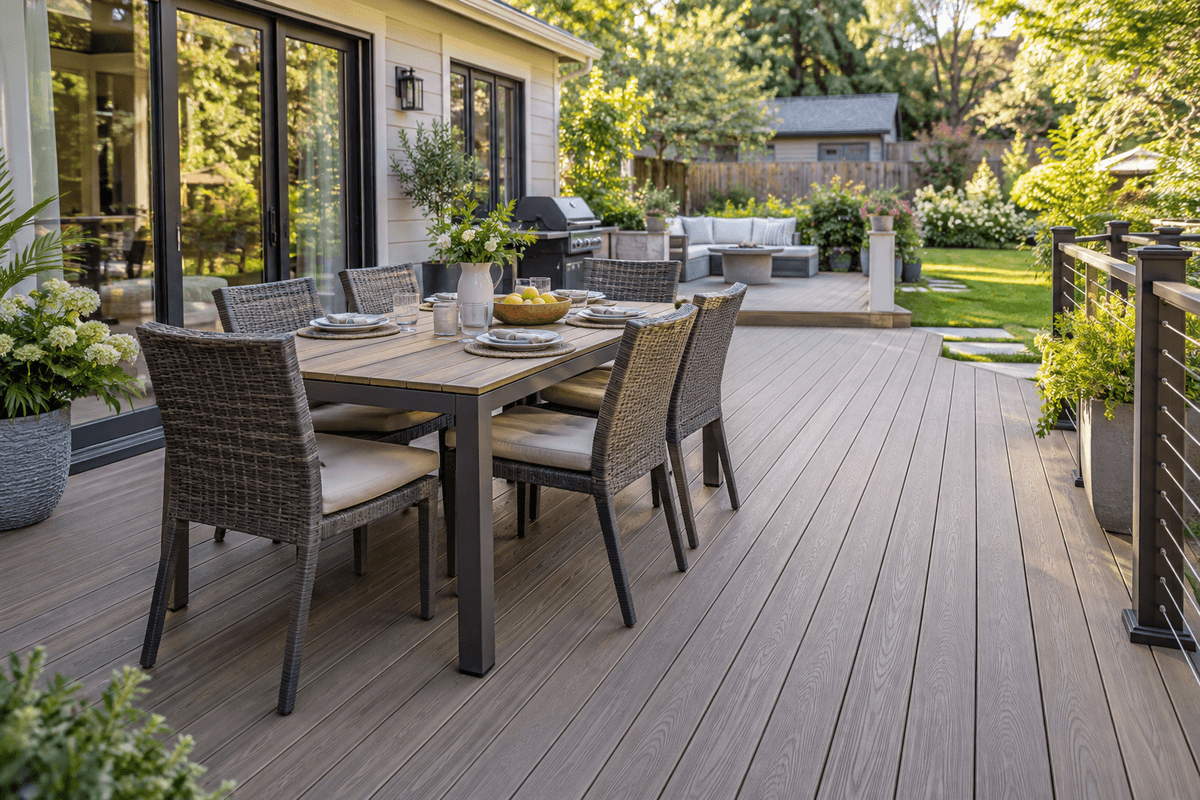
Is composite decking worth it? The answer changes with the household, not just the price tag. A homeowner planning to move soon may value a different finish than someone building a deck for the next twenty years. Composite usually asks for more money upfront than basic pressure-treated boards, while offering a different maintenance routine and a more predictable finished surface.
Start with the years you expect to use the deck and the work you are willing to do during them. The long-term value discussion, complete deck budgeting article, and wood versus composite comparison resources help separate initial cost from the day-to-day experience of ownership.
Count the Weekends as Well as the Dollars
Wood maintenance is not only a receipt for stain or sealer. It includes moving furniture, washing, drying, sanding rough spots, watching the weather, applying finish, and keeping people off the surface. Some owners enjoy that work. Others postpone it until appearance and small repairs become harder to recover.
Composite decking still needs sweeping and periodic cleaning, but it generally changes the kind of work required. The cleaning routine and low-maintenance decking overview articles describe a routine centered on debris and spills rather than recurring refinishing. Time saved has value only if those are tasks you genuinely want to avoid.
- Estimate how many years you expect to remain in the home.
- Price the full deck, including frame, railing, stairs, fascia, and fasteners.
- Write down the maintenance tasks you will realistically perform.
- Test samples in the hottest and shadiest parts of the yard.
- Compare written installation instructions and warranties for the exact products.
Use Can Justify the Upgrade
A deck used for daily meals, children, pets, and frequent entertaining may benefit more from a consistent, splinter-free surface than a platform used a few weekends each year. Color stability, easy cleanup, hidden fasteners, and comfortable board texture can matter every day even when they are difficult to express as a resale calculation.
Design can add value too. Long board lines, coordinated borders, fascia, and stairs make the deck feel connected to the house. The composite deck board guide, outdoor color testing guide, and edge finishing guide guides help decide whether a higher product tier improves something the household will actually notice.
Installation Quality Can Erase Material Value
An expensive board cannot correct weak framing, blocked drainage, wrong joist spacing, or insufficient expansion gaps. If the frame moves or holds moisture, the finished deck may disappoint regardless of the surface material. Resurfacing deserves particular care because old framing can look acceptable from above while hiding damage at connections and joist tops.
Budget for inspection and preparation. Follow the manufacturer instructions for fastening, ventilation, board direction, and gaps. The installation planning guide, moisture-planning guide, and grooved decking guide articles show why material and installation have to be evaluated as one system.
Composite Is Not Automatically the Right Answer
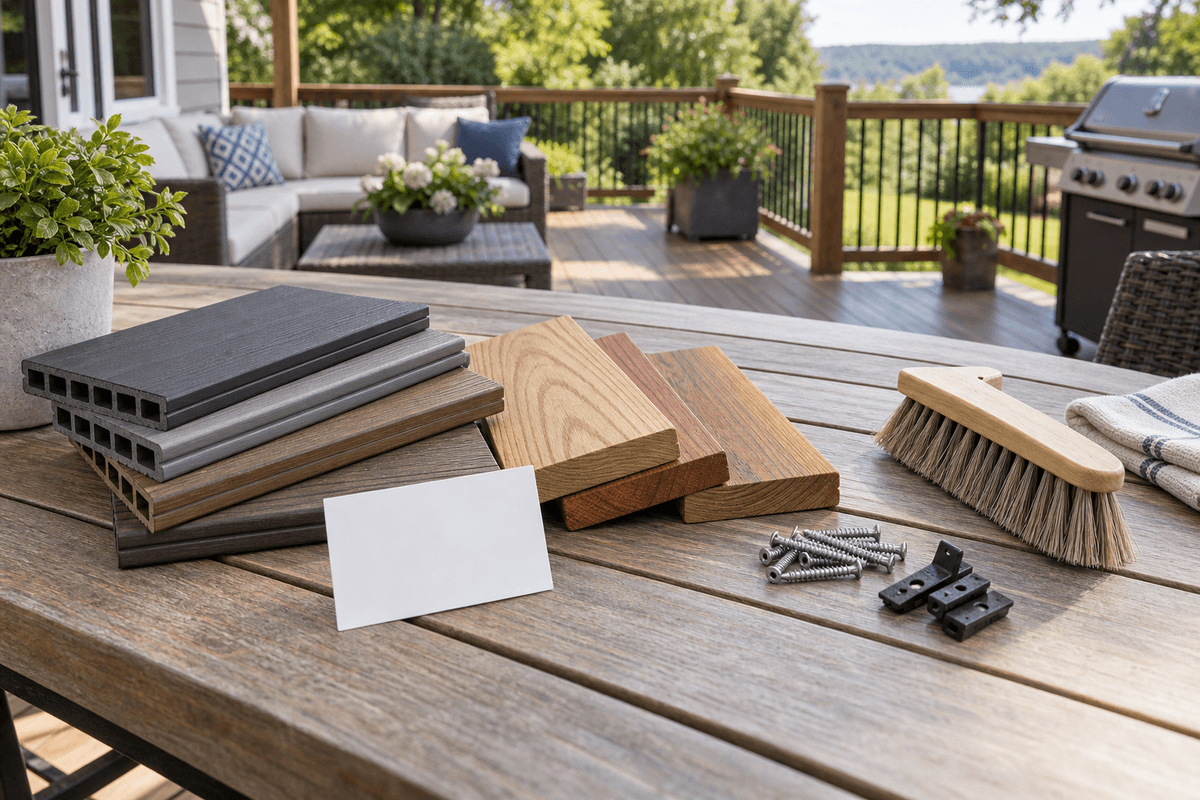
Wood may still be sensible for a tight initial budget, a temporary structure, a homeowner who prefers natural aging, or a project where matching an existing historic detail matters most. Composite may be a stronger fit when low refinishing demand, consistent appearance, and long-term use carry more weight. Neither choice becomes good simply because it is popular.
Avoid paying for features that do not solve a real need. A premium grain pattern may be wasted under rugs and furniture. A dark dramatic color may be uncomfortable in intense sun. A complex border can consume budget that would be better spent correcting the frame or improving stairs.
Test the Decision Against Real Scenarios
A useful value test starts with three realistic futures. In the first, the household keeps the deck for many years and uses it every week. In the second, the property is sold sooner than expected. In the third, the owner becomes too busy to maintain a stained wood surface on schedule. Composite tends to look more compelling in the first and third situations because avoided refinishing and a consistent surface are experienced repeatedly. The second case depends more heavily on local buyer expectations and whether the completed deck improves the home's presentation without consuming an excessive share of the renovation budget.
Next, compare like-for-like designs. A basic wood rectangle should not be compared with a composite proposal that includes premium railing, lighting, picture framing, fascia, and rebuilt stairs. Ask each contractor to price the same footprint and safety details, then show upgrades separately. This makes it possible to see how much of the difference belongs to the decking itself. It also exposes frame repairs that would be required whichever surface is chosen.
Comfort belongs in the trial as well. Place full-size samples where the deck will receive afternoon sun, splash them with water, walk on them with bare feet, and view them from inside the house. Surface temperature, traction, color, and grain can influence satisfaction more than a brochure's feature list. If pets use the space, include scratch visibility and cleanup in the sample test. If the deck surrounds a pool, review the product's approved application and drainage details rather than relying on the word composite alone.
Finally, assign importance to each result instead of forcing every benefit into dollars. Give maintenance time, initial price, appearance, comfort, expected ownership period, repair access, and warranty confidence a simple score. The winning material should be the one that performs best on the priorities that actually govern the household. That is a stronger answer than assuming composite is always worth it or rejecting it solely because its first invoice is higher.
Make the Decision With One Page of Evidence
Put the final wood and composite options on one page. Record installed scope, expected care, warranty terms, sample observations, and the features that matter to the household. This prevents a low board price from being compared with a complete installed proposal and keeps sales language from replacing practical evidence.
Composite decking is worth it when its lower-upkeep ownership and design advantages match the way the deck will be used long enough to justify the initial difference. Explore decking and flooring options options or contact Composite Deck Pro with site photos, dimensions, exposure, and the use priorities that will shape the decision.