
There Is No Single Countdown Clock
How long does composite decking last? Manufacturer materials commonly discuss decades of residential use, and product warranties often run for 25 years or more. Those figures are useful context, not a universal expiration date. Product line, exposure, installation, traffic, care, and the condition of the supporting frame all shape the real outcome.
A deck can also reach the end of its useful life in different ways. The boards may remain structurally serviceable while the owner dislikes the color or layout. The surface may look good while hidden framing has moisture damage. A realistic lifespan discussion therefore covers the whole deck, not just whether one sample board resists rot.
Product generation matters too. Older uncapped composites, modern capped composites, and PVC boards do not share one construction or one set of care instructions. Even within a brand, collections can carry different performance features and warranty periods. Identify the exact product before applying a broad lifespan claim or a cleaning method found online.
The Frame Can Age Faster Than the Surface
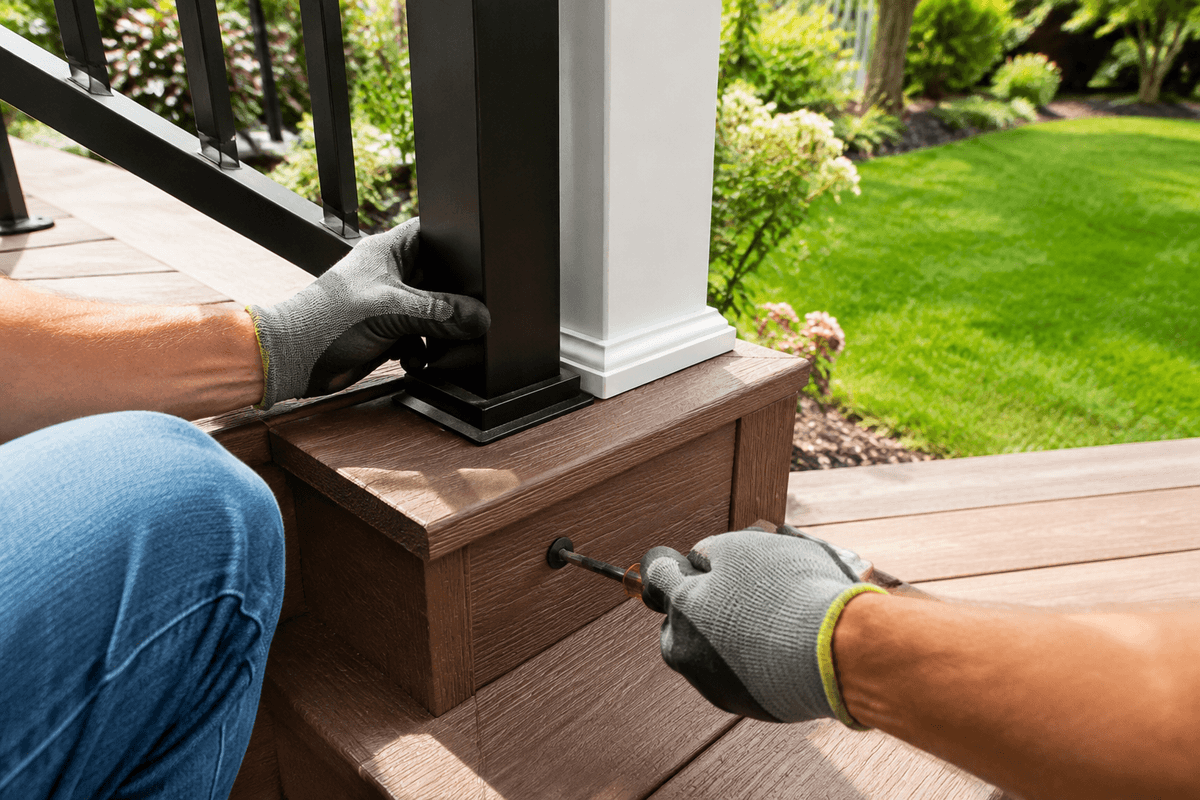
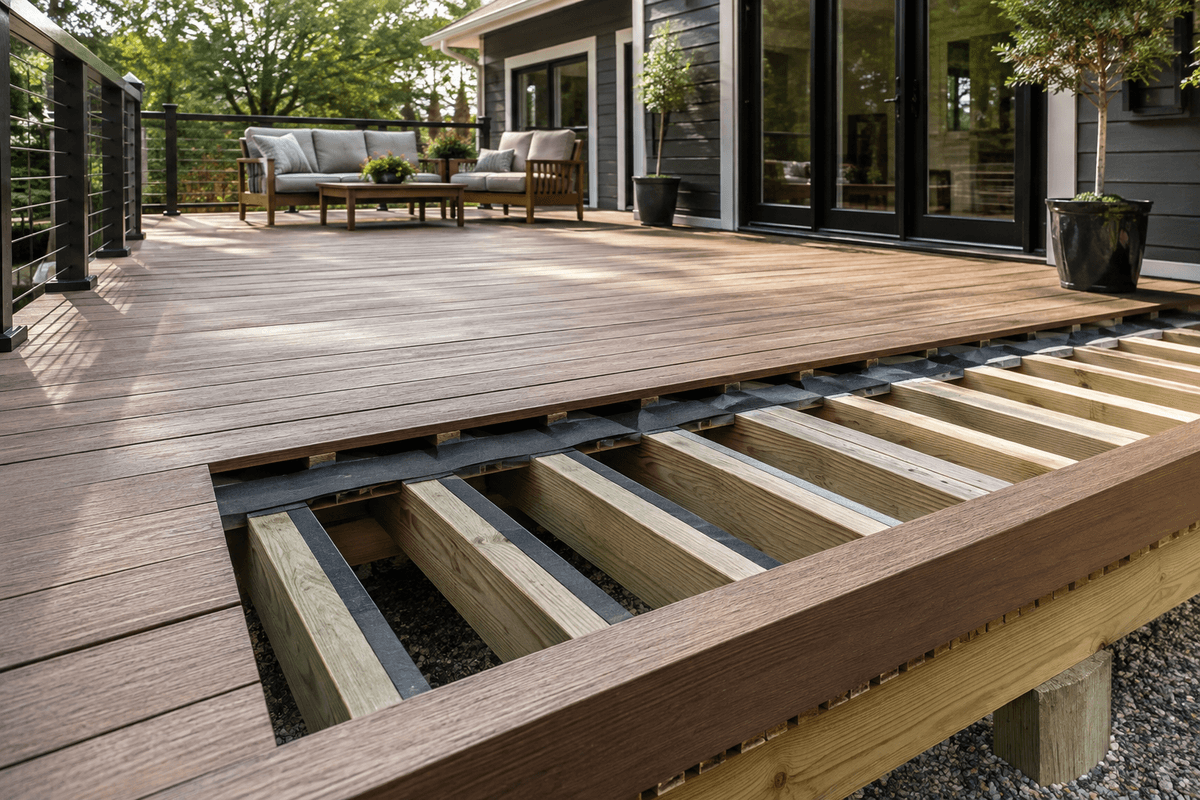
Composite boards are often installed over pressure-treated wood framing. If water repeatedly sits at joist tops, around fastener penetrations, or near the ledger, the structure can deteriorate while the visible surface still looks presentable. During resurfacing, installing new boards on questionable framing can shorten the value of the upgrade.
Check footings, posts, beams, joists, blocking, ledger attachment, flashing, and drainage before the surface goes down. Confirm joist spacing for the product and board direction. The moisture-planning guide, composite decking installation guide, and expansion gap guide guides explain how airflow, water movement, and thermal movement support a stable deck over time.
Installation Errors Become Long-Term Stress
Incorrect gaps, unsupported board ends, unapproved fasteners, insufficient blocking, and overtightened screws may not look dramatic on installation day. Repeated heating, cooling, loading, and wet weather can turn those details into movement, noise, uneven lines, or damaged edges. Following the current instructions for the exact board matters more than using a familiar rule from wood decking.
A clear installation record is valuable. Photograph the framing and flashing before covering them. Save the product labels, invoice, fastening information, and installation guide. If a concern appears later, that record helps identify whether the issue is local damage, installation, maintenance, or the product itself.
Maintenance Protects Usefulness, Not Just Appearance
Composite decking usually avoids seasonal staining and sealing, but low maintenance is not no maintenance. Leaves, pollen, food, grease, soil, and shaded moisture can collect on any outdoor surface. Prompt cleaning reduces staining risk and keeps gaps and drainage paths open. Furniture pads and sensible planter placement can reduce scratching and trapped moisture.
A simple care routine is often enough:
- Sweep leaves and debris before they remain wet for long periods.
- Clean spills promptly with methods approved by the board manufacturer.
- Keep gaps, drains, and the area below the deck from becoming blocked.
- Use furniture glides and lift heavy objects instead of dragging them.
- Inspect railings, stairs, fasteners, framing, and ledger connections each year.
- Correct drainage or irrigation problems instead of repeatedly cleaning the symptom.
Sun, Shade, and Use Change the Aging Pattern
A sunny deck experiences heat and ultraviolet exposure. A shaded deck may remain damp and collect organic material. Pool decks receive splash and chemicals. Rental properties and restaurant patios see heavier traffic than a quiet residential balcony. The same product can age differently across these settings.
Choose color, texture, and product tier for the actual exposure. Test samples in direct sun and shade, and consider how often the space will need cleaning. The composite decking color guide, composite decking cleaning routine, and low-maintenance decking overview articles help translate broad durability claims into decisions about a specific yard.
Watch for changes rather than waiting for a major failure. Persistent ponding, widening joints, loose stair parts, movement at rail posts, new low spots, or debris that never dries deserve investigation. Some symptoms point to the frame rather than the board. Early diagnosis can keep a small correction from becoming a large replacement project.
Warranty Length Is Not the Same as Service Life
A warranty defines selected obligations under stated conditions; service life describes how long the installed deck remains useful. Read coverage for structural performance, staining, fading, labor, transfer, commercial use, and exclusions. A 25-year warranty does not guarantee every visual characteristic for 25 years, and a deck does not necessarily fail when the warranty ends.
Compare the written terms for the exact product rather than relying on category averages. The composite board manufacturer guide guide can help structure that review. Keep proof of purchase and maintenance records, especially if registration is required or the warranty may transfer to a future owner.
Plan for Decades by Planning for Repairs
A durable deck should tolerate local intervention. Store a few matching boards correctly, keep spare fasteners, and know how a center board can be removed. Leave access to drainage points and utilities. Avoid details that require destroying large finished areas to reach a small problem.
The practical answer to how long composite decking lasts is that a quality system can serve for decades when product, frame, installation, exposure, and care work together. Review the wood versus composite decking comparison and composite deck board guide resources before choosing. You can also visit Composite Deck Pro or contact Composite Deck Pro with site photos and dimensions for a more grounded material discussion.