
A Believable Wood Effect Starts With Restraint
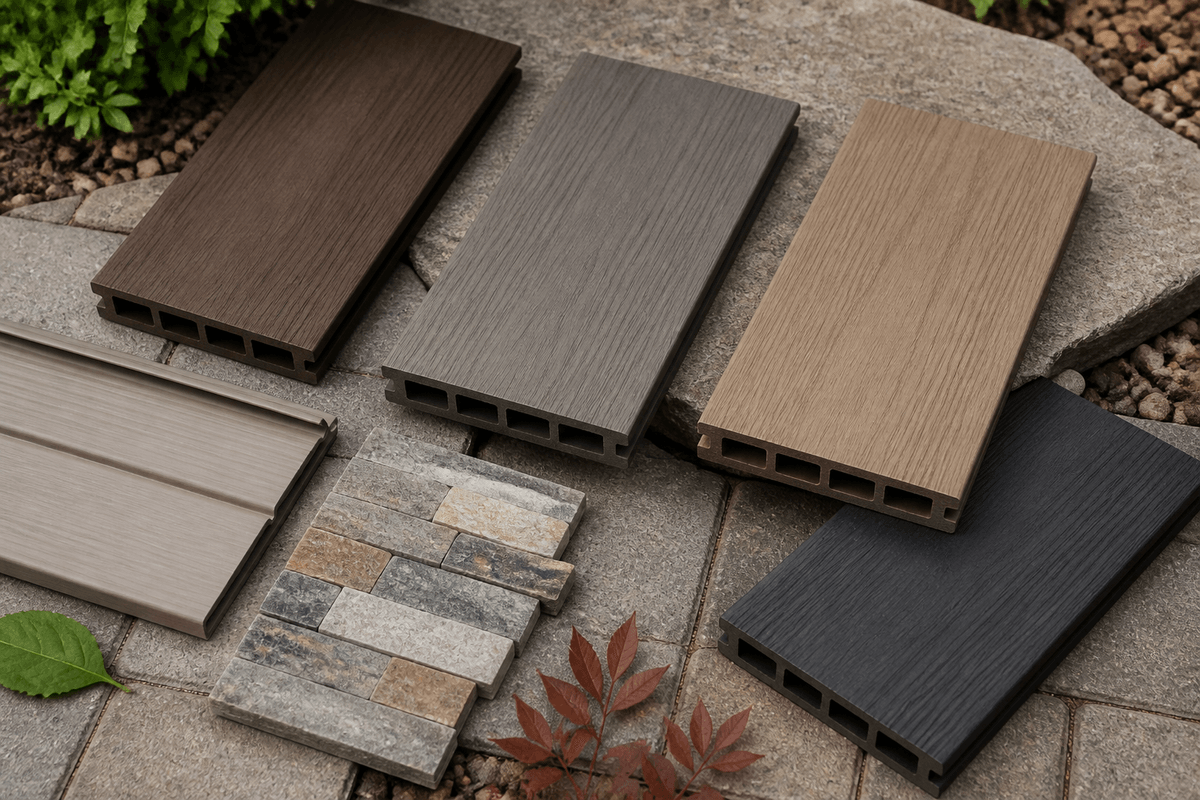
Wood effect composite decking is attractive because it offers some of the warmth people like in timber without asking the deck to behave exactly like lumber. The best versions do not shout. They use grain, undertone, and color variation carefully so the surface feels natural at deck scale. A dramatic sample can be exciting in the hand, but overwhelming across a full patio.
This is why a wood-look deck should be selected outdoors and viewed from several distances. The composite decking color guide, composite deck board guide, wood plastic composite decking guide, wood versus composite decking comparison, and decking and flooring options resources help frame the choice as a design decision as much as a material decision. The board has to work with the house, landscape, railings, furniture, and light.
Grain Should Support the Architecture
Heavy grain can look rustic and warm, especially beside brick, stone, or traditional siding. A quieter grain can look more refined on modern homes. Straight, calm boards may help a small patio feel larger. More varied boards can add depth to a big open deck. There is no single best wood effect; there is only the effect that belongs with the project.
Look at the house before falling in love with a board sample. If the exterior already has strong stone, busy landscaping, dark trim, and patterned furniture, a calmer deck surface may be better. If the house is plain, a richer wood-look board may add needed texture.
- Use subtle grain when the house already has several strong materials.
- Use richer wood tones when the outdoor room needs warmth.
- Check undertones against siding, stone, mulch, and furniture.
- Mix board lengths and layout details only when the system supports it.
- View samples from inside the house as well as from the yard.
Color Variation Needs a Layout Plan
Wood effect composite decking often includes color variation to avoid a flat plastic look. That variation can be beautiful, but only if the layout handles it well. Boards should be distributed thoughtfully so light and dark pieces do not accidentally form stripes or patches. On larger decks, a dry layout or careful board selection can make the final surface feel more natural.
Board direction matters too. Long runs can show variation differently than shorter framed sections. Borders, breaker boards, and stair treads can either organize the look or interrupt it. The composite decking layout article guide is worth reading before ordering because layout choices affect both appearance and waste.
Edges Decide Whether the Illusion Holds
A realistic top surface can lose its effect if the edges are awkward. Stairs, fascia, exposed board ends, and picture-frame borders need to be planned with the wood-look surface. Square-edge boards may be useful for some details. Grooved boards may work well in the field. Fascia can hide framing and make the deck feel complete.
The goal is not to hide that the deck is composite. The goal is to make the material feel intentional. A clean edge detail is often more convincing than an aggressive grain pattern. If the finishing pieces are ignored, the deck can look expensive and unfinished at the same time, which is a tragic little plot twist nobody asked for.
Lighting Changes the Whole Read
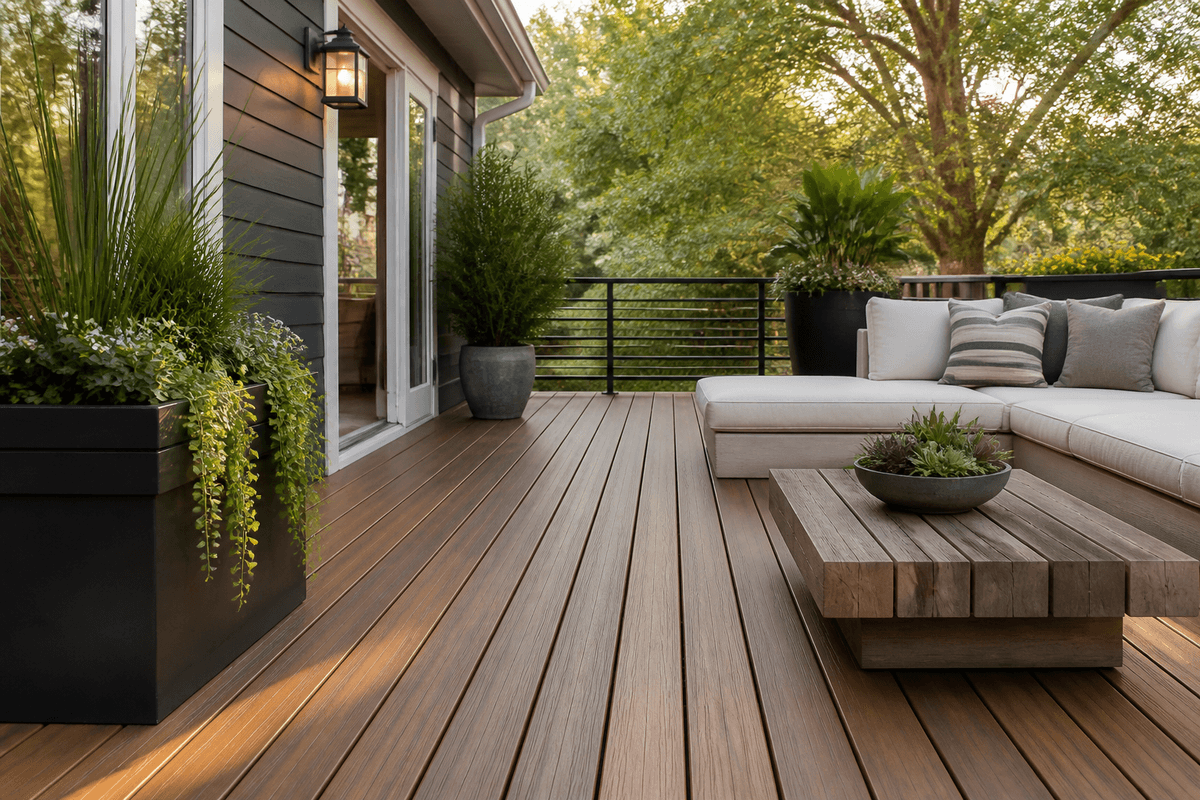
Wood effect composite decking can look different in morning light, harsh afternoon sun, and evening shade. Warm browns may become richer near sunset. Cool grays may pick up blue or green undertones beside plants. Dark boards may show dust more clearly in certain light. Samples should spend time outside before a final decision is made.
Maintenance should also influence the look. The composite decking cleaning routine, low-maintenance decking overview, slip-resistant composite decking guide, and waterproof composite decking guide articles help connect appearance with use. A beautiful wood-effect surface should still be easy to sweep, rinse, and live with. If a texture looks good but traps dirt in a shaded yard, it may not be the best fit.
The Most Natural Choice Fits the Whole Yard
Wood effect composite decking is most successful when it feels like part of the whole outdoor composition. The board should connect house color, landscaping, furniture, fencing, and trim. It should provide warmth without pretending to be something it is not. A restrained, well-coordinated composite deck can feel more natural than a busy board chosen only because the sample looked dramatic.
Choose the wood effect by testing samples outside, planning board layout, and resolving edges early. If the project needs help comparing tones or profiles, contact Composite Deck Pro with photos of the house exterior and the preferred board colors. A few careful decisions before ordering can make the finished deck feel much more settled.