
Artificial wood is a broad search term, but in outdoor projects it usually points to composite, PVC, or other manufactured surfaces that aim to deliver a wood-like look with lower upkeep than natural timber. People use the phrase when they want the warmth of wood without signing up for the same maintenance cycle. That makes it less of a style question and more of a lifestyle question.
If the project is a deck, patio platform, or outdoor floor, the main task is to compare how convincing the surface looks, how much care it will need, and how it behaves in the local climate. Composite Deck Pro's composite decking overview, non-wood decking article, and Floor page are strong starting points for that comparison.
Why Homeowners Look for Artificial Wood
The appeal is straightforward. Many people like the visual language of wood but want less sanding, sealing, and refinishing. Manufactured boards can also offer more predictable color choices and more stable coordination across stairs, fascia, and field boards. That consistency can be useful on contemporary projects where the deck should read as a clean exterior surface rather than a rustic timber platform.
Of course, not every artificial wood product looks the same. Surface embossing, board width, edge style, and color blending all affect how natural the finished deck feels. A well-chosen manufactured board can look polished and deliberate. A poor one can feel flat or overly synthetic.
What to Compare Before Choosing
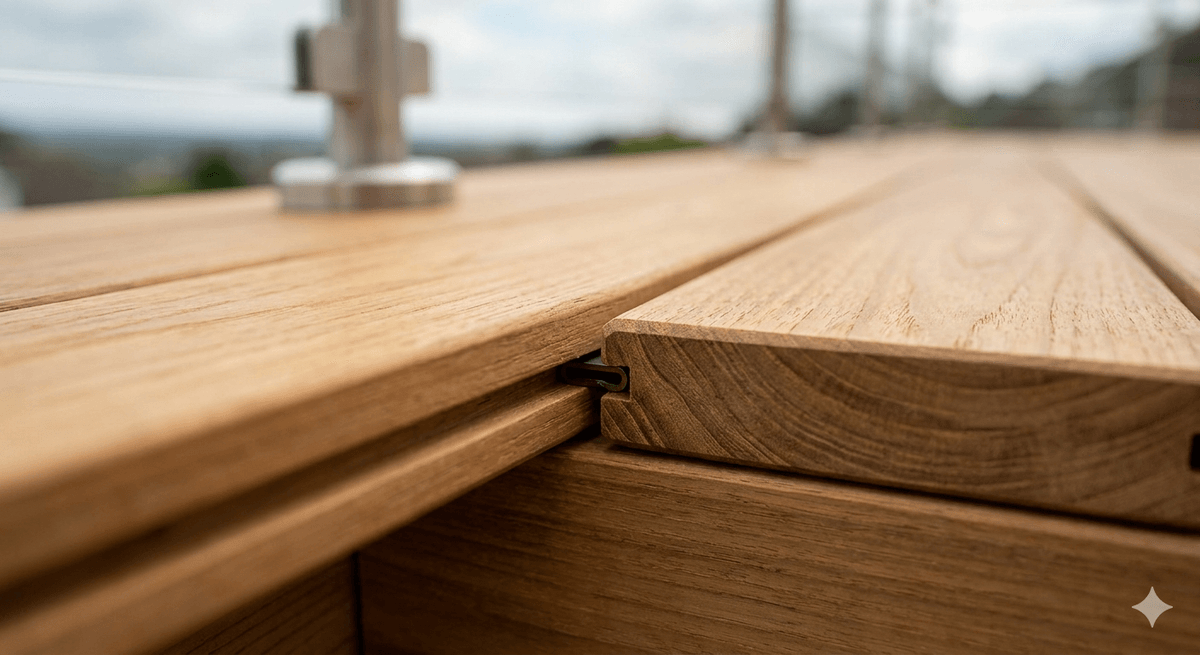
- How realistic the grain, color variation, and edge detailing look in daylight.
- What routine care the manufacturer expects over the life of the deck.
- Whether the product uses grooved, square-edge, or mixed-profile installation.
- How hot the surface may feel in strong sun and whether lighter colors are available.
- How the board dimensions support the layout you want to build.
These comparisons matter because "artificial wood" can describe very different performance profiles even when the boards look similar in a product photo.
Appearance Depends on the Whole Deck, Not Just the Board Sample
A good artificial wood deck is not only about grain pattern. It also depends on spacing, board width, border treatment, and how visible fasteners are handled. Composite Deck Pro's grooved board guide, flat board article, and board width guide are useful here because they show how profile and proportion shape the final look.
That means a realistic surface can still disappoint if the layout is careless. By contrast, a simple well-proportioned design often makes manufactured wood-look products feel far more convincing.
Low Maintenance Has to Be Defined Honestly
Artificial wood is often chosen for lower upkeep, but lower upkeep does not mean no care. Decks still need cleaning, sensible spacing, and attention to site conditions such as leaves, mold risk, or trapped moisture. The benefit is usually that the maintenance is simpler and less frequent than a natural timber finishing cycle.
Composite Deck Pro's maintenance article, heat article, and movement article help clarify what realistic low-maintenance ownership looks like.
Conclusion
Artificial wood is often the right choice when the goal is a wood-inspired deck or outdoor floor with less maintenance and more visual consistency. The key is to evaluate appearance, board format, heat behavior, and cleaning expectations as a group. Once those pieces align, manufactured wood-look decking can be a practical and attractive long-term solution.