
Composite deck flooring is often chosen by homeowners who want an outdoor surface that looks finished, feels more refined than bare framing, and asks less of them than traditional timber over time. In practice, the term can cover several situations: a backyard deck, a patio platform, a balcony upgrade, or an outdoor floor zone where moisture, dirt, and daily foot traffic all matter.
That makes composite deck flooring less about one product and more about one performance goal. The surface needs to look good, handle weather well, and fit the way the outdoor room will be used. Composite Deck Pro's Floor page, composite floor decking article, and maintenance-friendly decking guide are relevant if you are comparing deck flooring options from a practical angle.
Where Composite Deck Flooring Usually Performs Well

Composite deck flooring is a strong fit for outdoor areas where repeated cleaning, occasional spills, and regular sun exposure are normal. It can work well for dining decks, garden platforms, poolside zones, and low decks where easy upkeep matters. Because many composite systems are designed around coordinated trims and accessories, they also suit projects where the finished look matters as much as the raw durability.
The best use case is often a space that should feel like an outdoor room rather than a rough utility platform. In those settings, low-maintenance ownership and design coherence are usually part of the same brief.
What to Compare Before You Buy
- Board width and board length, because they affect seam count and visual rhythm.
- Edge profile, especially if you want hidden fasteners in the main field.
- Heat behavior and color range if the surface sits in strong sun.
- Cleaning expectations around leaves, dust, food, and standing moisture.
- How the flooring will terminate at steps, borders, walls, or adjacent hardscape.
Comparing those details early helps prevent the common mistake of choosing a board for appearance alone and solving every other condition later at higher cost.
The Layout Is Part of the Flooring Decision
Composite deck flooring often looks its best when the layout is simple and measured. Wider boards can make a platform feel calmer, while longer boards can reduce seams across the field. Composite Deck Pro's decking lengths guide, board width article, and grooved board planning guide are useful if you are trying to make the floor feel more deliberate and less pieced together.
This is especially important on compact patios and balconies where every seam line is visible. A small area can look much more refined when the board format is chosen well.
Maintenance Simplicity Is Usually the Main Advantage
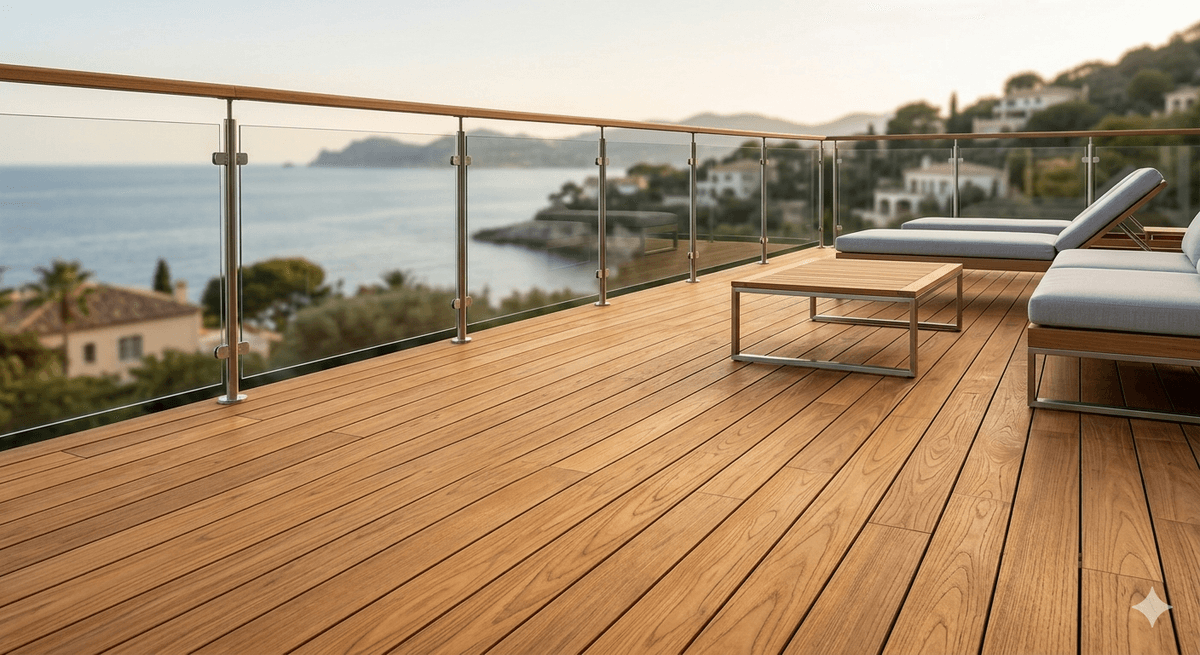
Composite flooring is often attractive because it simplifies ownership. That does not remove the need for cleaning, but it can reduce the refinishing cycle and help the surface stay presentable with more ordinary care. If the deck will host planters, dining furniture, or frequent foot traffic, that lower-maintenance profile can be a real benefit.
Composite Deck Pro's maintenance article, movement article, and heat article help set realistic expectations around care and performance.
Conclusion
Composite deck flooring is most compelling when the outdoor surface needs to work hard while still looking finished. If you compare board format, heat behavior, maintenance, and transition details before ordering, it becomes much easier to choose a flooring system that fits both the design and the daily life of the space.