
A Thin Surface Can Change the Ownership Experience
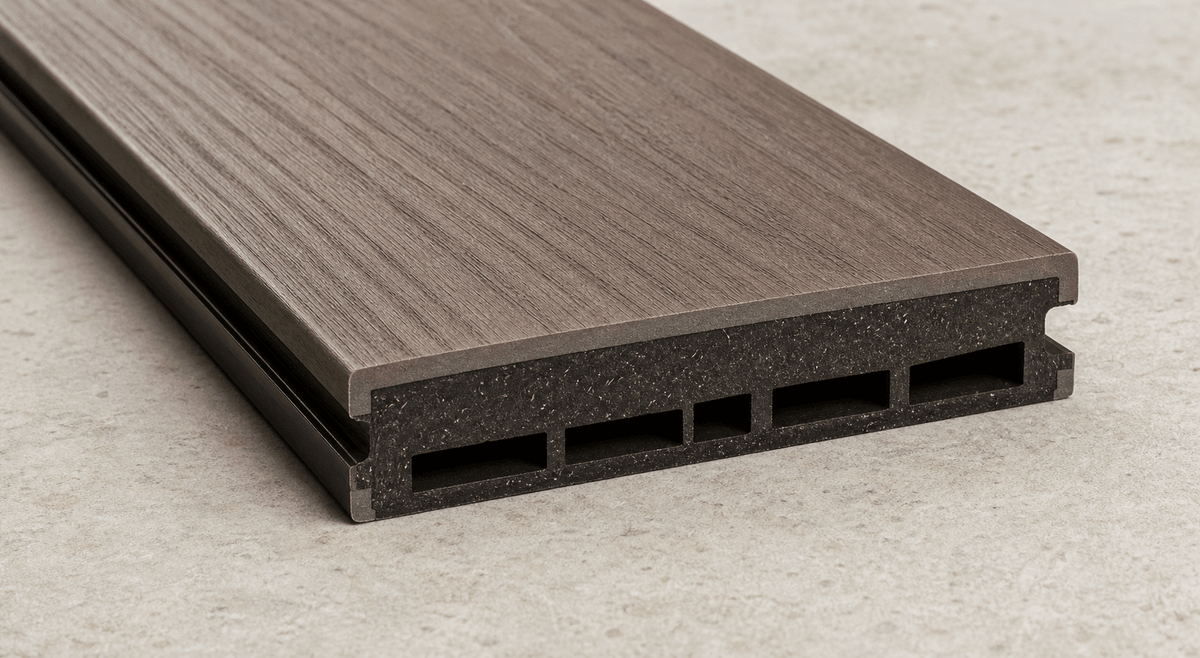
Capped composite decking combines a composite core with an outer polymer-based surface layer. From the patio, that cap is simply the color and grain people see. At the material level, it is intended to separate the core from much of the staining, moisture, fading, and everyday wear that reaches the walking surface.
The word capped is useful, but it is not a complete specification. Products can differ in cap formulation, number of covered sides, core design, profile, texture, color, and installation requirements. Compare the entire board through the decking and flooring options, composite board manufacturer guide, deck board sizing guide, composite decking installation guide, and low-maintenance decking overview rather than assuming the category name guarantees identical behavior.
What the Cap Is Designed to Handle
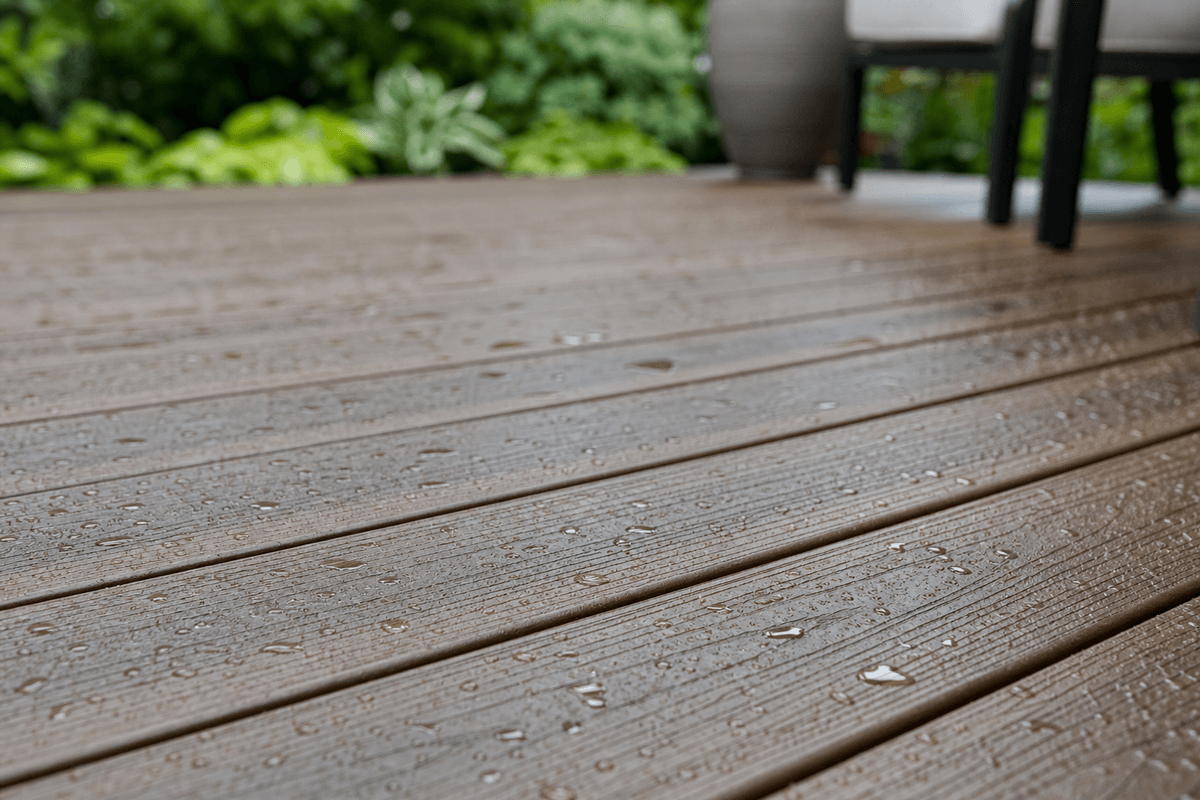
Deck surfaces meet spilled drinks, sunscreen, food, muddy shoes, wet leaves, furniture movement, sunlight, and repeated cleaning. A cap gives manufacturers a dedicated surface layer in which to develop color, grain, and resistance characteristics separately from the structural core. That helps explain why newer capped products can look and behave differently from early uncapped composites.
Resistance should not be confused with invulnerability. Prompt cleanup still matters, abrasive dragging can still mark a surface, and unsuitable chemicals can cause damage. Product care instructions remain the controlling source. The practical advantage is a surface designed around the kinds of exposure a residential deck routinely receives.
Ask How Many Sides Are Covered
Some boards carry a cap on the top and sides; others use broader coverage. The meaningful question is not whether one number is always superior, but how the coverage relates to the board profile, drainage, ventilation, approved applications, and cut-edge instructions. A protected top does not correct standing water or an installation that ignores required clearances.
Look at a full cross-section and ask the supplier to identify the core, cap, grooves, and any uncapped face. Confirm whether ripped boards, exposed cut ends, stair treads, fascia, or ground-adjacent details need special treatment. Those details often matter more than a broad claim printed on the front of a sample.
Questions Worth Asking Before You Compare Prices
Two capped boards can sit at different price points for reasons that are not obvious in a small sample. Build a consistent comparison around documented construction, appearance, and project support.
- Which faces are capped, and what does the exposed board cross-section look like?
- What cleaning products and tools does the manufacturer approve?
- Are stair, fascia, border, and square-edge boards available in the same finish?
- What joist spacing, gapping, ventilation, and fastening rules apply?
- Are stain, fade, scratch, heat, or slip claims supported by product-specific data?
- How should cut ends and unusual details be handled?
The Cap Also Carries the Design
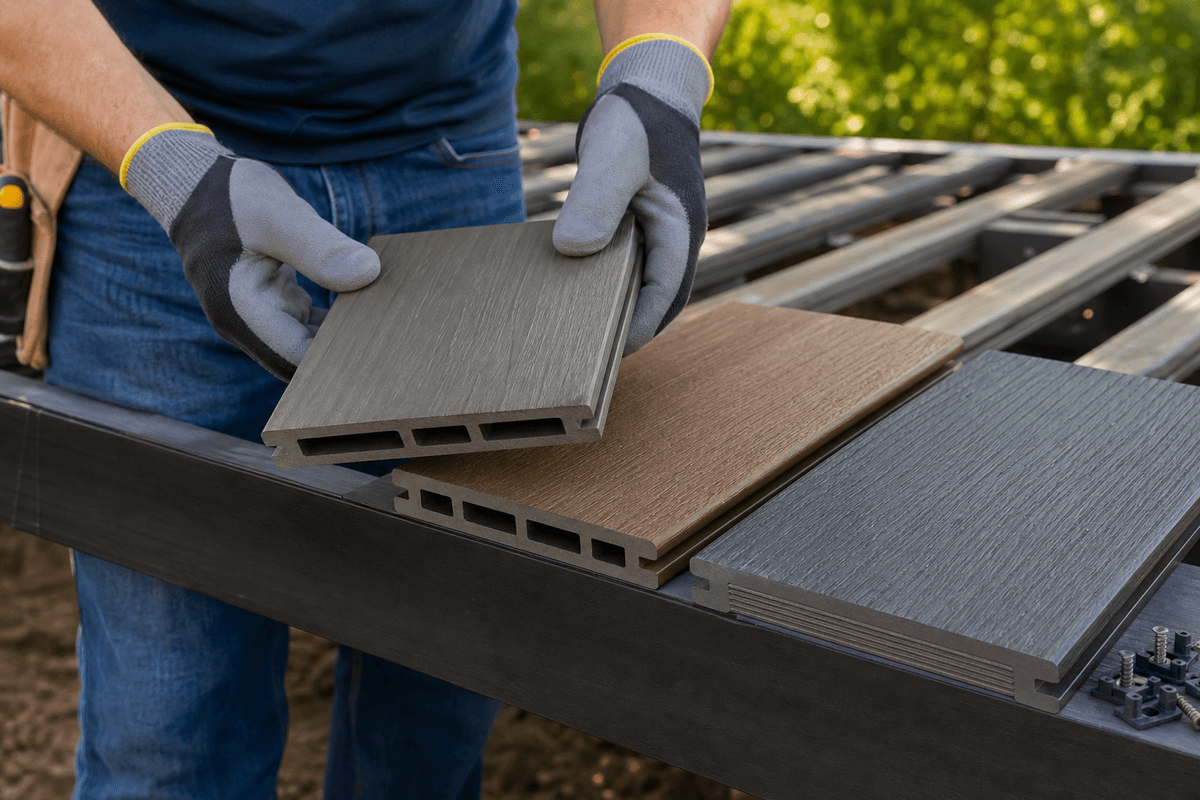
The outer layer is where much of the board's visible identity is created. Pigment variation, matte or reflective finish, and embossed grain can make one capped board feel restrained and architectural while another feels rustic. This is why performance and aesthetics should not be separated too early: the same layer contributes to both.
Review several boards together using the composite deck color guide and compare them outdoors. Look for repeating dark streaks, abrupt color transitions, and texture that becomes overly busy across a large area. If the deck receives strong sunlight, include the decking for full-sun spaces and heat-resistant decking guide in the decision. A protective surface still needs to be comfortable and visually appropriate for the site.
Installation Protects the Investment
A capped surface cannot compensate for weak framing, trapped debris, poor drainage, incorrect fastener placement, or missing expansion space. Follow the current installation guide for the exact product and treat every unusual condition as a detail to resolve before boards are cut. This is especially important around door thresholds, planters, roof drainage, stairs, and changes in board direction.
Plan borders and breaker boards early so the correct edge profiles are ordered. Avoid improvising with grooves or ripped edges where the manufacturer does not permit it. The composite decking installation guide provides planning context, but product-specific instructions should govern the final spacing, support, and fastening decisions.
Care Still Matters, Even When It Is Simple
Low maintenance means the routine is reduced, not eliminated. Sweep away debris that can retain moisture, clean spills reasonably quickly, keep grill protection and furniture feet appropriate, and wash the deck with approved methods. Do not assume aggressive pressure or strong chemicals are harmless simply because the board has a cap.
Capped composite decking is best understood as a coordinated material system: core, protective layer, profile, finish, accessories, and installation rules. Ask what is covered, how claims are documented, and how the full system fits the project. To compare available options without relying on the label alone, start with Composite Deck Pro and contact Composite Deck Pro.