
Why Iroko Keeps Appearing in Premium Decking Conversations
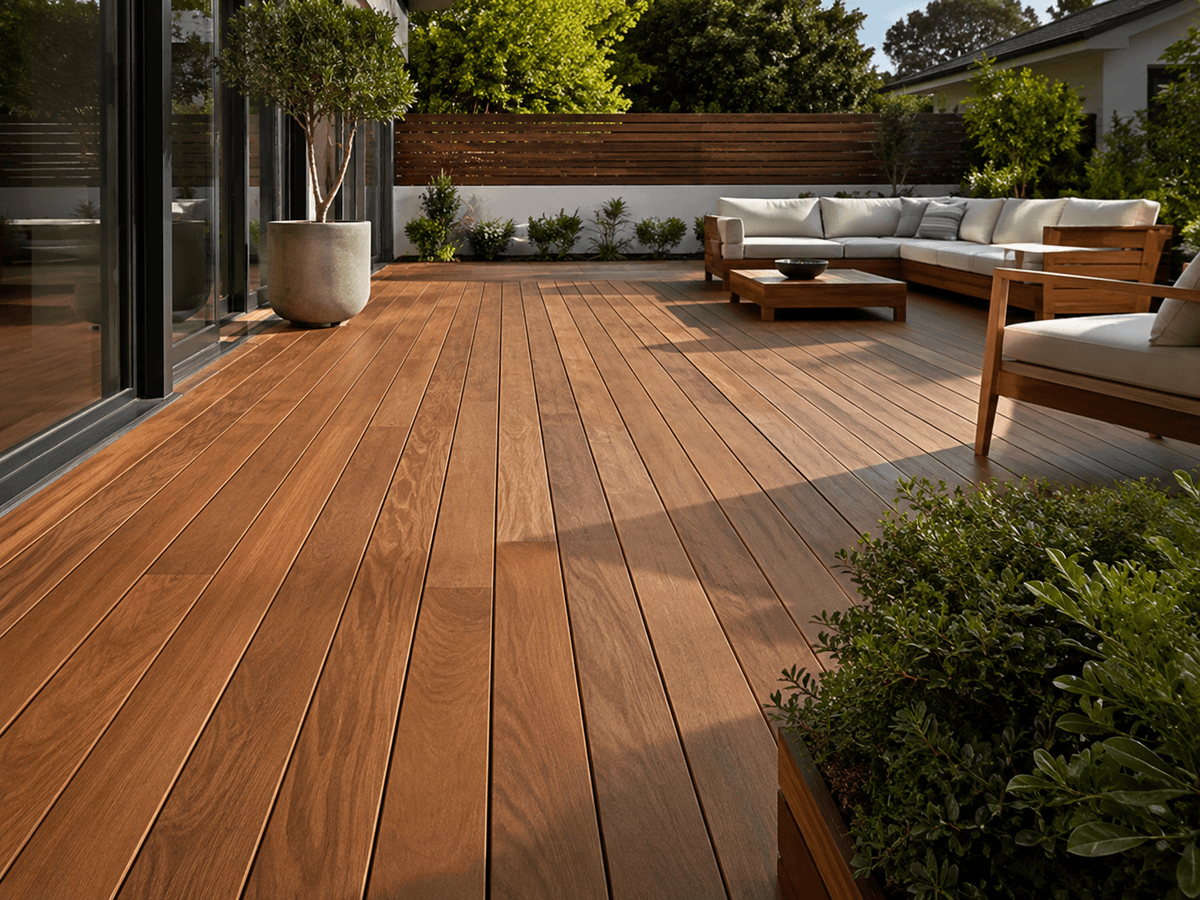
Iroko decking is usually shortlisted by people who want the look and status of a premium hardwood without automatically defaulting to teak. It carries a warm golden-brown tone when fresh, develops character outdoors, and has a reputation for durability that makes it attractive for high-visibility terraces, garden decks, and poolside projects.
The appeal is easy to understand. A hardwood like iroko can make a deck feel grounded and architectural in a way some budget softwoods cannot. But that does not mean it is an easy-choice material. If you are considering iroko, it helps to compare it not just with other hardwoods, but also with lower-upkeep alternatives like maintenance-friendly decking article, wood versus composite decking comparison, Composite Deck Pro floor page, composite board manufacturer guide, and contact page.
What Iroko Does Well Outdoors
The Wood Database classifies iroko as very durable, which is a big reason it is so often mentioned for exterior joinery and decking. Buyers are usually paying for two things at once: a species that ages with visual character and a wood that can tolerate exposure better than many more affordable timbers.
That said, durability is not the same as zero maintenance. Hardwood performance outdoors still depends on design, ventilation, fastening, drainage, and whether the owner is happy to let the deck weather naturally. Some people love the silvering process. Others choose iroko for its warm tone and then are disappointed when that tone changes unless the deck is maintained deliberately.
- Expect iroko to age visually, even if the structure remains sound.
- Treat its color change as part of the ownership decision, not a surprise.
- Use proper spacing and drainage so the deck does not trap moisture underneath.
- Check fixing details carefully because hardwood movement still matters.
- Budget for maintenance if the original tone is important to you.
Where Iroko Makes the Most Sense
Iroko tends to make the most sense on projects where natural timber character is central to the design. A courtyard terrace, a pool deck, or a garden platform next to masonry or rendered walls can look particularly strong with a hardwood that brings grain variation and warmth rather than a more manufactured finish.
It is less compelling when the buyer's top priority is ease. If the real goal is a deck that asks for as little intervention as possible over time, then a wood route may already be fighting the brief. In that case, the more useful comparison is often between iroko and the kinds of lower-maintenance surfaces covered in non-wood decking alternatives article, maintenance-friendly decking article, wood versus composite decking comparison, deck board width guide, and decking length guide.
The Hidden Cost Is Not Just the Material Price
Premium hardwood discussions often get reduced to the initial square-meter or square-foot cost. That is incomplete. Ownership cost includes finishing, occasional re-oiling if you want to preserve color, labor on a dense hardwood, and the simple fact that premium materials tend to raise expectations for the rest of the design. Once you choose a material like iroko, the detailing around borders, steps, and railings usually has to rise to match it.
This is one reason some buyers step back after first admiring iroko samples. They realize they do not just want an expensive board. They want a calmer ownership model. That is where Composite Deck Pro's material comparison content becomes useful: not because it tells you to avoid hardwood, but because it helps you decide whether what you really want is natural timber beauty or a lower-maintenance outdoor surface that delivers a similar level of visual order.
Conclusion
Iroko decking earns attention because it offers genuine hardwood character and strong outdoor durability. But it is best chosen with open eyes. If you want natural aging, a premium look, and you are comfortable with the maintenance logic that comes with hardwood, iroko can be a strong choice. If what you really want is a cleaner ownership experience, it is worth comparing that desire honestly against the benefits of more maintenance-friendly decking systems before committing.