
Most Size Questions Start as Pricing Questions and End as Layout Questions
When people search for standard timber decking sizes, they are often trying to estimate quantities or compare prices. But board size quickly becomes a layout issue too. Width changes the visual rhythm of the deck. Length changes seam placement and waste. Thickness influences feel underfoot and the supporting frame below.
That is why it makes sense to review size choices together rather than one measurement at a time. Composite Deck Pro already gives useful adjacent reading in its deck board width guide, decking length guide, composite decking installation guide, grooved deck board guide, and Composite Deck Pro homepage. Even if you are still comparing timber against composite, the planning logic is largely the same: good sizing decisions make the finished deck look calmer and cost less to build awkwardly.
The Difference Between Nominal Size and Real Coverage
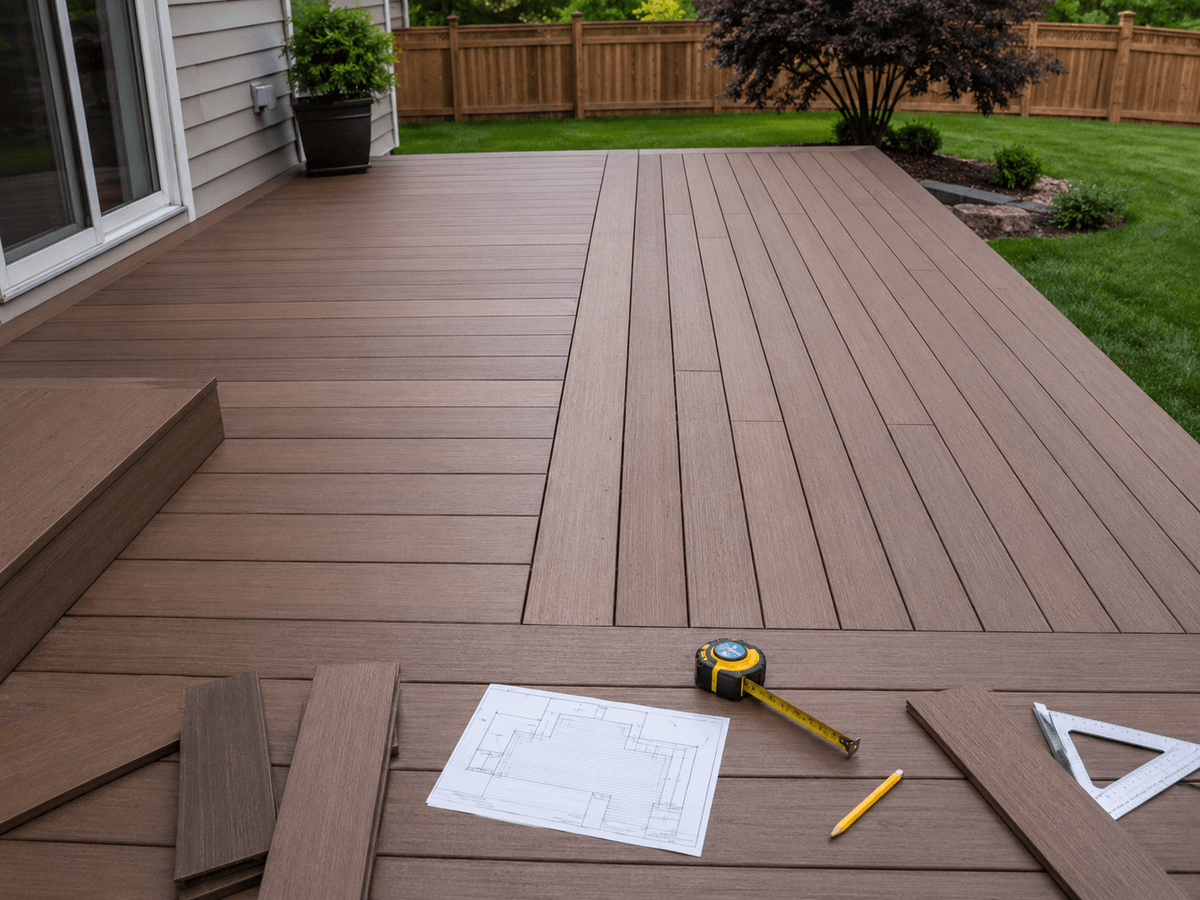
Across both timber and composite markets, informal board descriptions are often rough shorthand. A board that is casually called six inches wide may not deliver a full six inches of face coverage once actual dimensions and spacing are taken into account. The same issue affects lengths and thickness labels too.
Decks.com treats sizing and spacing as linked decisions rather than separate topics, and that is the right mindset. A standard-size board only helps you if you translate that standard into installed coverage, seam planning, and material count. Otherwise a design that looks balanced on paper can produce odd rip cuts, uneven margins, or a higher-than-expected order.
- Confirm actual board dimensions instead of relying on shorthand labels alone.
- Estimate installed coverage using the recommended spacing, not board width only.
- Check whether the stock lengths available suit the dominant deck dimension.
- Treat thickness as a structural planning choice, not just a product feature.
- Review stair, border, and fascia details before finalizing board size.
Why Standard Sizes Still Need Project-Specific Thinking
Standard board sizes make procurement easier, but they do not remove design choices. A long rectangular deck may benefit from longer boards and fewer seams. A compact garden deck with steps, curves, or picture framing may work better with a different combination. The right answer depends on how the deck is meant to feel, not just on what the merchant happens to stock.
That is one reason board width and board length should always be considered together. If you want a quieter contemporary surface, a wider face and longer run can help. If you are working around lots of detail zones, the same board may be less efficient. That is exactly why deck board width guide, decking length guide, composite decking installation guide, Composite Deck Pro floor page, and contact page are worth using together when the project is still on paper.
Use Standard Sizes to Reduce Waste, Not Create It
A common mistake is assuming that a standard-size board will automatically be the most economical. That is only true when the deck layout is shaped around it. If a stocked length creates heavy cut waste, or if a particular width forces awkward margins at the perimeter, the so-called standard option can quickly become the expensive one.
The better approach is to sketch the field layout first, then test a few stock sizes against it. If the design includes stairs, built-in seating, planters, or a picture-frame border, those should be included in the size conversation early. Standard sizes are useful because they simplify ordering, but they only save money when they are matched to the actual proportions of the deck.
Conclusion
Standard timber decking sizes are helpful because they create a predictable starting point, but they are not a substitute for planning. Width, length, and thickness each influence appearance, waste, and structure. The smartest move is to use those standard sizes as a design tool, not just a catalog category. When the board dimensions match the layout, the deck is easier to build and much easier to like once it is finished.