
A Square-Foot Number Needs a Clear Boundary
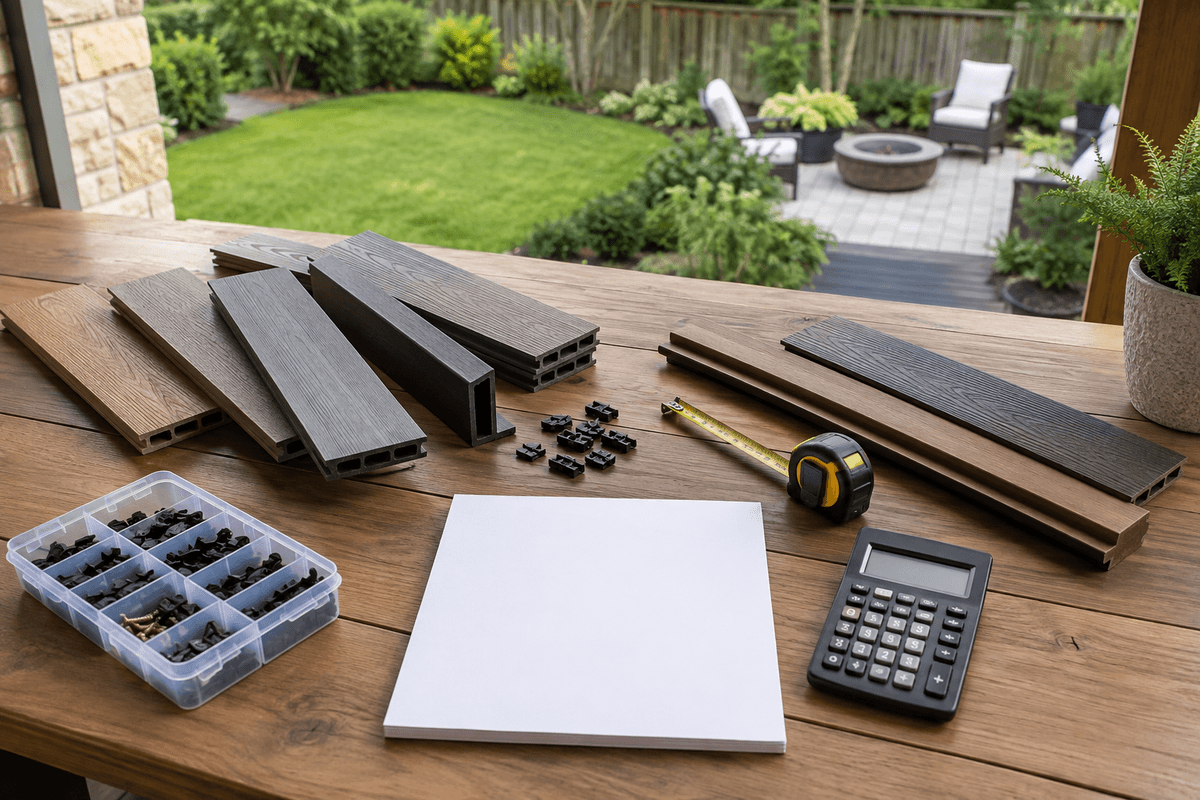
Composite decking cost per square foot can mean three very different things: the price of deck boards alone, the cost of all surface materials, or the installed price of a finished deck. Quotes become confusing when one number includes clips, fascia, and waste while another includes only boards. Before comparing prices, ask exactly what sits inside the stated square-foot rate.
A 300-square-foot deck does not use exactly 300 square feet of material. Cuts, board direction, picture frames, stairs, breaker boards, and defects create waste. The composite deck cost guide, composite deck board guide, and decking and flooring options pages are useful starting points, but a reliable budget still needs a drawing and a product-specific takeoff.
For a simple rectangle, area begins with length multiplied by width. That number is only the base. Add the measured stair treads, landings, borders, and any separate platform, then apply a waste allowance suited to the layout and available board lengths. Use linear-foot calculations for fascia and railings instead of forcing every component into the same square-foot shortcut.
Labor Follows Complexity
Two decks with the same area can require very different labor. A low rectangle with open access is not equivalent to an elevated deck with stairs, railings, angled corners, and material carried through the house. Labor also increases when the installer must correct an old frame, add blocking for borders, or work around posts and utilities.
Ask contractors to separate standard assumptions from site-specific work. If demolition, haul-away, permits, railing, lighting, or structural repair is excluded, add those items to the comparison rather than treating the lower proposal as complete. A clear scope makes price differences easier to understand and reduces change orders later.
Distinguish fixed prices from allowances. An allowance is a placeholder that can rise or fall when the actual product or quantity is selected. It is reasonable for uncertain repairs or undecided railing, but it should be labeled. A proposal filled with low allowances can appear competitive while moving much of the cost decision to a later stage.
Use the Same Checklist for Every Quote
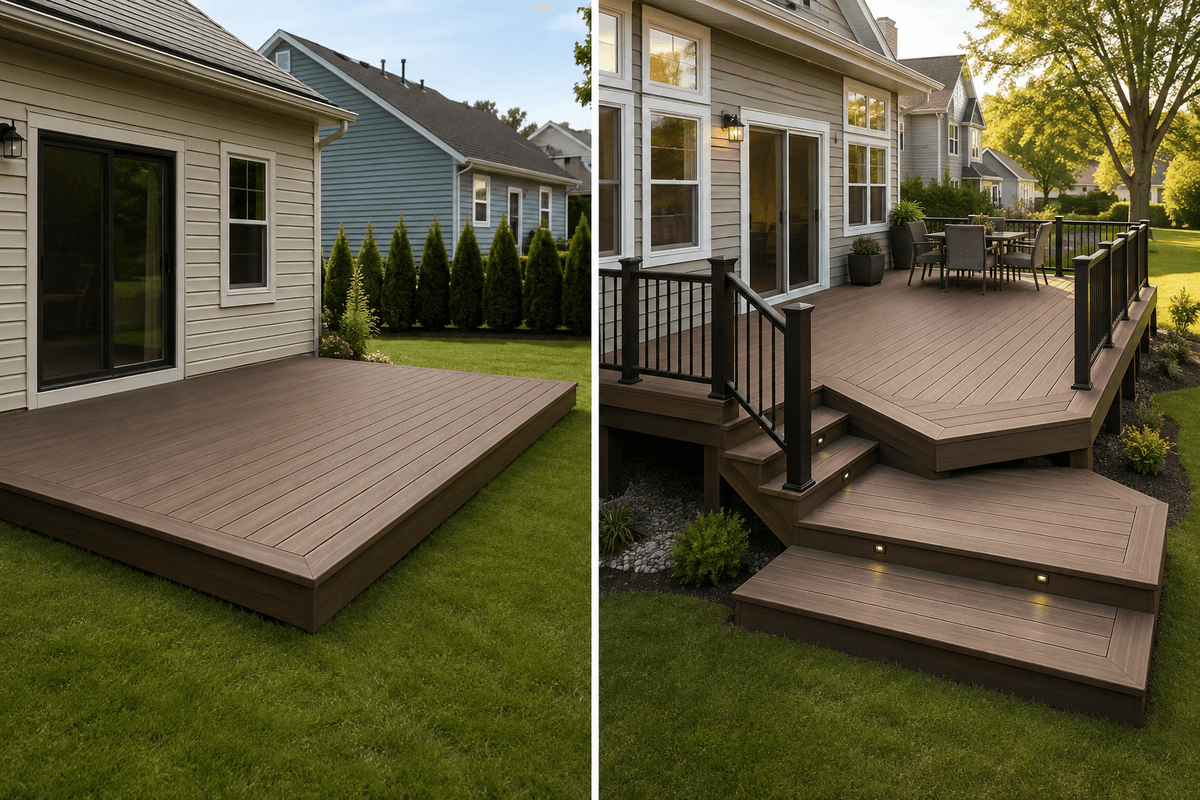
A useful quote comparison holds the project constant. Provide each bidder with the same dimensions, board direction, product or performance tier, border detail, stair count, railing concept, and demolition requirement. If one contractor recommends a different construction approach, record the reason and compare the benefit as well as the cost.
The following questions expose the biggest gaps quickly:
- Is the rate materials only, surface installed, or a complete deck build?
- What waste factor and board lengths are assumed?
- Are hidden fasteners, fascia, stairs, and picture-frame boards included?
- Does the price cover framing inspection, repairs, and joist protection?
- Are delivery, demolition, disposal, permits, and taxes included?
- Which changes would trigger an additional charge?
Resurfacing Has a Different Cost Logic
Replacing wood boards with composite can reduce the scope if the existing structure is sound. It can also reveal expensive problems after demolition. Joists may be damaged, uneven, or spaced too widely for the selected decking and layout. Ledger flashing may need correction. The deck may require new blocking for a picture frame or modern railing.
Budget a structural inspection before assuming resurfacing prices. A long-lived composite surface deserves a frame that can support it. The moisture-planning guide and expansion gap guide resources help identify details that should appear in the scope, while low-maintenance decking overview explains where future ownership costs may differ from wood.
Turn the Price Into a Decision
The lowest composite decking cost per square foot is not automatically the best value. A board that fits the climate, traffic, color preference, and fastening plan can avoid substitutions and rework. A complete quote also lets the homeowner decide where to simplify: perhaps a straight layout instead of diagonal boards, a shorter stair run, or a restrained border instead of a complex inlay.
Measure the deck, sketch the details, and compare equal scopes. Then review the long-term cleaning and maintenance expectations as part of the budget. Composite Deck Pro offers a place to explore options, and you can contact Composite Deck Pro with dimensions and photos when you are ready to discuss a more specific material plan.