
Permanent Is a Goal, Not a Product Label
A search for permanent decking material usually comes from a simple frustration: the homeowner does not want to rebuild the same outdoor space twice. No outdoor material is literally permanent. Sun, water, temperature changes, foot traffic, moving furniture, and the condition of the frame all influence service life. The better question is which system can remain useful and attractive for the time you expect to own the home.
Composite decking is often considered because it does not need the recurring sanding, staining, and sealing associated with many wood decks. That advantage is meaningful, but it does not excuse weak framing or poor drainage. Start with the wood versus composite decking comparison, wood plastic composite decking guide, and low-maintenance decking overview resources to compare ownership demands before comparing color samples.
The Long-Term Deck Is Mostly Invisible
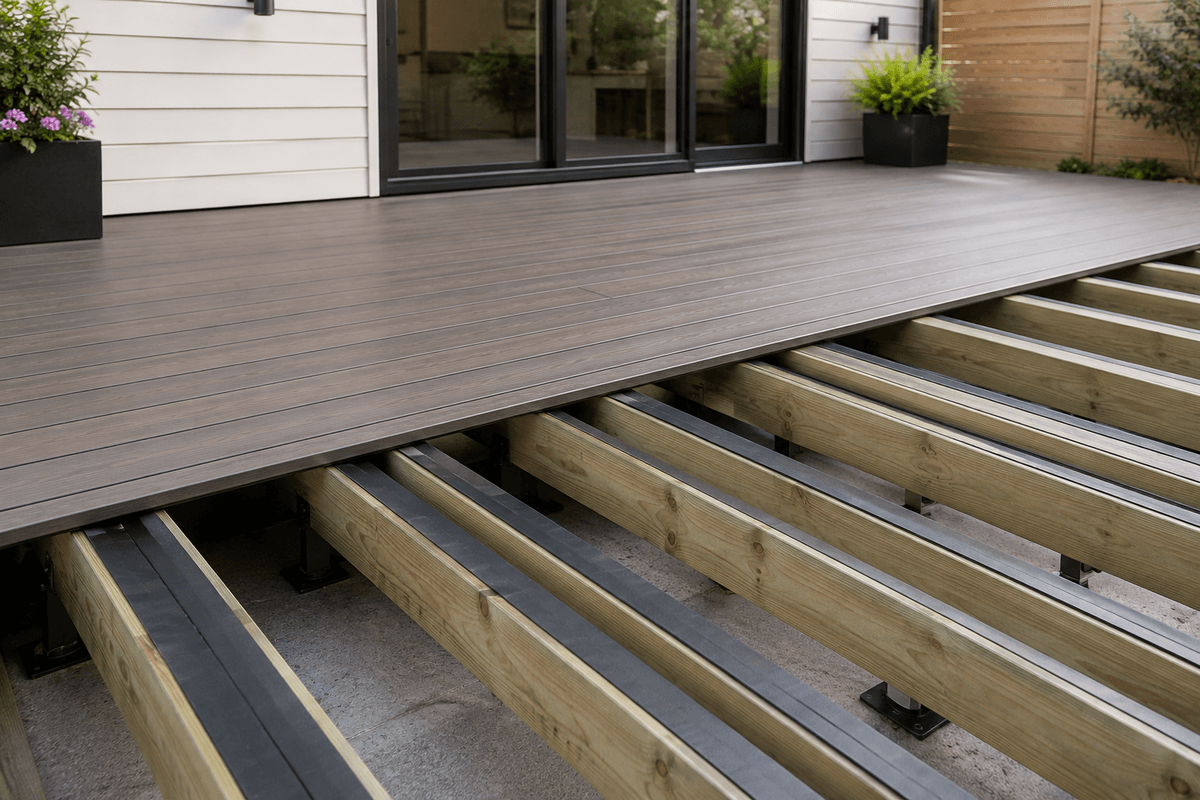
Homeowners see boards and railings. Longevity often depends on the parts beneath them: footings, ledger attachment, joist condition, flashing, ventilation, blocking, and connections. A durable surface installed over a failing frame is not a durable deck. This matters especially during resurfacing, when old boards are removed but the structure may be retained.
Have the frame evaluated before ordering new decking. Confirm that joist spacing matches the chosen board and layout, including any diagonal sections. Protect vulnerable framing where appropriate, keep water moving away from the house, and leave airflow below the deck. The moisture-planning guide, composite decking installation guide, and expansion gap guide guides explain why moisture and movement have to be planned together.
The inspection should not end when construction ends. A quick annual look below the deck can reveal blocked drainage, soil touching posts, loose connections, or irrigation spraying the frame. These are easier to correct while they are local. A surface chosen for decades of use makes routine structural observation more valuable, not less.
Choose for the Hardest Part of the Yard
A deck rarely experiences one uniform environment. The boards beside a south-facing wall may become much hotter than those under a pergola. A shaded corner may stay damp after rain. A grill zone sees grease and dropped food. Stairs receive concentrated foot traffic, while the area beneath planters may stay hidden for months.
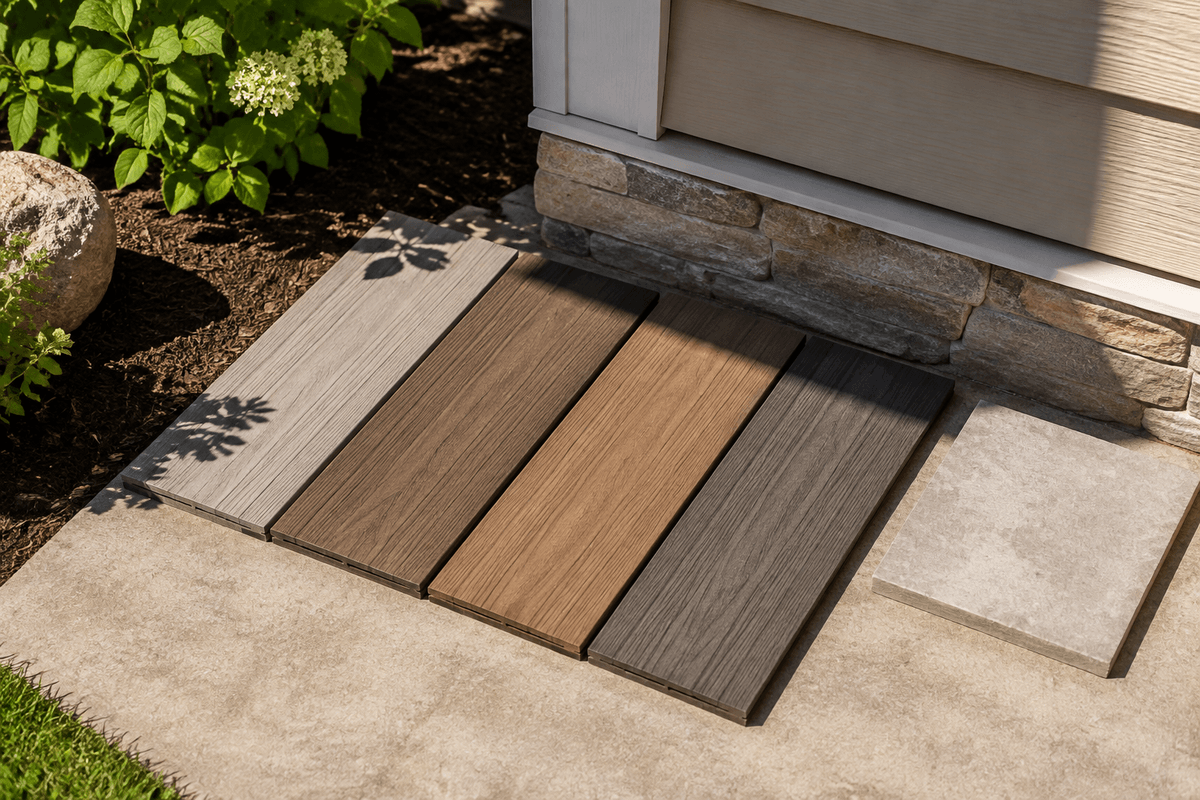
Use the most demanding zone to set the minimum performance requirements. Then test color and texture outdoors, not under showroom lights. A dark board can look elegant and still be a poor fit for bare feet in strong sun. A deeply embossed surface may disguise dirt but hold more debris. The composite decking color guide, composite decking cleaning routine, and composite deck board guide pages help connect appearance with daily use.
- Map full-sun, shade, splash, grill, stair, and furniture zones.
- Confirm the board profile and span for the planned joist spacing.
- Compare cleaning instructions before choosing a highly textured surface.
- Ask how damaged boards can be removed without dismantling a large area.
- Keep product records, receipts, batch information, and installation photos.
Repairability Belongs in the Buying Decision
Long service life does not mean nothing will ever be damaged. A falling branch, hot object, construction work, or heavy planter can harm an individual board. A practical long-term system allows a local repair without making the entire deck look patched. Ask whether matching boards are likely to remain available and how the fastening system releases a board in the middle of the field.
Buying a few extra full-length boards can be sensible insurance when storage is flat, dry, and properly supported. Product lines and colors change. Even if a near match exists later, natural weathering may make the replacement stand out. A spare from the original order gives the installer a better starting point.
Appearance also has to age gracefully. Strong variegation can disguise ordinary dust and small marks, while a very uniform surface may make local changes easier to notice. Edge details, railing color, and surrounding planting affect whether a deck still feels current years later. Timeless does not require plain design; it requires materials and details that belong with the house.
Read the Warranty as an Operating Manual
A long warranty can be useful evidence of manufacturer confidence, but the headline number is not the whole document. Coverage varies by product line, residential or commercial use, owner, type of damage, installation method, and maintenance history. Fade-and-stain terms may differ from structural coverage. Labor and removal costs may be treated differently from replacement material.
Before buying, read the current written warranty and installation guide for the exact product. Note transfer rules if a home sale is possible. Confirm approved fasteners and cleaners. A warranty does not convert every deck into a permanent structure, but its conditions reveal how the manufacturer expects the material to be handled.
Design for Change and the Deck Will Last Longer
Outdoor needs evolve. Families add shade, move grills, change furniture, or need safer stair lighting. A deck feels permanent when it can absorb those changes without major demolition. Leave sensible access to utilities, avoid trapping posts behind impossible-to-remove trim, and plan edges so a future repair remains feasible.
The best permanent decking material is therefore not a single board. It is a compatible combination of surface, frame, drainage, fastening, maintenance, and documentation. Review decking and flooring options options with the whole assembly in mind. For help narrowing the choice, contact Composite Deck Pro with the deck dimensions, exposure, framing plan, and expected use.