
These Materials Get Grouped Together Too Easily
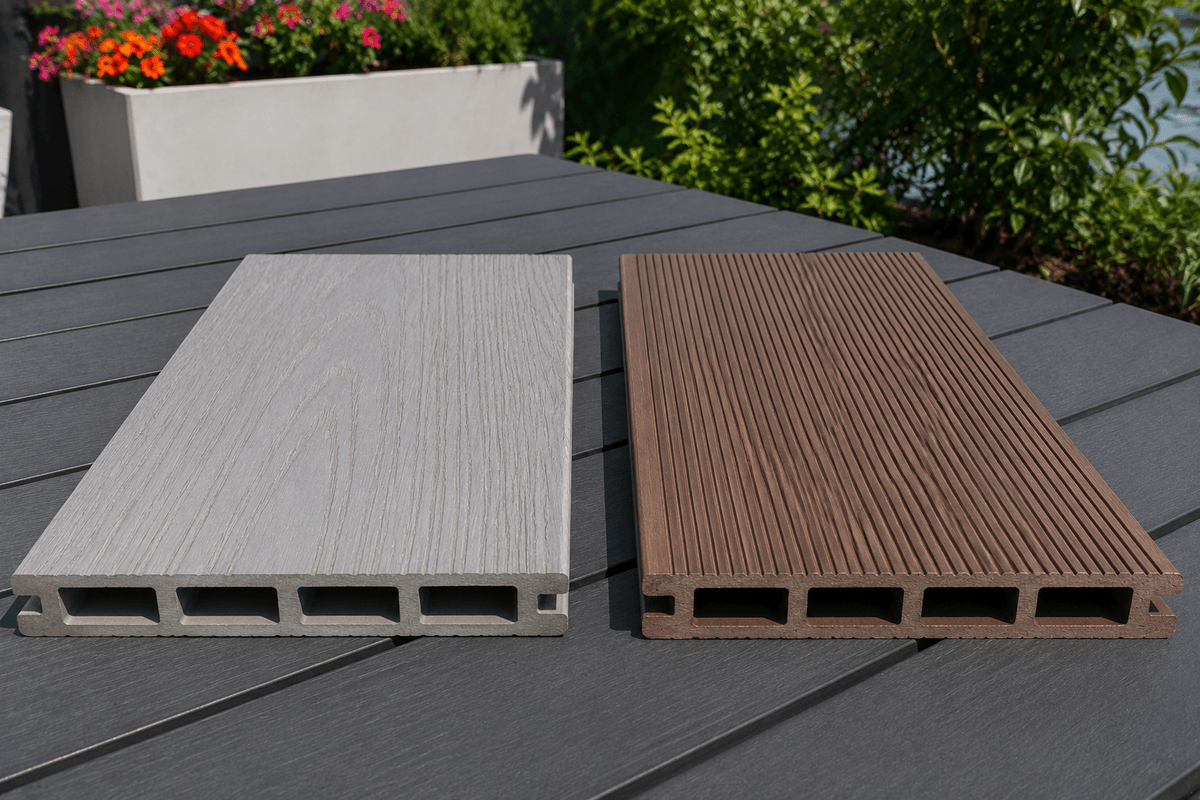
PVC decking vs composite decking is often presented as if both categories are nearly interchangeable. They are similar in the sense that both are usually chosen by people who want lower upkeep than traditional timber. But they do not behave exactly the same, and the differences become obvious once the deck is in real use.
The better comparison starts with the kind of owner and the kind of site. Composite Deck Pro's maintenance-friendly decking article, non-wood decking alternatives article, Composite Deck Pro floor page, wood versus composite decking article, and deck board width guide are helpful here because they frame the choice around living conditions instead of product slogans.
What PVC Usually Tries to Do Better
PVC-style decking is often positioned as a cleaner, lower-absorption, lower-upkeep category, especially in situations where moisture or easy cleaning are central concerns. It can appeal to buyers who want a very controlled ownership model and are comfortable with a more manufactured material identity.
That does not make it automatically better. It simply means the category often leans harder into practical maintenance advantages. If that is the problem you are trying to solve, PVC may deserve a serious look.
- PVC is often chosen by buyers who prioritize easy cleanup and low routine upkeep.
- It can be attractive where moisture handling and predictable maintenance matter most.
- Some buyers like the cleaner, more controlled surface language it offers.
- It may appeal more in functional outdoor spaces than in timber-inspired designs.
- The category still needs to be judged by project conditions, not by labels alone.
Where Composite Often Feels More Balanced
Composite often feels like a middle path. It gives many homeowners a lower-maintenance ownership model than wood while still keeping more visual warmth than some PVC products. That balance is one reason it remains popular for family decks, dining zones, and general-purpose outdoor rooms.
For many buyers, the decision turns on whether they want the cleaner maintenance story of PVC or the more wood-adjacent look and feel that some composite lines can provide. Neither priority is wrong. The value comes from naming it early.
Heat, Texture, and Layout Should Be Compared Together
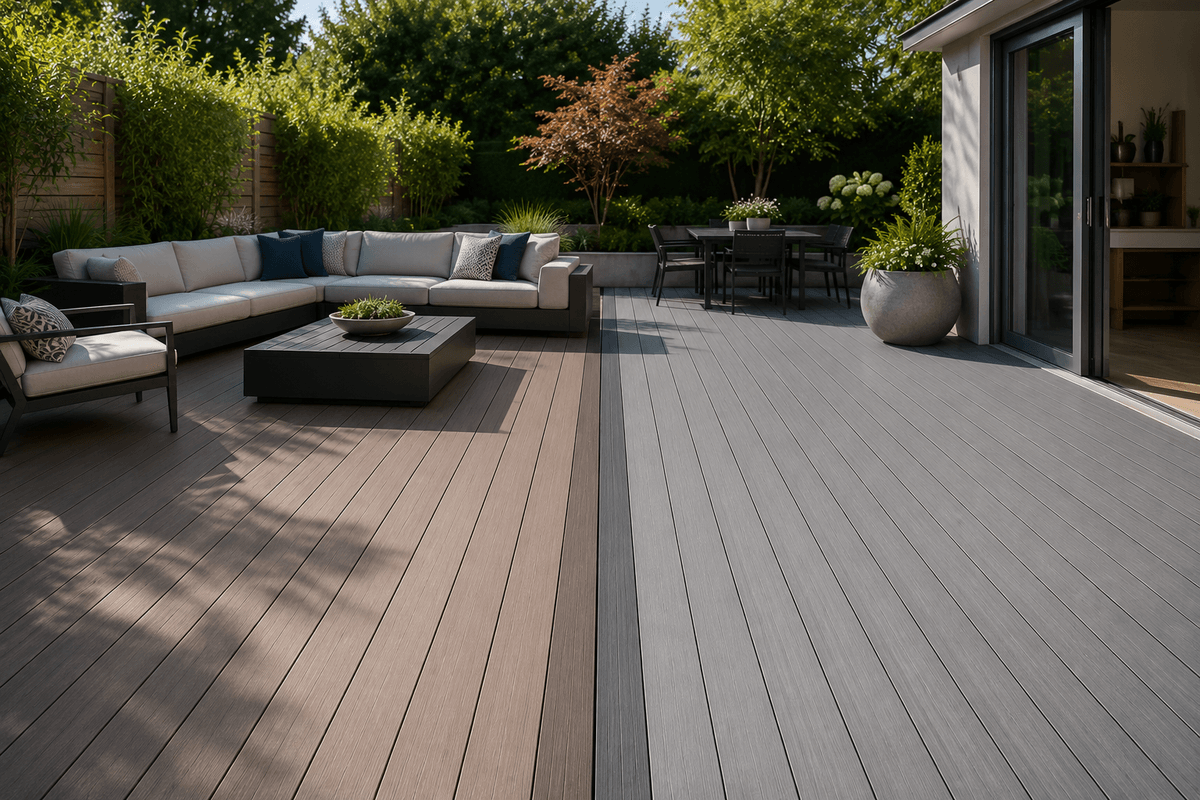
A material comparison that ignores surface heat, texture, and board planning is incomplete. A board that looks excellent in a sample can still disappoint if it gets uncomfortable in sun, feels too slick when wet, or creates awkward detailing in the actual layout. That is why decking length guide, composite decking installation guide, composite board manufacturer guide, contact page, and Composite Deck Pro homepage are worth reviewing alongside the material choice itself.
The strongest decisions usually happen when the site conditions are honest. A shaded garden deck, a roof terrace, and a pool-adjacent platform do not stress materials the same way, so the right answer should not be expected to look the same either.
Start With the Environment, Not the Label
One of the easiest ways to improve this decision is to map the deck environment before choosing the category. Is the site extremely sunny? Will the deck sit beside planting beds that drop debris? Will there be children running barefoot from lawn to deck, or is the space mostly used for evening dining? Those questions shape the right answer more accurately than simply asking whether PVC or composite is the more advanced material.
The same logic applies to visual expectations. Some buyers want a crisp, manufactured neatness because the deck is meant to read like part of a modern exterior composition. Others want a softer and more wood-adjacent surface language, even if it means accepting a little more material personality. If the project style is clear, the shortlist usually narrows on its own without much drama.
This is also why samples should be judged next to the rest of the project palette. Siding, paving, pool coping, railing, and outdoor furniture can make one material feel perfectly integrated and the other feel slightly off. When the comparison is done in context, PVC and composite stop looking like abstract categories and start revealing which one actually supports the finished space better.
Conclusion
PVC decking vs composite decking is not a question of which category sounds more advanced. It is a question of which material solves the right problem for the way the deck will actually live. If you compare upkeep, heat, texture, and appearance together, the choice usually becomes much clearer than it looks at first glance.