
The Material Category Is Broader Than Many Buyers Expect
Wood plastic composite decking sounds highly specific, but in practice it covers a range of boards, finishes, and profile types. Buyers often enter this category because they want a board that feels more stable and lower-upkeep than timber, while still keeping some of the visual language of wood.
That is a sensible goal, but the deck will only feel successful if the whole system is thought through. Composite Deck Pro's Composite Deck Pro floor page, deck board width guide, decking length guide, composite decking installation guide, and composite board manufacturer guide all reinforce the same point: the board is not the whole project. The board, the fastening strategy, and the layout have to agree with each other.
Why WPC Keeps Its Appeal
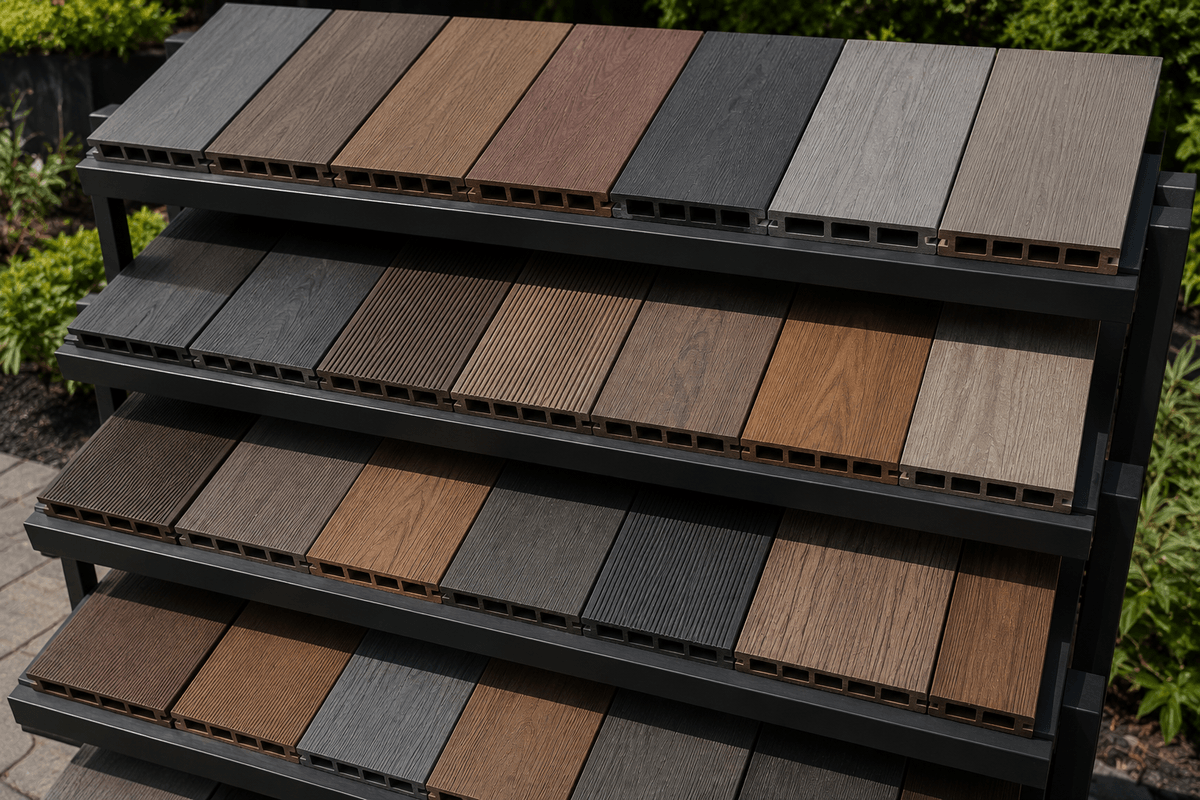
WPC remains attractive because it offers a practical compromise. It usually gives owners a calmer maintenance routine than real wood while still reading as a deck rather than as a purely technical surface. That balance is why so many everyday residential decks end up in this category rather than at the extremes of pressure-treated timber or premium hardwood.
For many homeowners, the real attraction is not novelty. It is relief. They want a surface that is easier to own, easier to keep visually coherent, and less dependent on seasonal refinishing cycles.
- Use WPC when you want a more relaxed maintenance rhythm than timber typically offers.
- Compare board profiles early because the edge style affects the whole installation system.
- Check color and grain in larger groupings, not from one sample alone.
- Think about heat and exposure before choosing the darkest color by default.
- Plan the perimeter and stairs before assuming one board format solves every detail.
Where the Deck Can Still Go Wrong
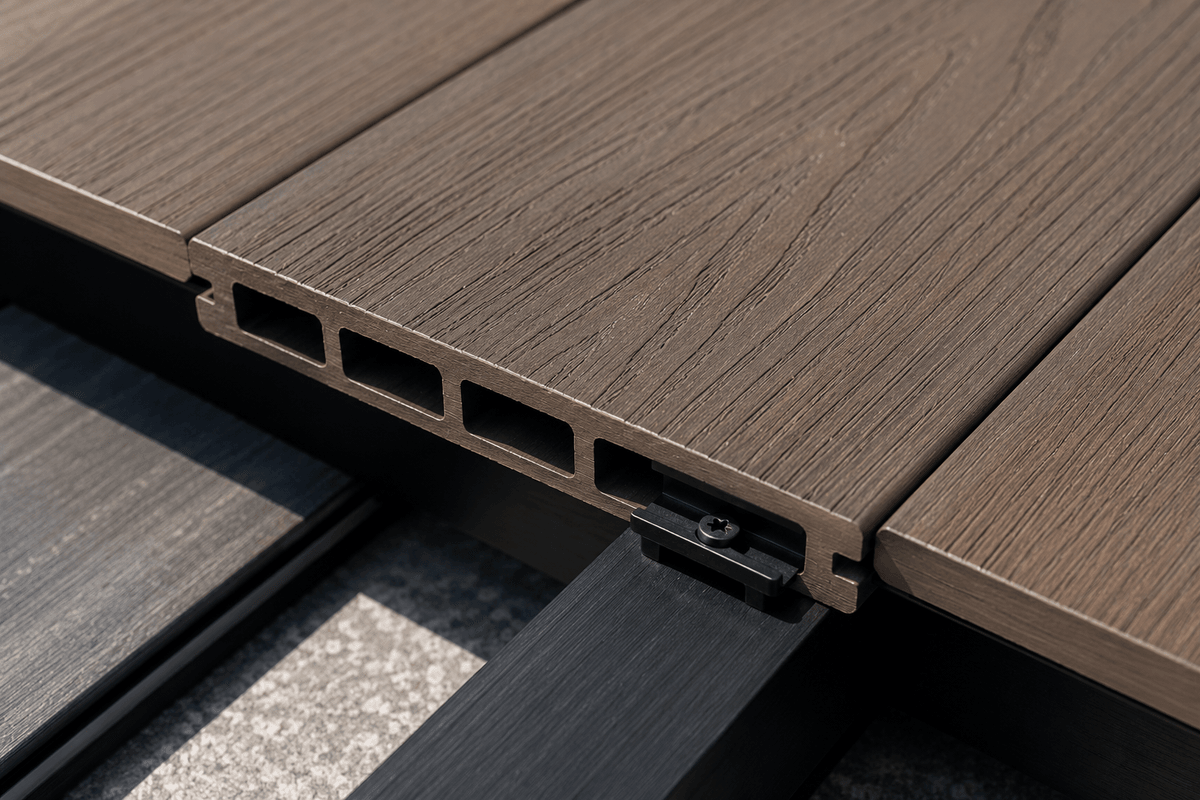
A WPC deck can disappoint when buyers expect the material alone to solve planning mistakes. Poor seam strategy, unresolved border details, weak drainage, or a mismatch between board profile and fastener system can make a perfectly acceptable board feel worse than it should. That is one reason composite decks that look similar on a sample table can perform very differently once installed.
This is also where the quieter planning resources matter. deck board width guide, decking length guide, composite decking installation guide, maintenance-friendly decking article, and contact page are all useful because they push the decision back toward layout and execution rather than product marketing.
What Buyers Should Compare Before Ordering
The strongest comparison is not simply one manufacturer against another. It is board profile, board dimensions, fastening method, maintenance expectations, and the intended style of the deck considered together. If those points are treated separately, a buyer can end up with a board that is fine on paper but awkward in the actual build.
In other words, WPC works best when the system is planned first. Once the field layout, stair logic, and upkeep expectations are clear, the material comparison gets much easier.
Think From the Perimeter Back Toward the Field
Many disappointing deck projects actually start with an incomplete edge strategy. Buyers spend most of their time comparing the main board surface, but the perimeter often decides whether the whole installation feels refined. Corners, fascia relationships, stair fronts, picture framing, and the point where the deck meets doors or thresholds all deserve attention before any WPC board is declared the winner.
That perimeter-first approach matters because WPC is often selected for projects that aim for a tidy, intentional finish. If the border detailing is weak, the material never gets to show its strengths properly. A field board that looks excellent in a brochure can lose impact quickly if the edges feel improvised or the transitions between levels are unresolved.
This is another reason to compare the full system instead of shopping by color alone. Once the stairs, border boards, and fastening approach all make sense together, the material choice becomes much more stable. Buyers are no longer choosing a sample. They are choosing a complete deck language, and that is where wood plastic composite decking is most likely to succeed.
Conclusion
Wood plastic composite decking is a strong category when the buyer wants a practical balance between appearance and upkeep. But the best results come from system thinking, not from trusting the board alone. If profile, layout, and ownership expectations are aligned from the beginning, WPC is much more likely to deliver the kind of deck people hoped they were buying in the first place.