
Wet Does Not Create One Universal Result
Is composite decking slippery when wet? Any outdoor walking surface can become slick when water, ice, leaves, pollen, grease, or biological growth reduces contact between footwear and the surface. Composite products also differ in texture and tested traction, so a single answer cannot describe every board.
Treat wet traction as a site-and-product question. Review the exact board data, then consider slope, drainage, shade, foot traffic, footwear, stairs, and maintenance. The composite board selection guide, moisture-planning article, and installation planning guide guides help connect the surface to the assembly below it.
Texture Helps, but Contamination Can Cover It
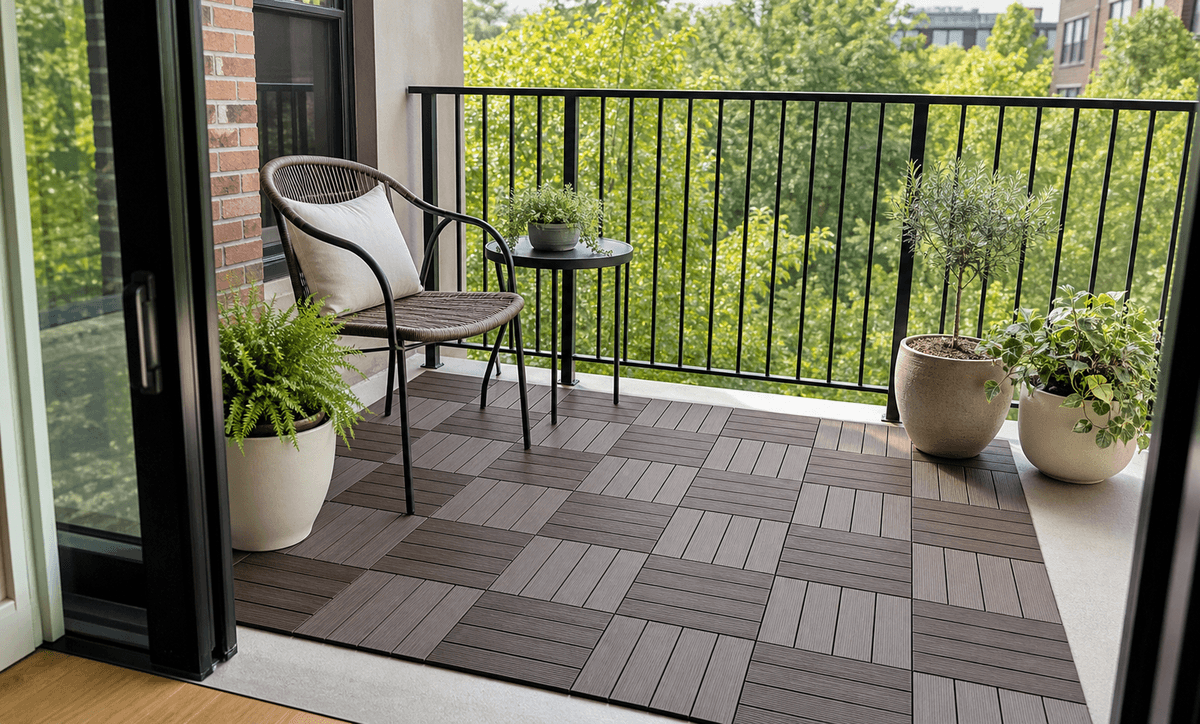
Embossed grain and microtexture can improve grip by giving shoes more surface features to engage. That texture becomes less useful when a film of algae, cooking oil, sunscreen, pollen, or compacted dirt fills the low points. A board can be structurally sound and still need cleaning to restore normal footing.
Glossy residue after cleaning is another warning sign. Too much soap or incomplete rinsing can leave a film. Follow the product-specific instructions in the routine cleaning guide guide and work in manageable sections so cleaner does not dry on the boards.
Standing Water Points to a Design Problem
Puddles extend the time a deck remains wet and collect fine debris. Check whether board gaps are open, the frame provides the intended drainage, and planters or furniture block runoff. A deck should not depend on evaporation alone when a simple obstruction is holding water.
At doors and stairs, water may also arrive from roof runoff or irrigation. Redirect the source where practical. Do not drill, grind, or reshape installed boards without approval from the product manufacturer and a clear understanding of the assembly.
- Keep leaves, pollen, and soil from building up in traffic lanes.
- Clean grease and food spills promptly with an approved method.
- Open blocked board gaps without damaging board edges or fasteners.
- Use handrails and good lighting on wet stairs and transitions.
- Check product-specific wet-traction data when the location is demanding.
Stairs and Pool Routes Deserve a Higher Standard
A minor loss of traction on a level deck can become more serious on a stair, ramp, or pool exit. Use continuous graspable handrails where required, keep tread geometry consistent, and avoid placing loose rugs at the top or bottom of stairs. Lighting should reveal water, debris, and changes in level.
For docks, pools, spas, and frequently wet entries, compare products intended for those settings. Manufacturer test results can inform the choice, but methods and values are not always directly comparable. Confirm the standard, wet condition, board orientation, and exact collection.
A Careful Field Check Is More Useful Than a Barefoot Guess
Do not deliberately create a fall risk to test a sample. Secure full-size boards on a stable support, wet them evenly, and compare them with suitable footwear while holding a rail or using another safe setup. Include clean samples and samples with realistic dust or pollen only if the test can be controlled.
A sample result does not replace published data, but it reveals how texture feels with the shoes commonly used at the property. Pair that observation with the manufacturer's technical information and the manufacturer comparison guide comparison process.
Winter Brings a Different Hazard
Ice and packed snow can make almost any deck dangerous. Use only ice-melt products and removal tools approved for the selected decking. Metal shovels, sharp tools, and unapproved chemicals can scratch or discolor the surface. Remove residue when conditions allow.
Plan storage for a plastic shovel and approved ice treatment before winter. The low-maintenance decking overview overview and warranty questions checklist checklist explain why care instructions should be saved with the house records rather than searched for during a storm.
Trace the Water Before Blaming the Board
Repeated wetness often has a source that can be corrected. Roof valleys may discharge onto one corner, irrigation can mist the same walkway every morning, and a downspout may empty beside the stairs. Condensation from a spa cover or air-conditioning equipment can create another narrow wet zone. Walk the deck during rain and again after the weather clears to see which areas dry last.
Compare the slow-drying area with the frame and ground below. Blocked gaps, dense shade, poor air movement, and debris trapped between joists can keep the surface damp. Correct drainage without cutting or drilling the boards unless the system instructions explicitly permit it. Water should have a continuous route away from the house and walking path.
Maintenance frequency should follow the exposure. A sunny open deck may need occasional sweeping, while a shaded deck below trees may need frequent leaf and pollen removal. Keep a simple seasonal inspection record so a change in traction is noticed before it becomes a fall hazard.
Choose the Surface and the Routine Together
The right wet-area deck combines suitable board texture, drainage, clear traffic routes, lighting, rails, and regular cleaning. No product should be described as slip-proof, and a good board can become hazardous if grease, growth, or ice remains on it.
Explore decking and flooring options choices with the actual wet-use scenario in mind. You can contact Composite Deck Pro with photos, slope, pool or stair locations, shade conditions, and the exact traction documentation you want to compare before selecting a board.