
The Phrase Points to a Wood-Look Goal
Decking composite timber is usually shorthand for a buyer who wants a wood-inspired outdoor surface without committing fully to traditional timber ownership. That makes it a useful phrase because it highlights the real target: the balance between warmth, realism, durability, and everyday upkeep.
Composite Deck Pro's timber vs composite decking article, composite floor maintenance guide, Composite Deck Pro floor page, deck board width guide, and decking length guide are all relevant because they show how visual character and maintenance expectations can be evaluated together instead of treated as separate decisions.
What Composite Timber Needs to Deliver
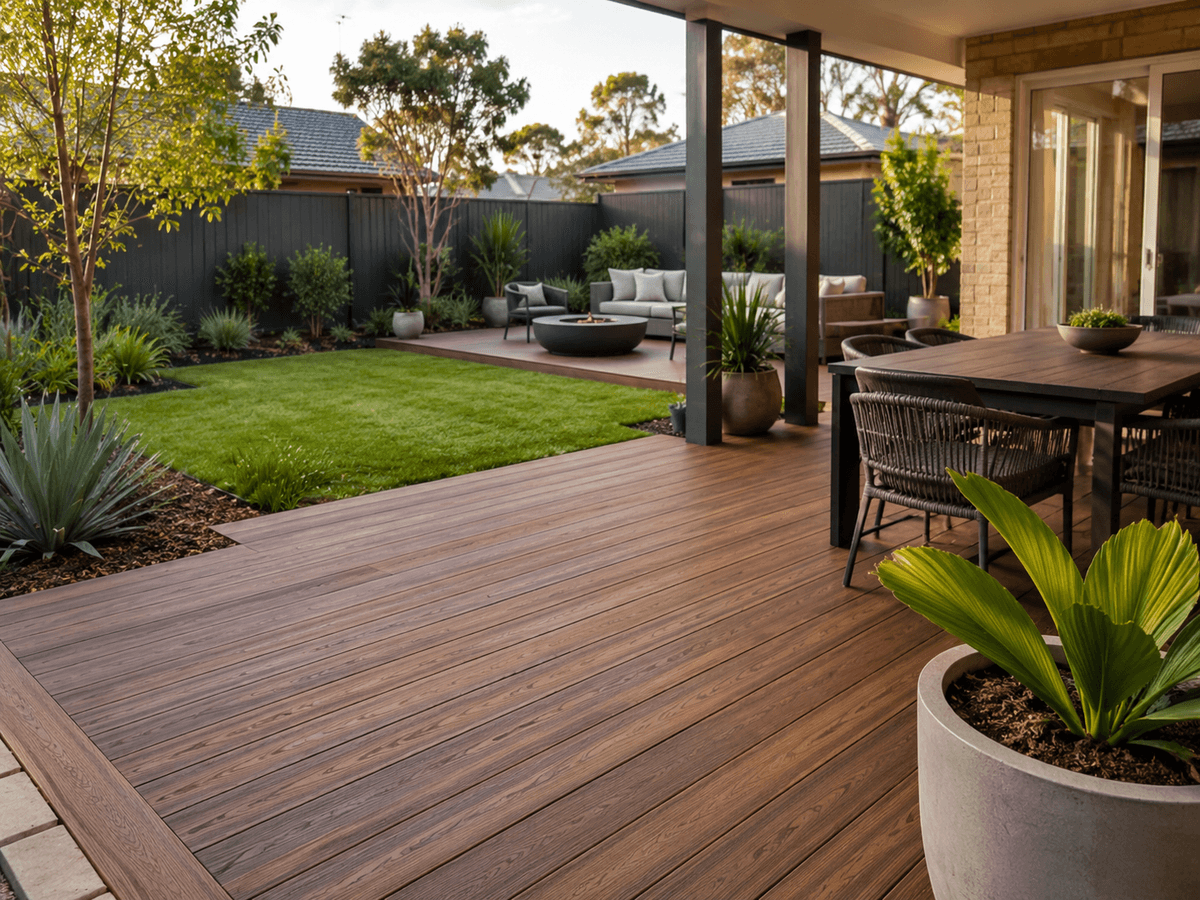
A strong composite timber deck should satisfy more than one requirement at once. It should look convincing enough to support the design intent, feel coherent across borders and stairs, and fit the owner's appetite for cleaning and upkeep. If one of those fails badly, the board can feel like a compromise rather than a solution.
That is why a material comparison should not stop at color boards or brochure phrases. The practical questions are about the finished deck, not just the sample.
- Look for color variation and grain that suit the style of the house.
- Check whether the board profile supports the fastening method you want.
- Compare how easily the chosen finish will show dust, pollen, or marks.
- Plan the deck edge and stair treatment before deciding the board is ideal.
- Use layout planning to support the wood-look effect rather than fight it.
Why Proportion and Spacing Matter So Much
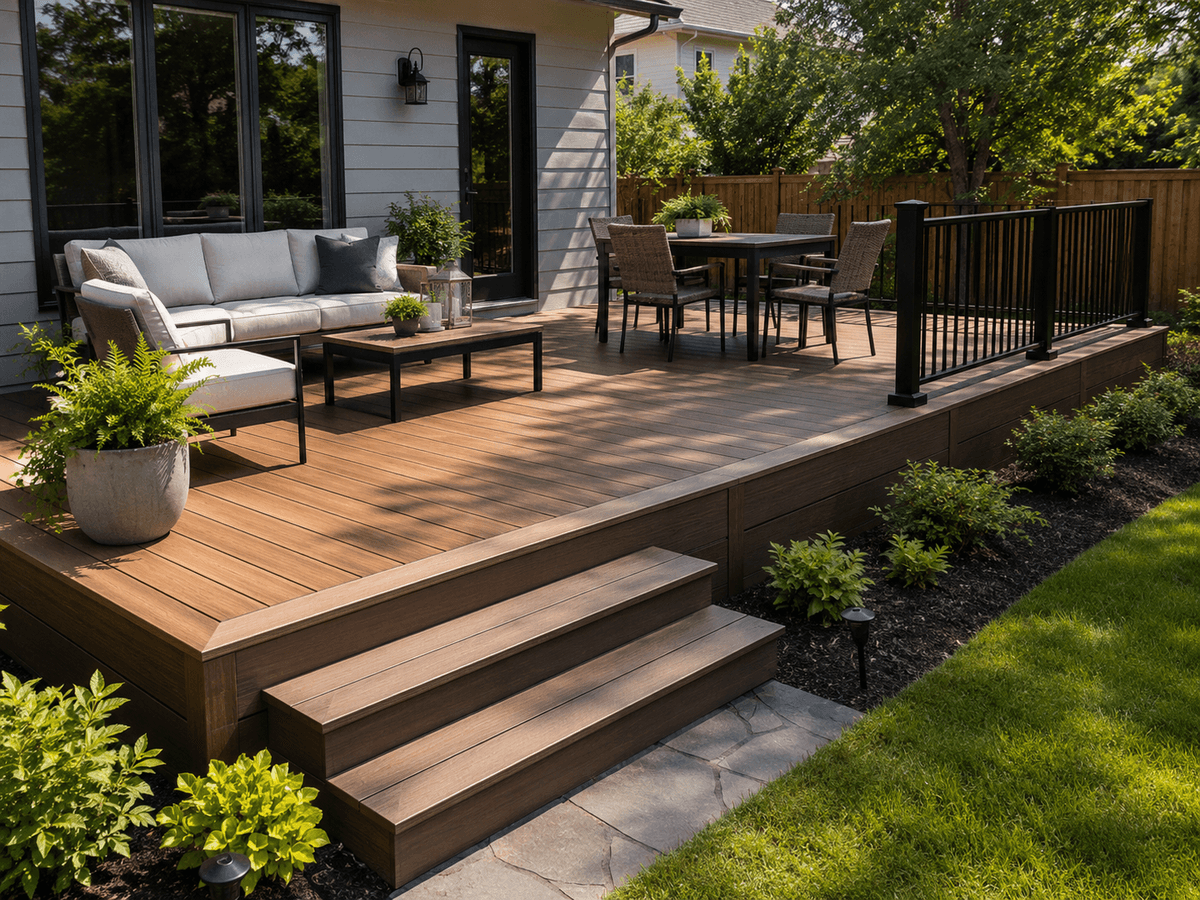
Composite timber looks more believable when the board format and seam rhythm feel intentional. Overly busy layouts can make even a well-finished surface feel synthetic. Cleaner runs and balanced proportions usually improve the result more than chasing a slightly different embossing pattern.
That is where the deck board width guide, decking length guide, grooved deck board guide, installation planning article, and expansion gap article resources become practical design tools. They help turn a wood-look idea into a deck that feels settled and complete.
Choose the Ownership Model You Actually Want
The final choice often comes down to ownership style. If you want natural weathering, timber may still be more emotionally satisfying. If you want a planned look with reduced refinishing and more predictable care, composite timber systems are often the clearer fit.
Naming that preference early saves time. Buyers who skip that step can spend weeks comparing products when the real decision is whether they prefer authentic timber behaviour or an easier-maintenance imitation of it.
Conclusion
Composite timber decking is most compelling when you judge it by the job it needs to do: support the design, reduce upkeep, and stay coherent over time. If you compare appearance, spacing, and ownership demands together, the right material choice becomes much easier to defend.
Questions to Settle Before You Order
Before committing to decking composite timber, it helps to pressure-test the choice against the actual project instead of against product marketing. Think about the deck's exposure to sun and moisture, how visible the edge details will be, and how much maintenance the owner will realistically accept after the excitement of the build has passed. Those answers usually matter more than a single specification or a dramatic sales claim.
It is also worth checking whether the board format supports the layout you want without creating avoidable waste or awkward seams. Composite Deck Pro's deck board width guide, decking length guide, installation planning article, expansion gap article, and contact page give useful next steps when the decision is narrowing. A deck usually performs best when the product choice, the layout, and the maintenance expectations all agree with each other from the start.
- Confirm the board size and profile suit the planned framing and stair details.
- Check how the chosen color and texture will behave in your sun, shade, and cleaning conditions.
- Review internal guides and installation notes before locking the material order.
- Choose the option that fits long-term ownership habits, not just first impressions.