
Grey wood decking appeals to homeowners who want a softer, more architectural outdoor look than bright fresh timber usually provides. Sometimes that look is created by natural weathering. In other cases, it is chosen on day one through a grey-toned decking product, stain, or composite board finish. The important distinction is that grey wood decking can describe both an intentional design choice and a maintenance result, and those two paths do not behave the same way over time.
If the goal is a calm, contemporary outdoor space, it helps to compare real wood weathering with manufactured grey-toned composite surfaces before committing to a material. Composite Deck Pro's Floor page, deck board width guide, and maintenance-friendly decking article are useful starting points when you want the grey look without constant surface treatment.
Weathered Grey and Factory-Grey Are Different Products
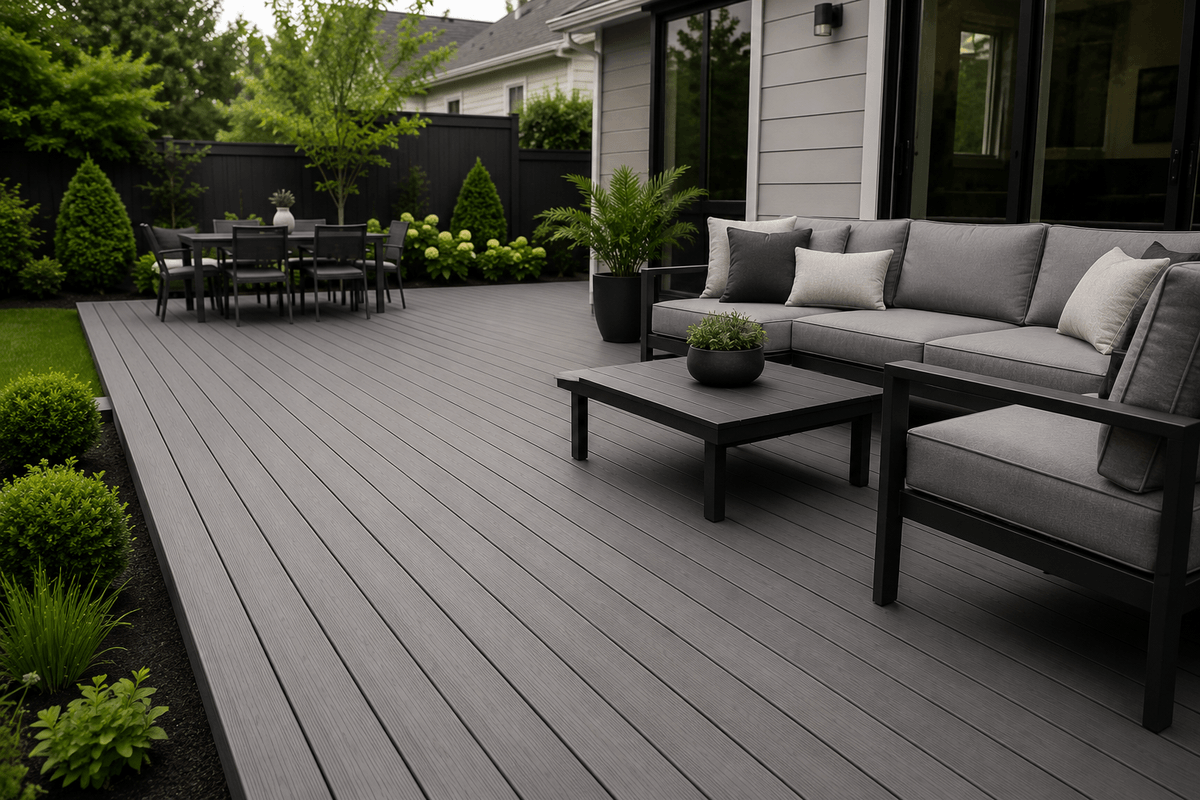
Natural wood often turns grey because sunlight, moisture, and oxidation break down the surface color over time. That weathered appearance can look beautiful, but it is not the same as a board that starts out grey. A factory-grey composite or capped board is designed to stay closer to its original tone, while an untreated timber deck keeps changing as the seasons do.
That difference matters because some homeowners love the organic variation of weathered wood, while others want a more controlled look. If you are trying to keep a deck visually consistent across stairs, fascia, and field boards, a purpose-made grey decking product is usually easier to manage than hoping natural ageing lands in the exact tone you imagined.
When Grey Decking Usually Looks Its Best
- On modern homes that already use black, white, stone, or muted exterior finishes.
- In backyards where the deck should support landscaping instead of dominating it.
- On poolside and patio projects that benefit from a clean, coastal, or contemporary palette.
- When furniture, planters, and railings are warmer or darker and need a quieter surface underneath.
- In remodels where an aged or lived-in tone feels more natural than a fresh honey-brown wood look.
Grey also works well when the rest of the project has a disciplined material palette. Composite Deck Pro's garden decking ideas article and backyard deck article can help frame how decking tone interacts with planters, lighting, and furniture.
The Maintenance Question Comes First
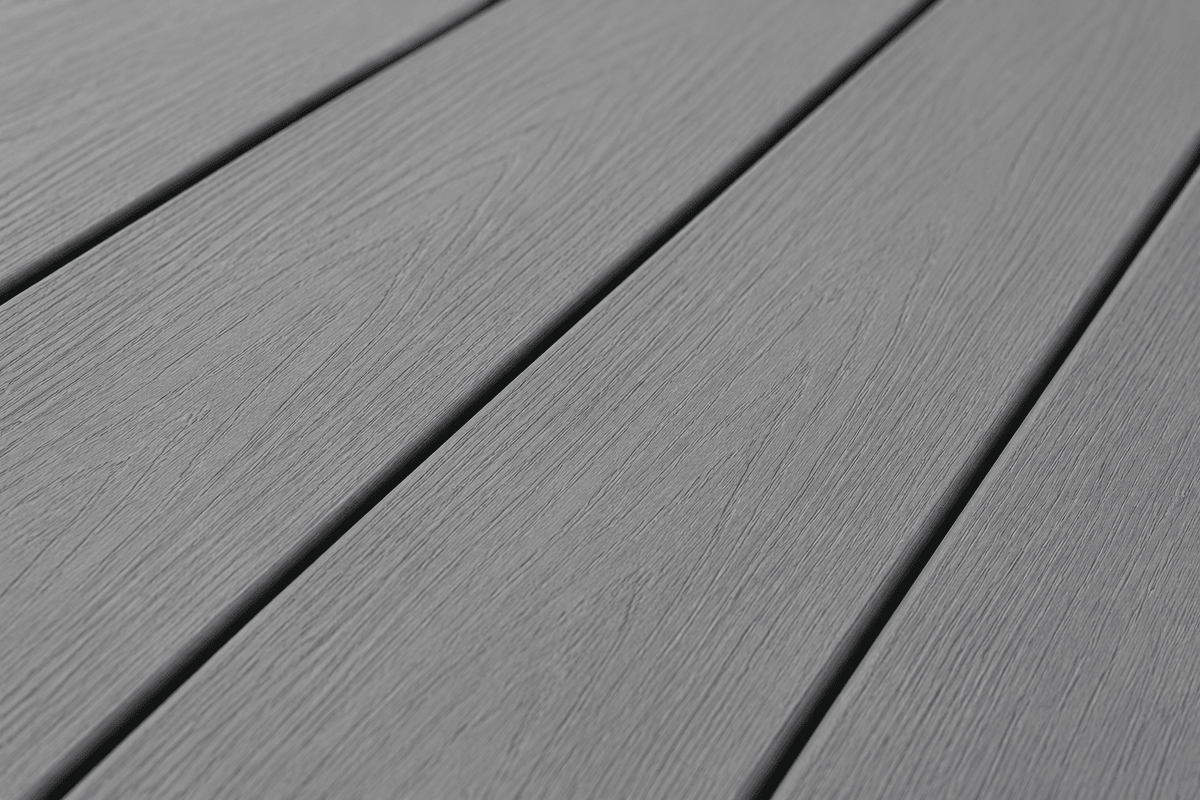
Before choosing grey wood decking, decide whether you want to maintain a color or accept change. A real wood deck can shift unevenly in sun and shade, especially under furniture, rugs, or tree cover. If you plan to preserve a specific color, that often means cleaning and recoating. If you are comfortable with natural variation, timber can be satisfying, but the result will rarely stay frozen in one perfect shade of grey.
That is why many buyers end up comparing wood with composite rather than comparing two wood species alone. Composite Deck Pro's composite decking overview, expansion-gap article, and composite maintenance article are useful if low upkeep is part of the brief.
Think About Texture, Not Just Color
Grey boards can look flat if the texture is weak or the layout is too busy. Wider boards, clean seams, and consistent border details usually help the tone feel deliberate. Narrow boards with inconsistent spacing can make the same color feel dull. This is one reason board width and board length should be considered alongside color instead of afterwards.
If you are still shaping the layout, it helps to pair color decisions with size decisions. Composite Deck Pro already covers how wide deck boards are, decking lengths, and grooved board planning so the finish and the format can be chosen together.
Grey Works Well, but Only When the System Is Coherent
The strongest grey decking projects are not just about color. They bring together the right board width, edge profile, railing tone, and cleaning expectations. Whether you choose weathering timber or a low-maintenance composite finish, the better result usually comes from treating the deck as a complete exterior surface rather than a color swatch.
If your priority is a stable, low-fuss outdoor room, grey-toned composite decking is often the easier path. If your priority is natural material character and you accept seasonal change, weathering wood can still be a rewarding choice. The right answer depends less on trend and more on how much variation and maintenance you want to live with.
Conclusion
Grey wood decking can look sophisticated, relaxed, and highly versatile, but it only stays appealing when expectations match the material. Natural wood greys because it ages. Composite grey boards are designed to hold a planned color story more consistently. Decide which experience you actually want, then choose the product, board size, and maintenance routine around that decision.