
Realism Is More Than a Pattern Pressed Into a Board
Wood grain composite decking is often judged from a close-up photograph, yet a deck is experienced from several distances. From the doorway, color rhythm matters first. From a chair, the grain and tonal changes become visible. At board level, texture, sheen, and repeated marks reveal how the surface was made. A convincing product has to work at all three distances rather than merely photograph well in a sample box.
That is why buyers should compare the surface with the entire outdoor space in mind. The decking and flooring options, composite deck color guide, wood and composite deck comparison, deck board sizing guide, and composite board manufacturer guide provide useful context for moving beyond one attractive swatch and considering board dimensions, material category, and finished appearance together.
Look for Variation at the Scale of the Whole Deck
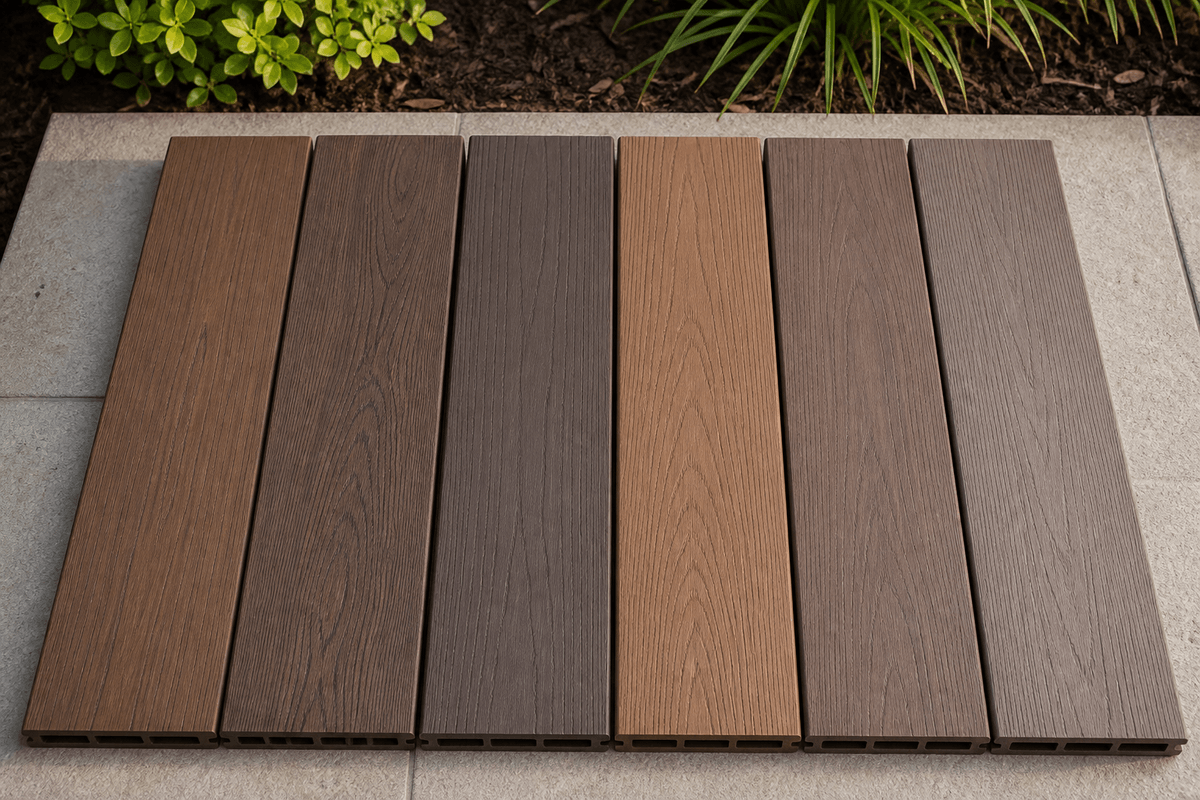
Natural timber rarely repeats in a neat, obvious sequence. Its knots, streaks, and density changes appear irregularly, so the eye does not immediately find a loop. Composite boards are manufactured, which means some repetition is unavoidable, but better visual planning can make that repetition much less noticeable. Long grain runs, several embossing patterns, and restrained tonal shifts usually read more naturally than a dramatic motif repeated every few feet.
Lay several full-length boards beside one another before making a decision. A single short sample cannot reveal whether dark streaks line up, whether the same knot appears too frequently, or whether the grain direction creates a striped effect. Photographs of complete installations are more useful than isolated product shots, especially when they show the deck in ordinary daylight rather than heavily edited marketing light.
Five Details That Separate Natural-Looking Surfaces From Busy Ones
There is no single grain style that suits every house. A rustic home may carry stronger markings comfortably, while a crisp contemporary exterior often benefits from quieter texture. Still, a few checks help identify a surface that will remain visually calm after hundreds of boards are installed.
- Pattern repeats are difficult to spot across several adjacent boards.
- Embossed lines vary in depth instead of looking uniformly carved.
- Color changes support the grain rather than forming unrelated stripes.
- The finish is not so glossy that sunlight makes the plastic character dominant.
- Board edges, fascia, and stair components coordinate with the main field boards.
Texture and Color Need to Tell the Same Story
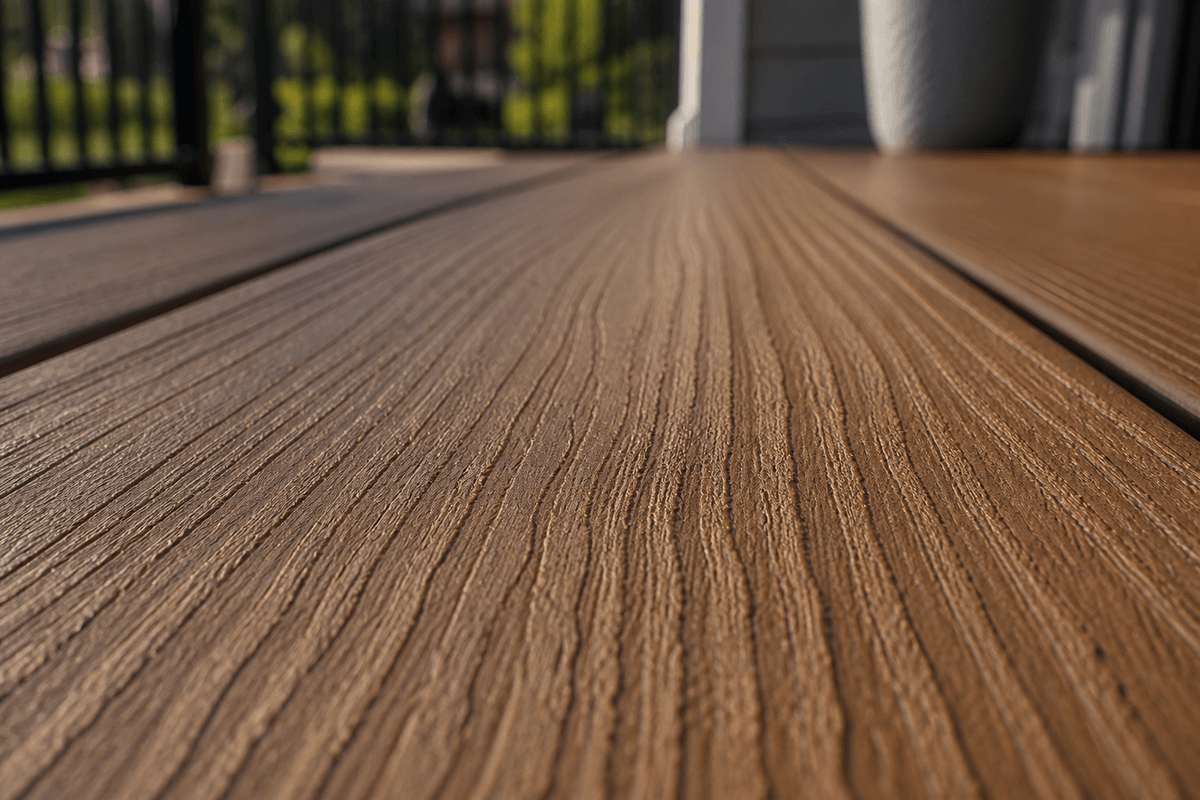
A deep embossed grain paired with a perfectly flat single color can feel less believable because the visual and tactile cues disagree. Likewise, strong multitone coloring on a nearly smooth board may look printed rather than integrated. The most coherent wood-inspired surfaces align texture depth, color movement, and sheen so that no one feature is trying too hard.
Consider the species impression you want without expecting a literal copy. Warm medium browns can suggest familiar domestic timber; cooler taupes may suit weathered coastal palettes; deeper brown-black tones can recall dense hardwood. The composite deck color guide can help establish a color family, while the decking for full-sun spaces and heat-resistant decking guide are worth reviewing before committing a very dark finish to an exposed site.
Installation Can Improve or Expose the Pattern

Board arrangement has an outsized effect on realism. Installers can open multiple packs, mix boards, reverse compatible orientations, and place highly distinctive streaks where they do not form obvious clusters. Picture-frame borders can also interrupt a large field and give the eye a deliberate edge. These are layout choices, not changes to the material, but they often determine whether the finished deck feels composed or repetitive.
Before work begins, confirm which board faces and orientations the manufacturer permits. Then use the composite decking installation guide to think through joints, borders, stairs, and fastening details. Grain should never distract from correct support spacing, ventilation, drainage, or expansion allowances. A beautiful surface still depends on a sound deck beneath it.
Test Samples in Sun, Shade, and Evening Light
Take the finalists outdoors and leave them there for several days. Morning light may emphasize embossing, midday sun may flatten it, and low evening light may make every ridge more visible. Wet the surface as well, since moisture can temporarily deepen color and change reflectivity. View samples beside siding, masonry, railings, and interior flooring visible through the door.
Also touch the boards after sun exposure and walk on a secured sample with the footwear normally used outside. Visual realism matters, but comfort and confidence underfoot matter more once the deck becomes part of daily life. If you need help comparing finish, layout, and project conditions, contact Composite Deck Pro after reviewing the options available through Composite Deck Pro.
The Best Grain Is the One You Stop Noticing
Successful wood grain composite decking does not demand constant attention. It gives the deck warmth and depth, supports the architecture, and then recedes behind meals, conversations, and ordinary backyard use. Judge several boards together, watch for repetition, align color with texture, and plan the layout before ordering. Those steps reveal far more than the most dramatic close-up in a brochure.